

Manufacturing-X: What It Is and Why It Will be Increasingly Significant for Manufacturing
Manufacturing data is everywhere. The problem is not a lack of reliable information. The problem is that the data is usually scattered across companies, systems, and countries.
When you need to prove where a component came from, calculate a product’s carbon footprint, or trace its history, things can get messy fast. You end up with one-off integrations, manual back-and-forth, and long discussions about who has which data.
That is why Manufacturing-X matters. It gives you a way to think about digital data sharing across the market so companies can work within a shared, secure, and scalable industrial data ecosystem.
What is Manufacturing-X?
Put simply, Manufacturing-X is an international initiative focused on the rules and tools companies need to share data about products, components, and processes without giving up control of that data.
In this model, data does not just get pushed into one central system. Each company keeps control over what it shares, who gets access, and why. That is why data sovereignty, secure data sharing, data exchange standards, and well-designed data infrastructure matter so much here.
For you, that can mean easier collaboration in a business environment where shared data between companies is becoming just as important as the product itself.
Why manufacturers need something like Manufacturing-X
Manufacturing rarely happens in one place. One partner supplies raw material, another makes a component, another handles final assembly, and someone else may take care of service, reporting, or recycling.
If every company describes data differently, uses different formats, and applies different access rules, working together gets expensive and slow.
That can hurt several areas at once:
- It makes manufacturing data exchange harder
- It slows data processing
- It weakens supply chain resilience
- It complicates reporting and traceability
- It makes data-based services harder to build
That is why Manufacturing-X is closely tied to Industry 4.0, digital transformation, and the push to build a stronger European industrial base.

How Manufacturing-X is different from standard B2B integration
In a traditional setup, every partner relationship often needs its own connection, its own agreements, and its own data mapping. That may work when you only have a few partners. Once the network grows, you run out of time, budget, and consistency.
A shared data ecosystem works differently. The goal is to make information exchange easier across the full value chain.
| Traditional model | Data ecosystem model |
|---|---|
| Separate connection for each partner | Shared data exchange standards |
| Data is often copied into central systems | The data owner keeps control |
| Changes are expensive | New participants can join more easily |
| Reporting across the full chain is hard | Digital data exchange is simpler |
| Limited scale | A base for digital ecosystems |
For manufacturers, that creates a stronger base for production ecosystems, the data economy, and new ways to work with partners.
How Manufacturing-X connects with Gaia-X and Catena-X
If you follow this topic, you have probably already seen the names Gaia-X and Catena-X.
Gaia-X focuses on trusted, European, sovereign data infrastructure. Catena-X showed that the automotive sector can build a shared model for information exchange across many market participants. For manufacturing as a whole, that is a useful reference point.
That is also why you see related terms such as data spaces, digital sovereignty, digital industry, sovereign data infrastructure, and European data exchange platforms. They all point to the same goal: making collaboration easier without giving up control over your data.
Why the Digital Product Passport matters so much in Manufacturing-X
One of the clearest use cases for Manufacturing-X is the Digital Product Passport, or DPP.
For a product passport to mean anything, you need information about material origin, components, emissions, and selected lifecycle events. And that data has to come from many companies across the full product journey.
So the challenge is not only technical. You also need a shared data language and clear access rules. Without that, it is hard to build trust, scale, and smooth cooperation.
That is where data spaces and manufacturing data exchange become very real. The DPP is no longer just an extra document attached to a product. More and more, it is becoming part of how a product will be evaluated, sold, and supported in the market.
explitia and Manufacturing-X: our role in the project and at Hannover Messe
explitia’s role in this project shows what happens when the idea moves from paper to real work.
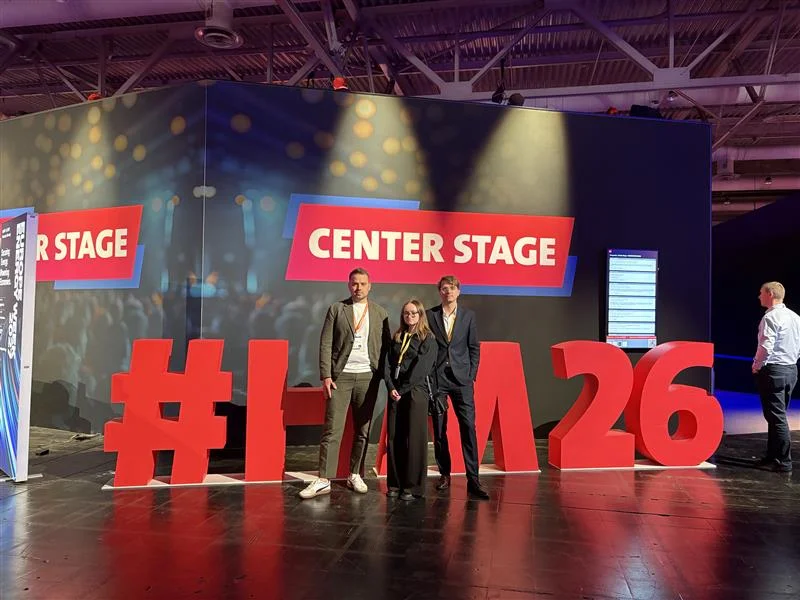
As a new Manufacturing-X Council member, we are part of a project being prepared for Manufacturing-X at Hannover Messe 2026, and we have two major roles in it. We will tell you more about those soon in the upcoming article.
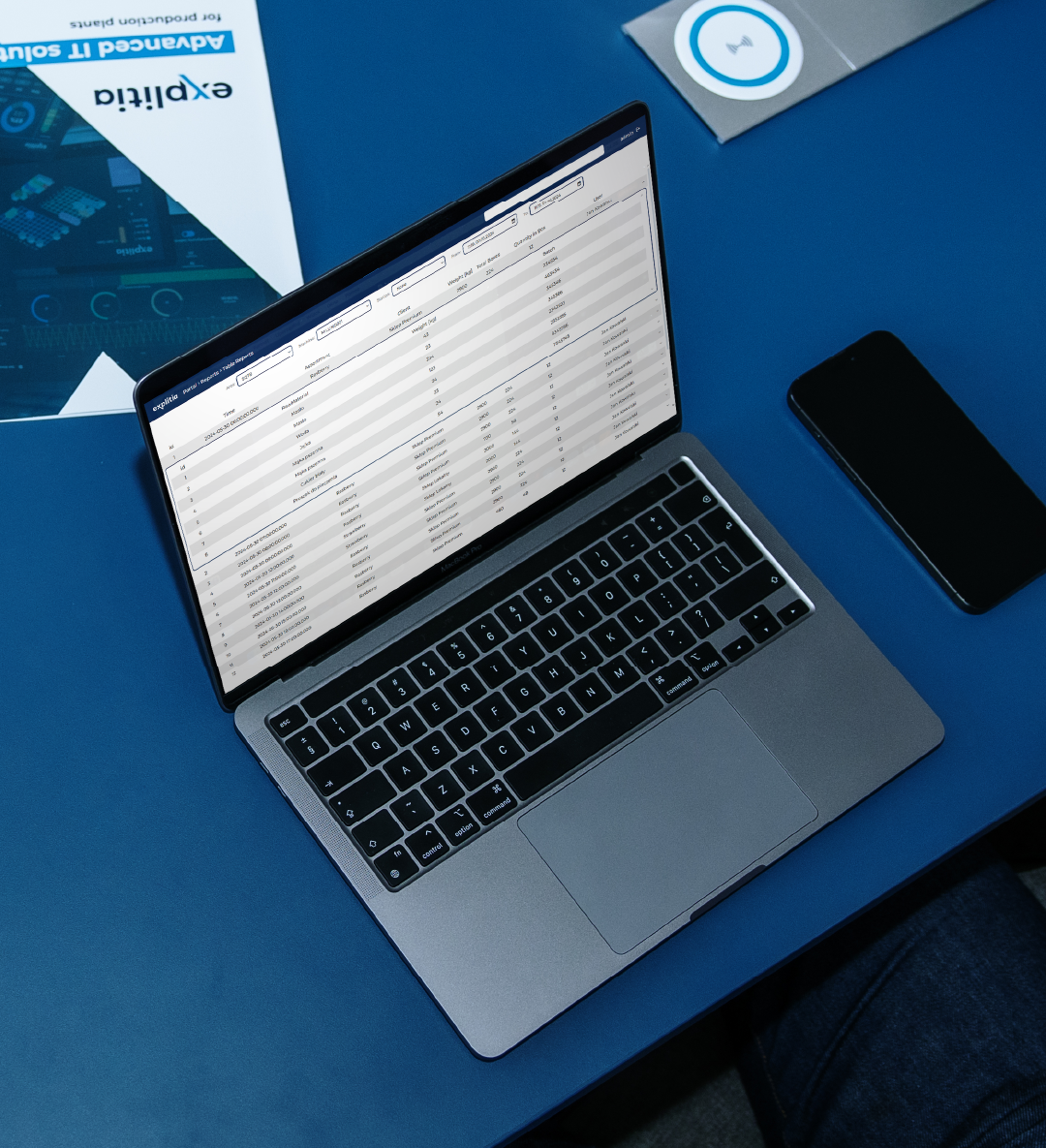
Find out more about the International Manufacturing-X Council
Manufacturing-X is an international initiative that will show part of its potential at the Hannover Messe 2026. Contact us and let’s chat. Or meet us at the Messe
What Manufacturing-X means for manufacturers
For manufacturers, this is about much more than joining an industry initiative. What is at stake is your ability to operate in a market where data is becoming part of the product’s value.
That can mean:
- easier manufacturing data exchange with partners
- better preparation for the Digital Product Passport
- more control over access to information
- a stronger base for digital transformation
- a better position in the European value chain
Over time, it also means a stronger industry, better cooperation, and better conditions for a more sustainable economy.
This is only the start
What makes Manufacturing-X worth watching is simple. Companies are starting to work by shared data rules. That can change how connected manufacturing works across borders, suppliers, and product lifecycles.
If your company wants to stay visible, trusted, and ready for new market requirements, this topic is no longer something to watch from the sidelines.

FAQ
Is Manufacturing-X a single platform?
No. It is a cooperation model and a set of rules meant to make data exchange between companies easier without moving everything into one central system.
Why does it matter for manufacturers?
Because transparency, carbon footprint data, component traceability, and cooperation across distributed supply chains matter more every year.
What does the Digital Product Passport have to do with Manufacturing-X?
A Digital Product Passport needs data from many companies and many lifecycle stages. Without shared standards and a trusted model for information exchange, it is very hard to build.
What role does explitia play?
explitia supports the project as a trusted point for the Polish ecosystem and as the assembly node in the battery and Digital Product Passport demonstrator.
What can companies gain from this model?
More control over data, easier cooperation with partners, better readiness for market requirements, and a stronger position in European value chains.
Let's talk and help you understand Manufacturing-X and its relation to Hannover Messe 2026