



Shorten order lead times with explitia.APS
Advanced Planning And Scheduling with system built for your plant
A production plan can only work if your team is capable of carrying it out on the shop floor. explitia.APS is an APS system (Advanced Planning and Scheduling) that works with production planning and scheduling with constraints, dependencies, and priorities of your plant in mind.
It is not based on a rigid template but built around how your plant processes and production rules.
If your planning still relies on spreadsheets, manual edits, and the experience of planners, an advanced planning and scheduling system can bring structure to the process. Instead of a static list of jobs, you get a solution that allows you to build a production schedule that is more consistent, more practical, and easier to manage.

Bring more structure to production planning and scheduling in your plant!
See how explitia.APS supports production planning and scheduling with constraints, dependencies, and priorities in mind. Get in touch and find out how it could work in your plant.
What you earn with explitia.APS?
A production scheduling system should help your team in day-to-day work, not make things harder. explitia.APS stays focused on what matters on the plant floor.
With a production and scheduling system, you can:
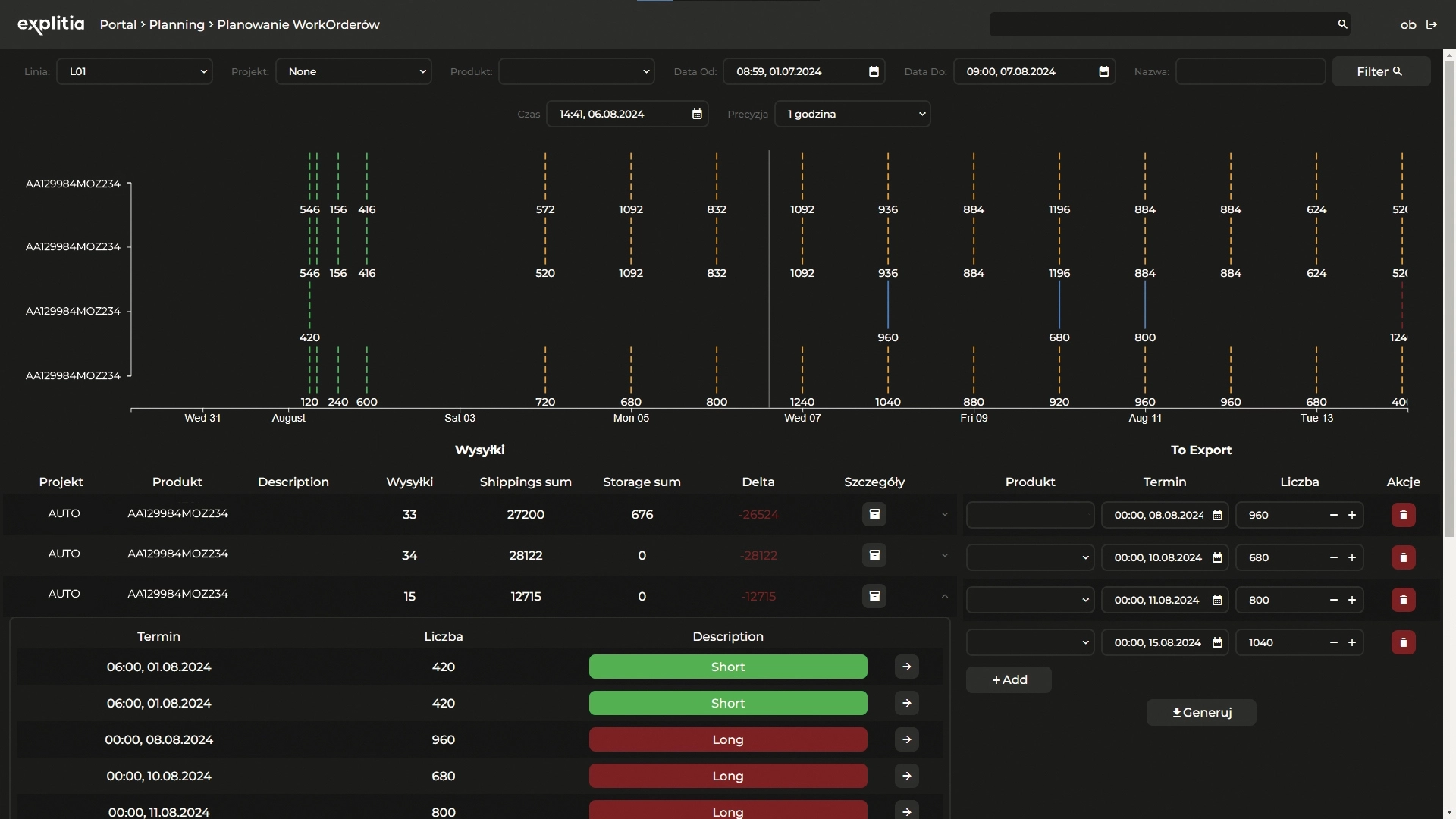
 Manage production orders and sequencing more effectively
 Build a schedule that reflects real production conditions
 Allocate work over time more efficiently
 Reduce losses tied to changeovers
 Make better use of available resources
 Align planning logic with the actual flow of production
This matters most when standard planning methods stop working. When production is complex and there are many moving parts, a ready-made model usually falls short. That is where APS software starts to show real value.

What is explitia.APS?
explitia.APS is an advanced planning and scheduling (APS) system designed to support scheduling and planning your production. Its role is more than just to display a plan. It helps you create it, organize it, and keep it aligned with the way your plant operates.
The APS system takes into account how production runs, its operational limit, which rules apply to job sequencing, and where the most common problems come up. As a result, your schedule becomes a tool useful for your team’s everyday work.
Where we start implementation?
When implementing an advanced planning and scheduling system, you cannot skip the process of discovery stage. To prepare the right system, you need to start with a clear picture of how planning works today, which rules are in place, what limits exist, and what should change after implementation.
In that case, workshop sessions matter. We define the system assumptions with you, the scheduling logic, and your expectations for the production plan. Only then can an APS system be designed in a way that fits your plant.
Because of that, you get a production scheduling system built around your operation, not a model forced on you from the start.

Managing production orders
At the core of explitia.APS is based on production orders. They are the starting points for building the plan and the schedule. The system helps you organize orders, set their sequence, and manage execution with greater clarity.
It gives you more control over what needs to be done, when it should happen, which jobs should start first, and how work should be distributed across resources and process stages.
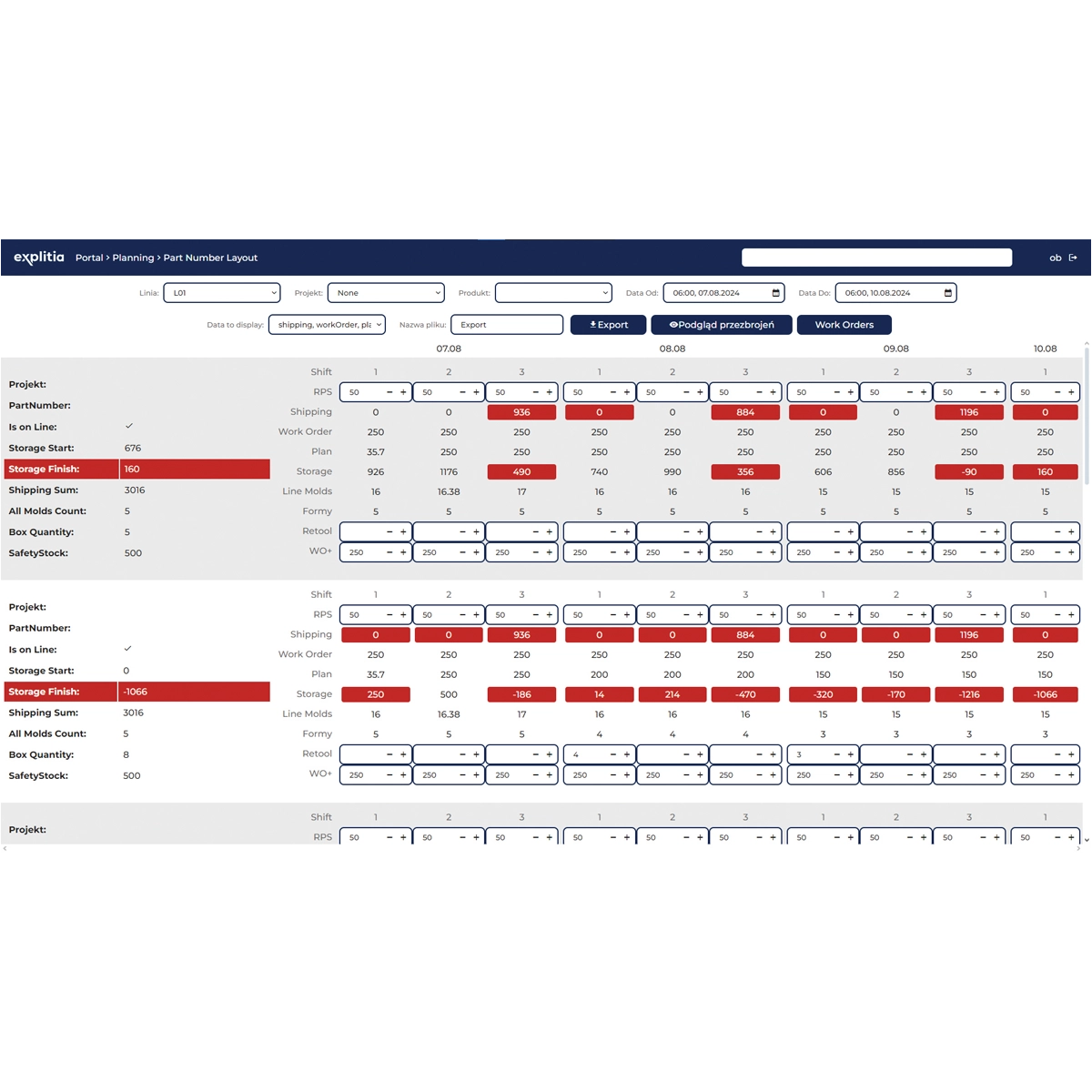

A schedule that reflects the reality of your plant
The biggest value of APS comes from the fact that the schedule is built around actual production conditions. It takes constraints, dependencies, priorities, and the way work is organized on the floor into account.
In one plant, the top priority may be machine loading. In another, it may be job sequence. In a different setting, it may be the way work is divided across lines and process stages. explitia.APS makes it possible to build a planning model that closely matches your production setup.

Better job sequencing
A simple change in job sequence can have a visible effect on efficiency. Production order affects lead time, resource use, workstation loading, and the number of changeovers.
That way APS software supports planning not only in terms of what needs to be produced, but also in what order it makes the most sense to run it.
A well-planned sequence can help you:
- reduce unnecessary changeovers,
- improve production flow,
- balance the load across resources more effectively,
- cut the time needed to complete the plan.
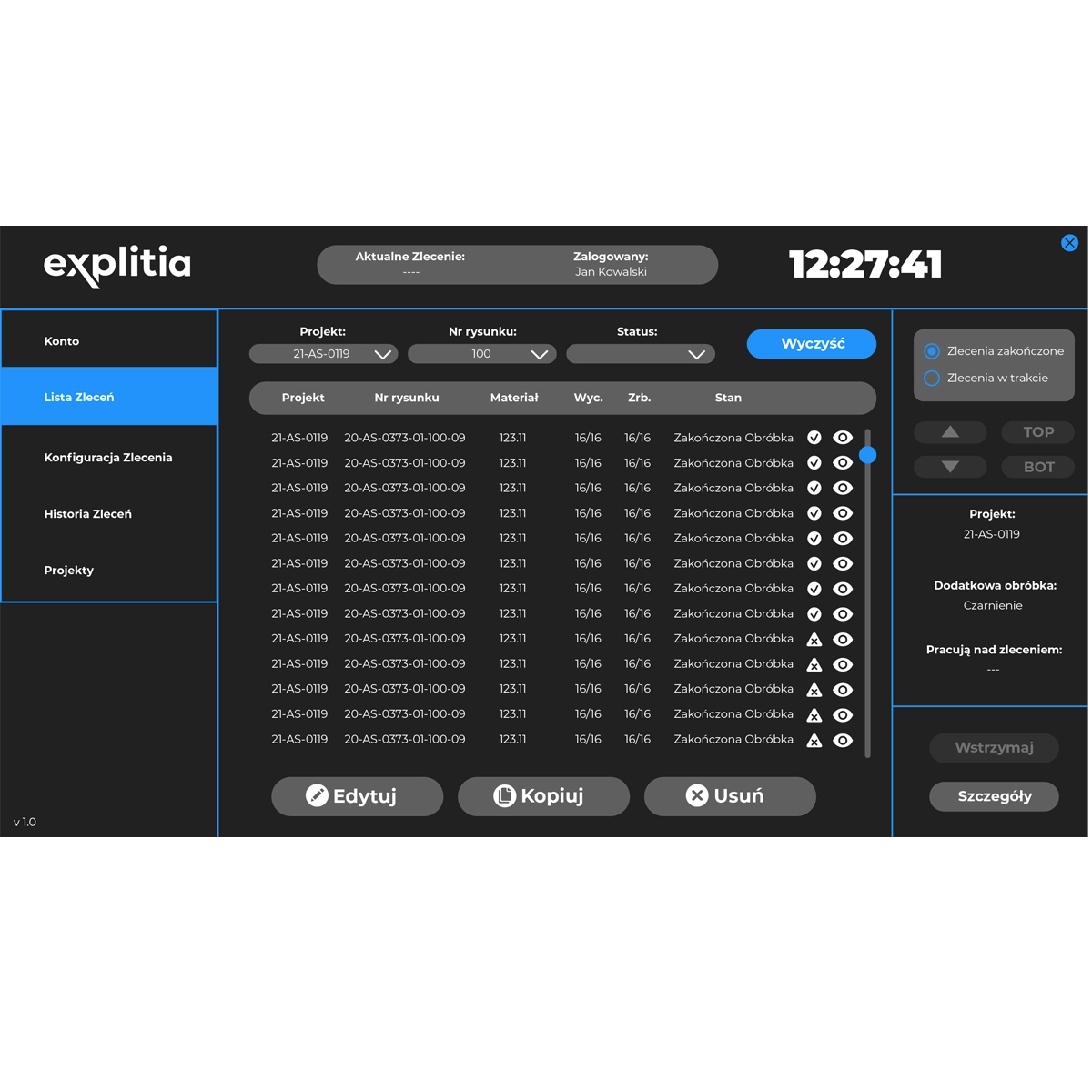
Order distribution and execution planning
Production rarely follows a simple pattern. Orders move across different lines, workstations, cells, and process stages. Each of those areas can have its own conditions and limitations.
An APS system gives you more advanced options for distributing orders and organizing execution across the plant. It becomes especially useful when planning is not just about setting up a due date, but about assigning work in a practical way across production resources.

Planning logic based on your actual process
explitia.APS is not a tool that forces the same operating model on every company. It was designed as an order planning system shaped around the needs of a specific plant. Its logic comes from production practice, not from a generic template.
It matters most in plants where the process is complex, variable, or full of exceptions. APS helps bring structure to that area and turns process data into clear scheduling rules.

Bring more structure to your production schedule!
explitia.APS helps you build a production plan that reflects the constraints, dependencies, and way of working in your plant. Write to us and see how much it can add to your planning process.
Business benefits of advanced planning and scheduling system
It is not a standalone tool but part of a more organized way to plan and run production.
A well-implemented production scheduling system brings order not only to the plan itself, but also to the way decisions are made. You can see the difference in your team’s daily work and in how the whole plant operates.
Benefits include:
| Better planning discipline | The plan becomes a working tool that helps you organize production according to its actual conditions. |
| Reduced losses caused by poor job sequence | A better production sequence helps reduce inefficiencies, including losses linked to changeovers. |
| More efficient resource distribution | Planning can distribute work across available workstations, lines, and process stages with greater awareness. |
| Enhanced production predictability | A schedule built on clear logic gives you more control over how orders are carried out. |
| A system built for your plant | An APS system should reflect your needs and fit your technology, operational limits, and the way work is organized. |
How explitia.APS works within the production process?
The schedule is connected to production, warehouse operations, orders, material availability, and operational data. For that reason, an APS system should work together with the other parts of your production environment.
It can be connected with the explitia Production Portal environment and with selected areas and technologies such as:

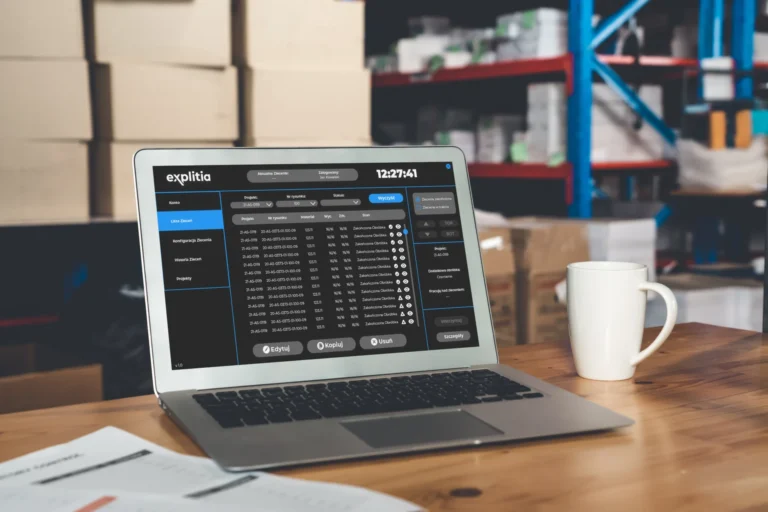


It is not a standalone tool, but part of a more organized approach to planning and running production.
Why explitia.APS is a solution for you?
It can be a strong fit if you need a more deliberate and effective way to plan production. Especially when:
- the production process is complex,
- too many variables make manual planning difficult,
- standard tools are no longer enough,
- the schedule has to account for many dependencies,
- job sequence, resource loading, and changeover reduction all matter.
If your production needs more than a simple plan, APS software can become an important part of day-to-day management.
Where does implementation begin?
Workshop and analysis
Scheduling logic design
Configuration and testing
Launch and further development
When implementing an APS solution, the discovery stage cannot be skipped. To prepare the right system, you first need to understand how planning works today, which rules are in place, what limitations exist, and what should change after implementation.
That is why workshop sessions are such an important stage. This is where we define the system assumptions with you, the scheduling logic, and your expectations for the production plan. Only on that basis can an APS system be designed to fit your plant’s needs.
As a result, you get a production scheduling system built around your operation rather than a model imposed from the start.
Let’s talk about explitia.APS in your production
Want to see whether explitia.APS – advanced planning and scheduling system is the right fit for your plant?
Let’s talk about how you plan production today, where the constraints show up, and what kind of schedule would truly support your team.