



Ensure continuity of warehouse flows with explitia.QSYSTEM
Material flow management that brings order to the shop floor and shortens the path from warehouse to production
The material is on site, but production does not have it. A pallet has been put away, but nobody knows where. The buffer is full, yet the items that should actually reach the line are still missing.
These situations are not uncommon in production environments and can quickly escalate to bigger problems. Fortunately, there is a way to prevent them.
QSYSTEM brings structure to material flow management between the warehouse, buffers, and production. It shows where the material is, who moved it, what is waiting to be picked, and where it should go next.
If you want to stop relying on manual checks, searching for pallets across the shop floor, and constantly asking people for updates, QSYSTEM helps you restore order to the plant.

Gain full control over material flow on the shop floor!
Contact us today and see how explitia.QSYSTEM helps you quickly determine where a pallet, container, or batch is located, as well as who made the last move and when.
See what you gain with explitia.QSYSTEM:
 You know where every pallet, container, and batch is
 You deliver material to production faster
 You organize production-side buffers and internal warehouses
 You reduce mistakes during put-away and picking
 You shorten the time spent searching for material
 You keep better control over stock levels and inventory
 You can see the history of material movements
 You gain greater control over what happens between the warehouse and the production line
explitia.QSYSTEM was built for an area that too often depends on people’s memory, shop floor walkthroughs, and quick phone calls. It is exactly where delays, tension, and wasted time appear most often.
It is a solution for production-side buffers, internal warehouses, material locations, and physical carriers such as pallets and containers.

Where the problem usually begins
Not in the ERP system, the production plan, or material availability itself.
The problem usually starts when material moves between the warehouse, the buffer, and production, while information about that movement is incomplete or scattered.
This is when familiar situations begin to emerge:
- an operator is looking for the right pallet,
- the warehouse is not sure whether the material has already been issued,
- the buffer is getting full, but the required material is still missing,
- production is waiting even though the material is supposedly on the shop floor,
- nobody can quickly check who made the last move.
QSYSTEM turns this area into an organized process.
Material has a location, a status, and a history, and your team knows what to do next.
QSYSTEM organizes material flow management from start to finish
QSYSTEM supports material flow management from receipt into circulation, through internal transfers and buffering, to issue for production or preparation for dispatch. It supports ERP integration, warehouse document handling, and the ability to track material from warehouse entry to outbound loading.
This means you can:
- receive material and assign it to a location,
- control transfers between zones,
- manage production-side buffers,
- direct material to the right place,
- handle issue to production,
- prepare material for further movement or shipment.
You no longer have to guess. You can work with a clear picture of the current situation.
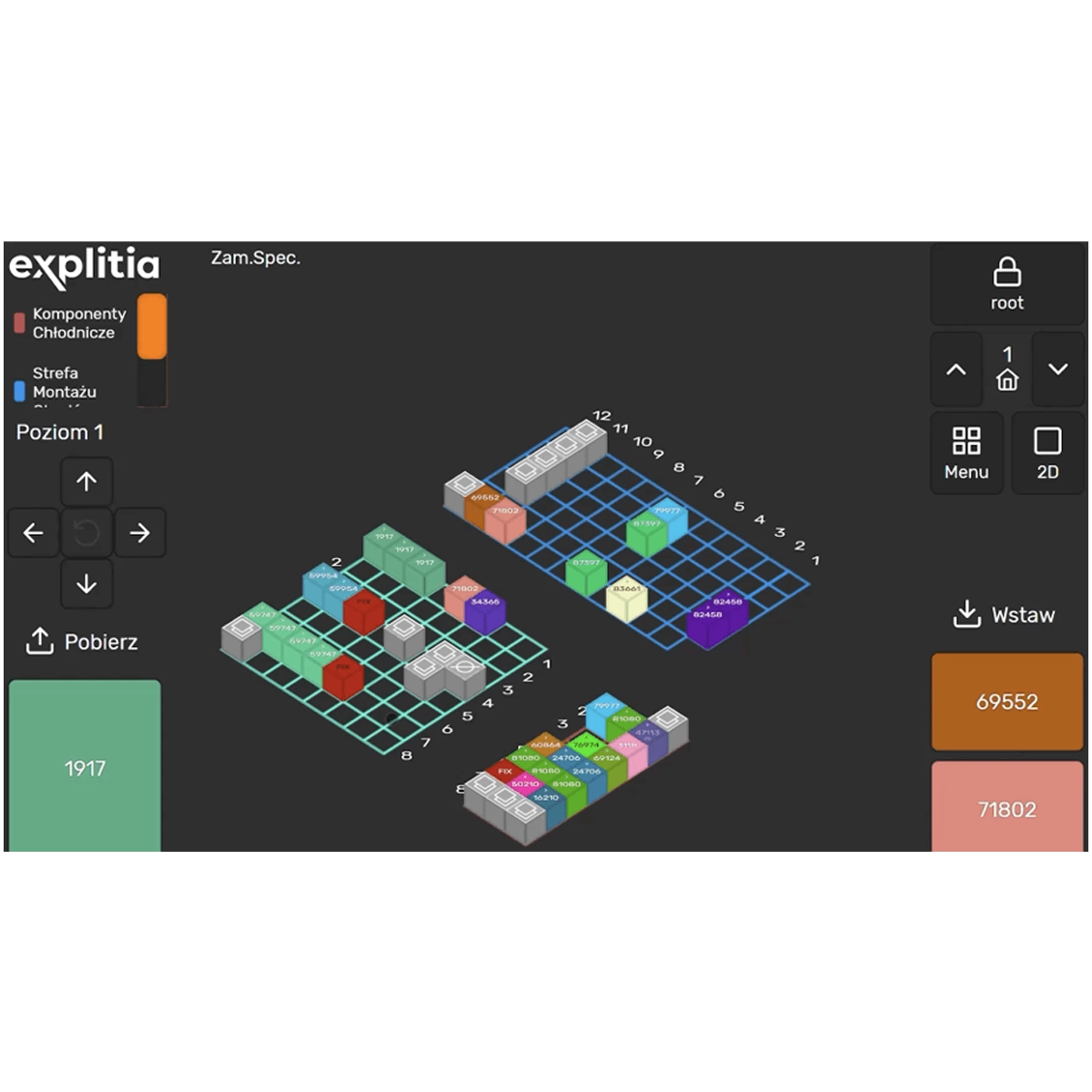

Production-side buffers stop being a blind spot
Buffers are often the part of the process that takes the most time and peace of mind away from the team. Material is placed there for a brief moment, then stays longer, and after some time it becomes difficult to determine what actually remains in a given zone and what should move on next.
explitia.QSYSTEM helps you organize this part of the operation. It shows you:
- what materials are in the buffer,
- which locations are occupied,
- where capacity is running out,
- what is ready to be picked,
- where a bottleneck is starting to form.
The system works well as a tool for managing warehouse and production-side buffers and for detecting bottlenecks between the warehouse and the production line.
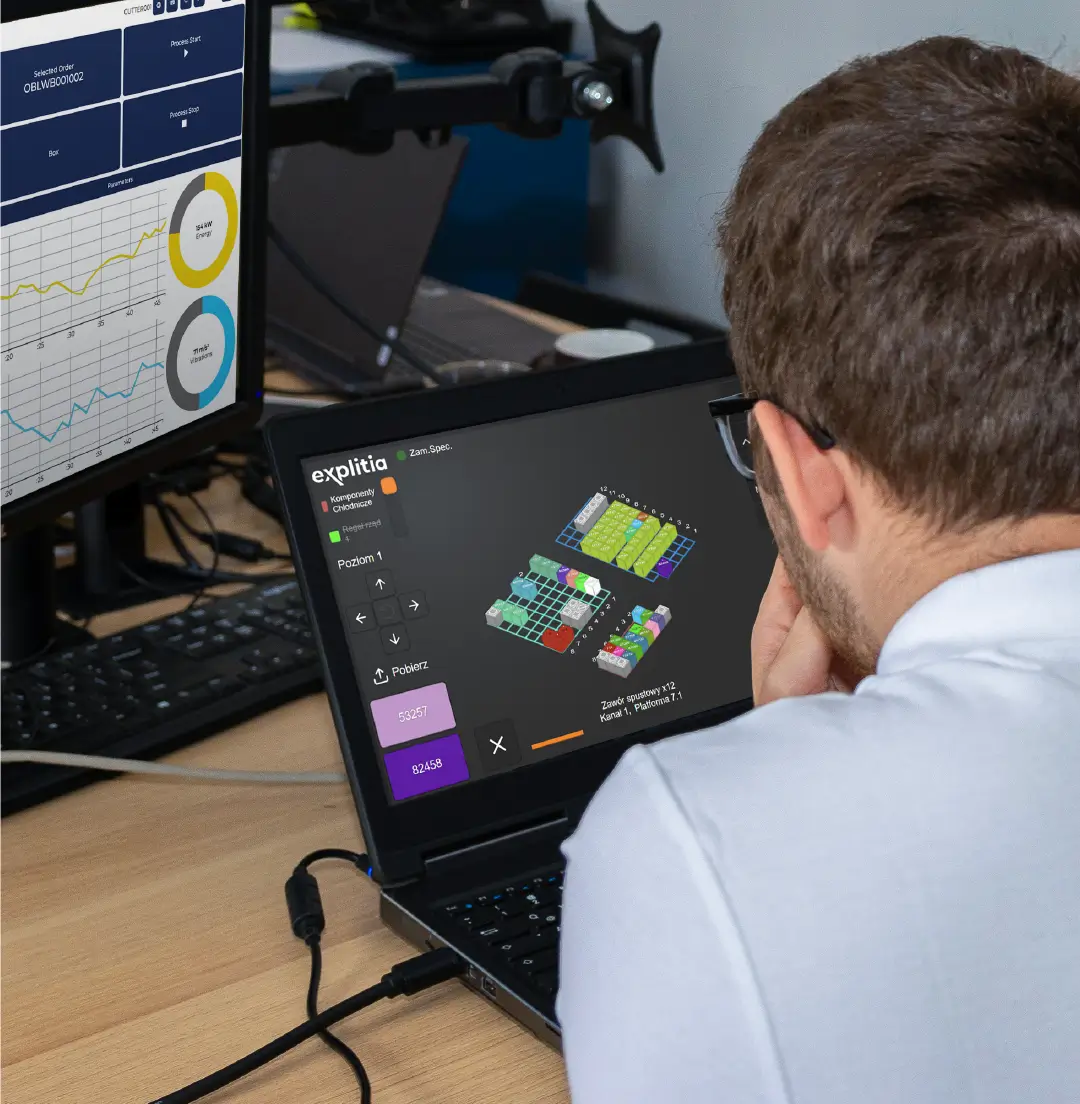
The operator does not guess, but gets clear instructions
On the shop floor, what matters is a simple message: what to pick, where to pick it from, where to put it away, and in what quantity it should be delivered.
QSYSTEM supports your operators in everyday work and guides them through material movement. The system was also designed for forklift operators and employees responsible for material placement, and the interface is adapted to touch screens, with large buttons, clear fonts, and glove-friendly operation.
The effect on the shop floor can be significant:
- fewer incorrect put-away actions,
- fewer questions to other employees,
- shorter task completion time,
- faster delivery of material to the line,
- greater repeatability of work.
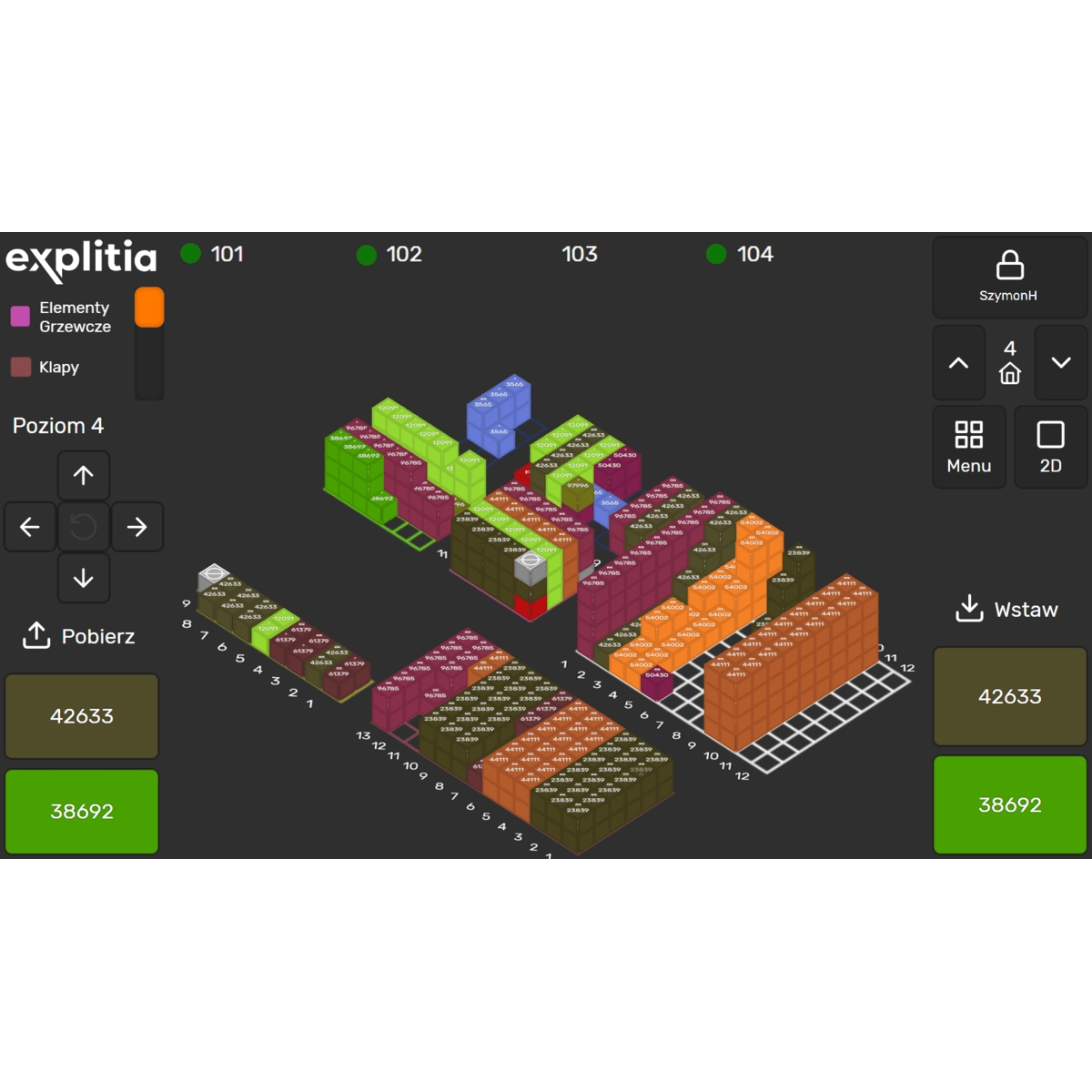
FIFO, LIFO, and automatic location selection
Well-organized material flow does not rely on putting material wherever there is space. It needs rules.
QSYSTEM supports FIFO and LIFO, as well as automatic location selection during put-away and picking. You can also take into account carrier type, size, weight, component grouping, or work with partial units.
It means fewer decisions on the operator side and more order on the process side.
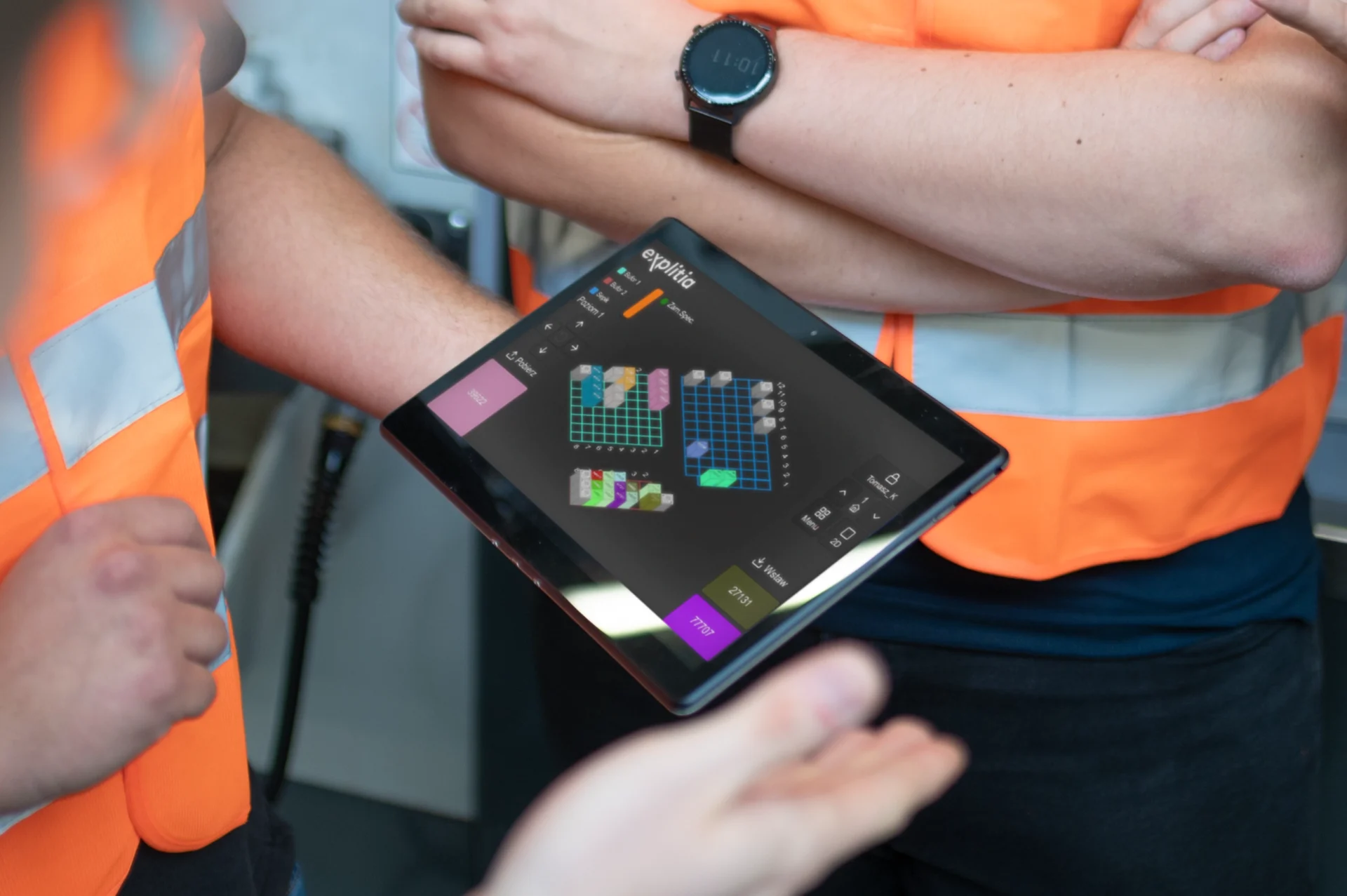
Pallets, containers, batches, and locations always under control
In explitia.QSYSTEM, you work with real units that move through the plant. These include pallets, containers, batches, packages, and other material carriers.
At any moment, you can check:
- where a given unit is located,
- who made the transfer,
- when the material was put away,
- what its status is,
- where it should go next.
It is a simple change that can quickly bring visible results. Less walking across the shop floor. Fewer phone calls. Fewer situations where several people are searching for the same material.
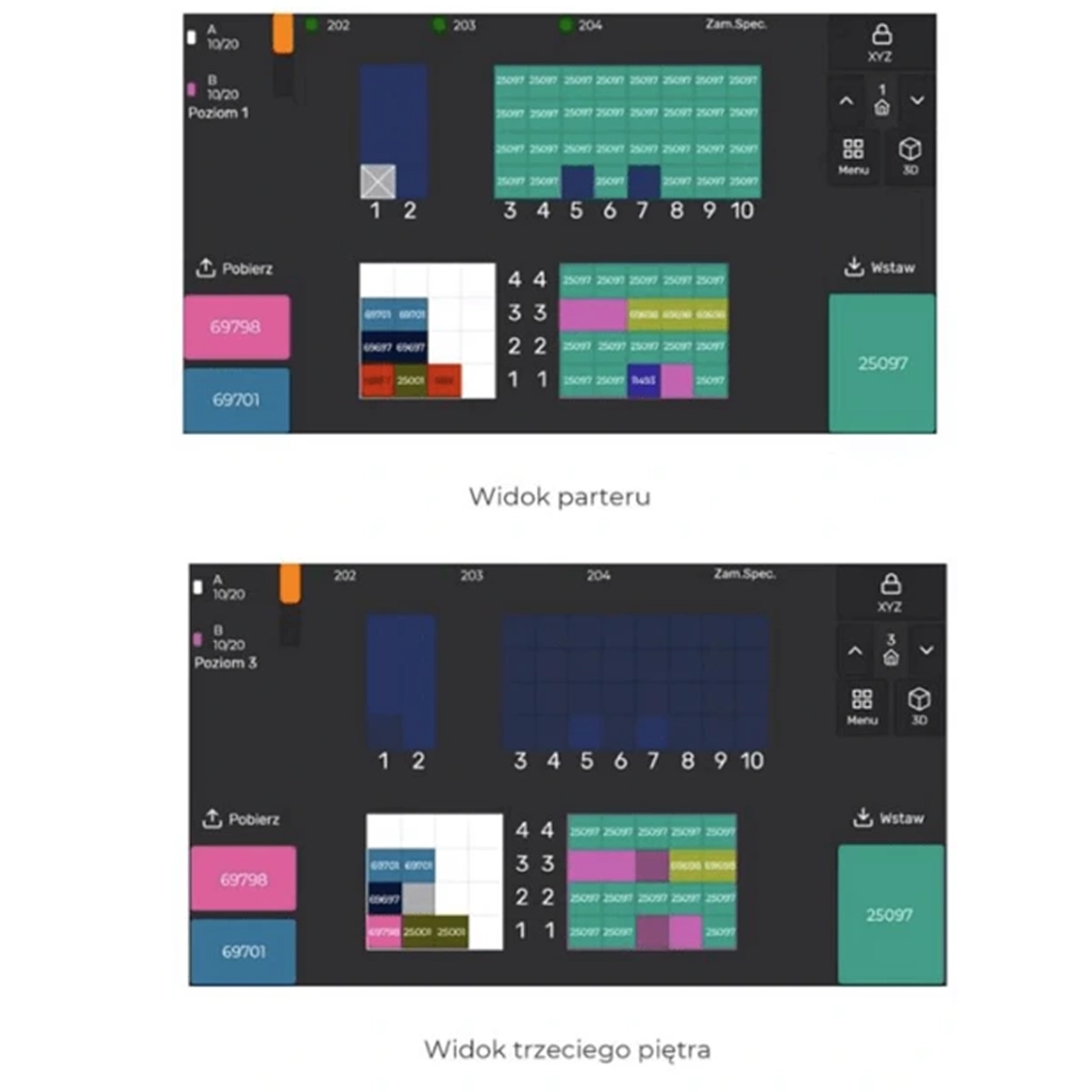
Fast search and ongoing stock records
When someone asks, “Do we have it?”, the answer should not depend on who happens to be on shift.
QSYSTEM enables continuous stock recording and lets you quickly search for components, locations, and physical material carriers. You also get filtering options, visibility into which units contain a specific component, as well as inventory reports and unit information reports.
It helps you:
- respond faster to production demand,
- reduce excess stock sitting in buffers,
- plan replenishment more easily,
- carry out inventory more efficiently.

Movement history and greater accountability across the team
When a mistake happens, you need facts.
explitia.QSYSTEM records the history of material movements and user activity. You get access to inventory reports, user activity reports, buffer status reports, and information about specific material units.
It gives you:
- greater transparency in day-to-day work,
- faster clarification of discrepancies,
- easier control over completed actions,
- better accountability across the team.

Less guessing, more control over internal logistics!
Contact us and discover how QSYSTEM supports the daily work of warehouse and production teams by organizing material flow from receipt, through buffering, to line issue.
explitia.QSYSTEM supports order fulfillment before delays appear
Your customer sees the deadline. Sales see the commitment. Production sees the plan. The warehouse sees the material.
If material flow management is not working properly, the problem shows up during execution. Not when there is still time for a calm correction.
QSYSTEM helps you make sure the material is available where it is needed, when it is needed.
This can result in:
- shorter waiting time for production components,
- fewer urgent shortages,
- fewer delays caused by internal logistics,
- smoother order fulfillment,
- higher predictability in daily operations.
You do not need a heavy WMS if the problem lies elsewhere
explitia.QSYSTEM is a solution for the area between the main warehouse and production, without trying to compete with large, extensive WMS systems. Technically, it can also cover a broader warehouse scope, but its strongest side is production-side buffers, internal warehouses, and material flow close to production.
QSYSTEM is a good fit for your plant if:
| You want to organize internal logistics |
| You do not need a heavy and expensive implementation |
| You want to quickly bring order to the area where the biggest problems exist today |
| You are looking for a solution that supports the everyday reality of the shop floor |
Who benefits most from explitia.QSYSTEM?
QSYSTEM will work well in your plant if:
- you have production-side buffers and want full control over them,
- material too often gets lost between the warehouse and production,
- operators lose time looking for locations,
- you want to reduce errors in material movements,
- you want better control over stock, locations, and movement history,
- you want to improve material flow management without implementing a very extensive WMS.
What implementation of QSYSTEM with explitia looks like
Analysis of the current material flow and identification of areas that need to be organized
Definition of zones, locations, buffers, and working rules in the system
Configuration of QSYSTEM to match your process and the way your team works
Integration with ERP and other required data sources
Go-live on the shop floor and verification of how the system works in practice
User training and start of work on real operations
Further development of the system along with new process needs
QSYSTEM works even better when connected with the rest of the process
explitia.QSYSTEM can work on its own, but it can also cooperate with ERP, production, and traceability.
QSYSTEM mainly operates at the level of batches, pallets, and containers, while traceability focuses on the individual item and product genealogy. It means the solution is not a disconnected tool, but part of a broader ecosystem like the Production Portal.
ERP
Connecting QSYSTEM with ERP enables the exchange of data about materials, documents, and warehouse movements, so material flow stays aligned with higher-level planning and records.
More
Orders
Connecting QSYSTEM with explitia.Orders makes it possible to link material flow with specific production orders, so material reaches the right place at the right time.
More
Traceability
Connecting QSYSTEM with traceability enables tracking of batches, pallets, and containers in the broader context of process traceability and material flow history.
More
What you gain from explitia.QSYSTEM from a business perspective
| Less lost material | You know where the material is and who moved it |
| Fewer production stoppages | Material reaches the right line faster |
| Fewer mistakes | Clear put-away and picking rules bring order to everyday work |
| Faster inventory counts | You have stock data, movement history, and reports in one place |
| Better use of buffers and space | You can see location occupancy and react faster to bottlenecks |
| Greater accountability | You can check who made a specific move and when |
The system helps you eliminate lost material, gain full visibility of buffers, speed up inventory work, and improve control over user accountability.
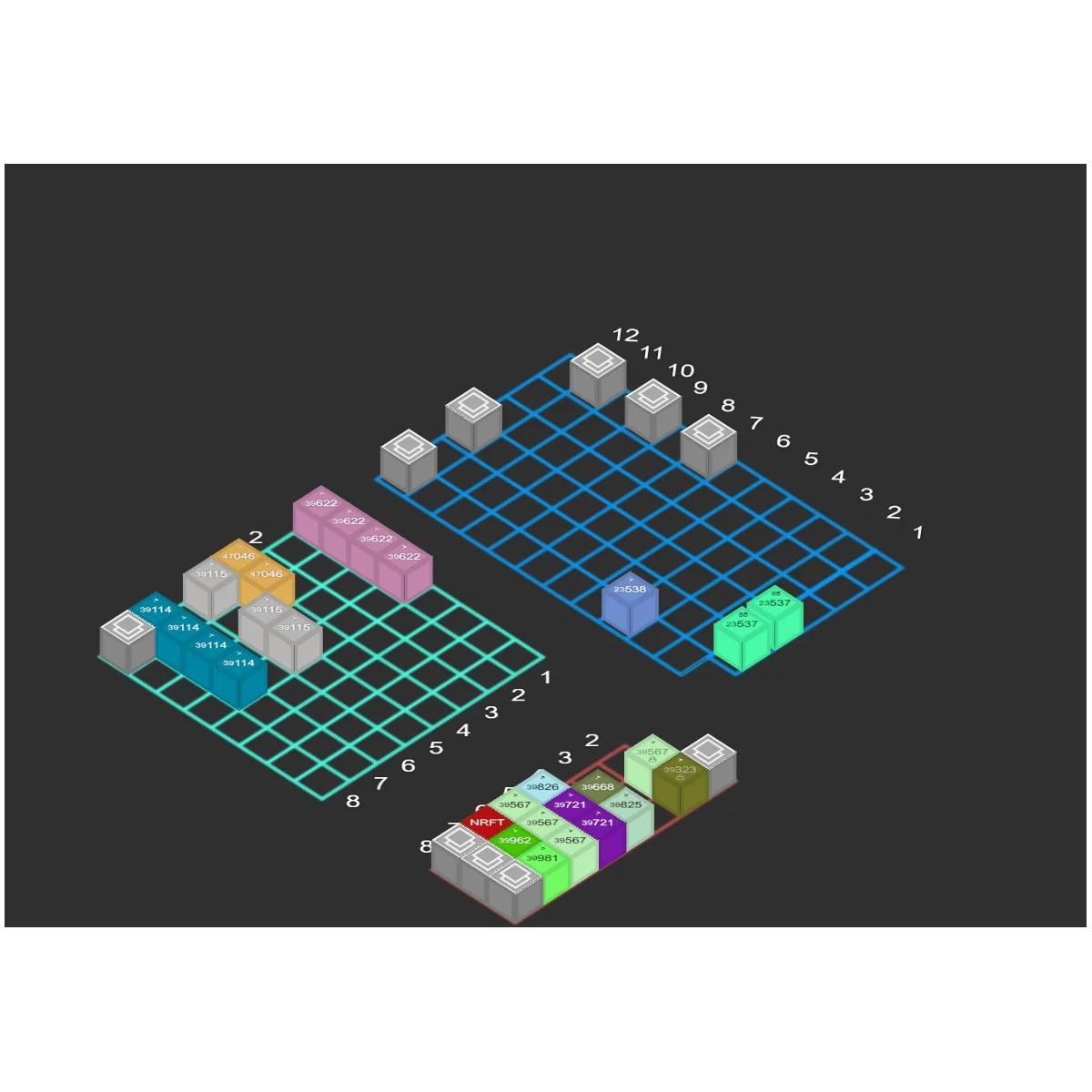
Bring order to material flow before the next issue stops production
If you want to gain control over buffers, internal warehouses, and the area between the warehouse and production, QSYSTEM will show you how to do it.
See what material flow management looks like when everything has its place, movement has its history, and the team gets clear guidance instead of having to guess.