



Manage and develop production processes with the Production Portal – a MES System
A flexible platform with a MES system that aligns with your production
The explitia Production Portal is a multimodal platform for manufacturing facilities that helps you build and expand IT tools around the real needs of your plant.
You can implement a MES system as part of the platform, but it is only one part of the picture. You can also use it to support planning, monitoring, reporting, quality, maintenance, and other production processes that need better structure and better data.
You can collect information from machines, sensors, PLCs, ERP systems, and operator forms and gather them in one place. You get a clear view of what is happening on the shop floor without pulling data from several places, comparing spreadsheets, or waiting for reports that arrive too late.
You can start with one area of your production, learn how the platform works in the reality of your everyday operations, and then expand it over time. There is no need for you to replace the whole system just to add the next module.
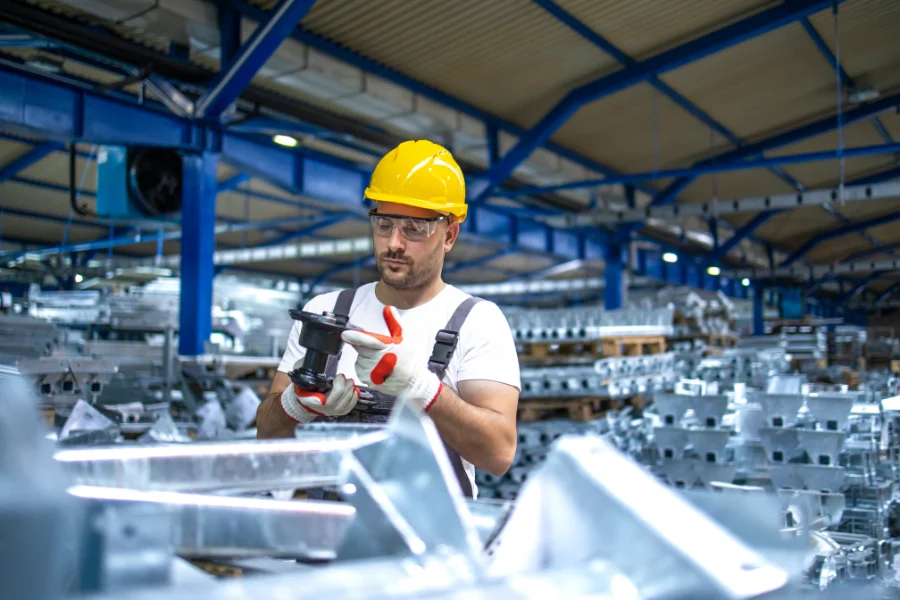
Bring more order to production and grow it in one environment!
See how the explitia Production Portal helps you plan, monitor, report, and develop production processes in one place. Contact us and see which area is the best place to begin in your plant.
What do you gain from the Production Portal?
What matters to you is simple. You want more order, faster access to information, and better control over production.
The Production Portal gives you:
 One system for production processes
 Data from different sources in one place
 Live insight into production and order progress
 Easier work planning
 Faster detection of downtime and process deviations
 Automatic reporting
 The option to implement one module or a wider scope
 Room to expand without a required license for every user
That is why a MES system matters in a modern plant. It helps you stay closer to the process, reduce losses, and make decisions sooner, when you can still change the outcome.

What is the explitia Production Portal?
The Production Portal is a flexible platform that includes a MES system manufacturing environment, but it is not limited to MES alone.
You do not get a closed product with a fixed list of features. You get a working environment that can match your company, your process, and the people who use it every day.
You do not always want to begin a large project covering the whole factory. Sometimes the first need is reporting or an OEE. In other cases, it is traceability, ERP integration, or a better way to collect shop floor data.
With the Production Portal, you can begin where the business need is most urgent and where the result is easiest to see. Then you can expand into other areas when the time is right.
The Production Portal can be used by:
- operators
- foremen
- production leaders
- quality teams
- maintenance teams
- warehouse staff
- planning teams
- management
The system runs in a browser, so you can access data from different devices and in different parts of the company.
Business benefits for your plant
A well-implemented MES system should bring clear results to everyday work on the shop floor.
The Production Portal can help you:
| Increase efficiency through better resource management |
| Reduce unplanned downtime |
| Find the causes of problems faster |
| Improve product quality |
| Shorten order lead times |
| Reduce waste and losses |
| Organize communication between departments |
| Make better use of production data |
For you, it means less guesswork, less manual data collection, and more decisions based on reliable information.
Elements within the Production Portal
The Production Portal is more than a MES (Manufacturing Execution System).
If you do not already have your own tools for production data collection or production management, the platform also includes products such as:
Andon system
A system for quickly reporting production problems that improves communication, shortens response time, and helps reduce downtime.
More
CMMS module
A tool for managing maintenance that supports inspection planning, service requests, and control over maintenance activities.
More
E-instructions module
A module for digitally sharing workstation instructions that gives operators easier access to current knowledge and standardizes work.
More
EMS system
A system for monitoring, analyzing, and optimizing energy and utility consumption that supports lower costs and better efficiency.
More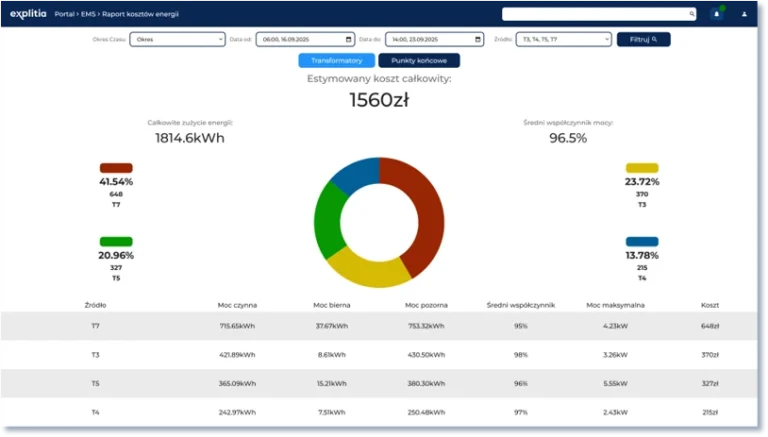
Production orders module
Supports planning, execution, and supervision of production orders, bringing more order to work on the shop floor.
More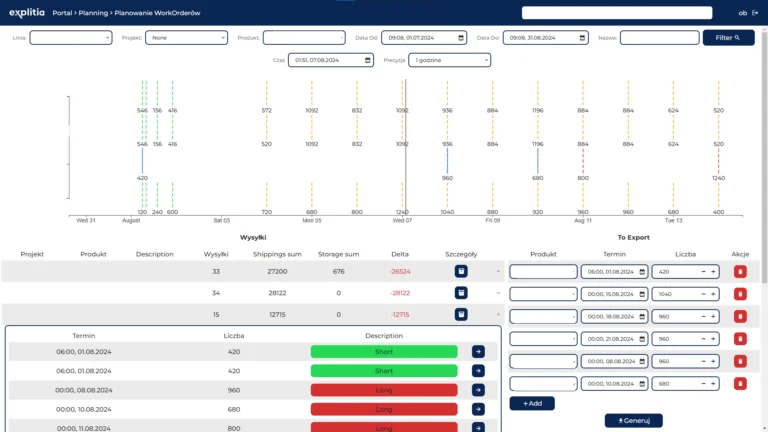
OEE module
A module for monitoring and analyzing production efficiency that helps identify losses and improve machine and production line performance.
More
Predictive maintenance module
A solution that analyzes machine data, predicts failure risk, and helps reduce unplanned downtime.
More
QSystem module
A module supporting quality management in the production process that makes it easier to record non-conformities, corrective actions, and quality control data.
More
SPC module
A tool for statistical process control that lets you analyze production parameters continuously and detect deviations faster.
More
eKanban module
A digital system for handling material replenishment signals in production that organizes material flow, speeds up logistics response, and helps reduce downtime on the shop floor.
More
Most of these can also work as separate products. If your current infrastructure already covers some of these areas, we can help you expand it based on what your production needs.
Dedicated solutions within the Production Portal
Alongside ready-made products, the Production Portal also includes dedicated solutions built around the real day-to-day work of your plant
These include:
Traceability module
A module that lets you track the flow of raw materials, components, and product batches at every stage of the production process.
More
Forms module
A module for digitally collecting operational and quality data that organizes manually entered information and eliminates paper-based document flow.
More
LIMS module
A system supporting laboratories and quality teams that improves management of tests, results, and sample control.
More
Production module
Automatic production recording. A module that supports supervision of production execution, organizes shop floor data, and makes daily production management easier.
More
WMS system
A system for warehouse management that improves inventory control, material movements, and internal logistics operations.
More
APS system
A system for advanced production planning and scheduling that helps you use resources better and shorten production order lead times.
More
Integration module
An integration module that connects different systems, such as ERP, and multiple data sources into one consistent ecosystem supporting production management.
More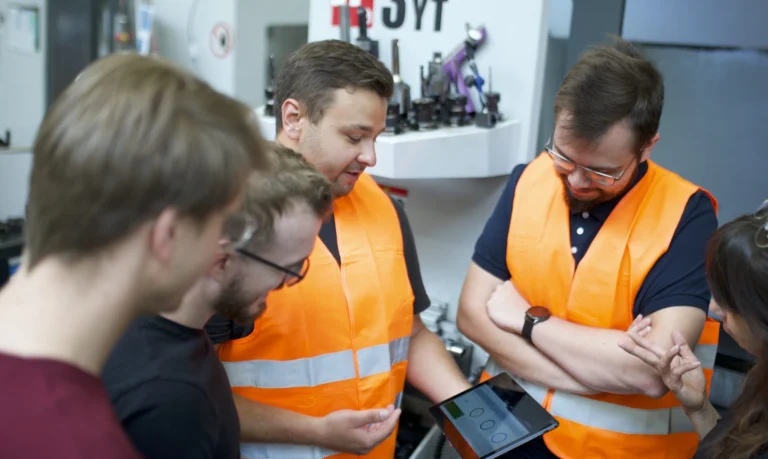
How the MES system works in daily production?
A good MES system should support your work every day. It should help you organize production, not just collect data for a report at the end of the shift.
The Production Portal gathers information from:
- industrial automation
- PLCs
- sensors
- ERP systems
- other applications used in your company
- forms and operator panels
All data goes into one place where you can analyze it, visualize it, and use it to make decisions.
This way you can spot a problem, downtime, or deviation before it escalates. You can react while there is still time to stop the issue from spreading through the process.
Main system modules
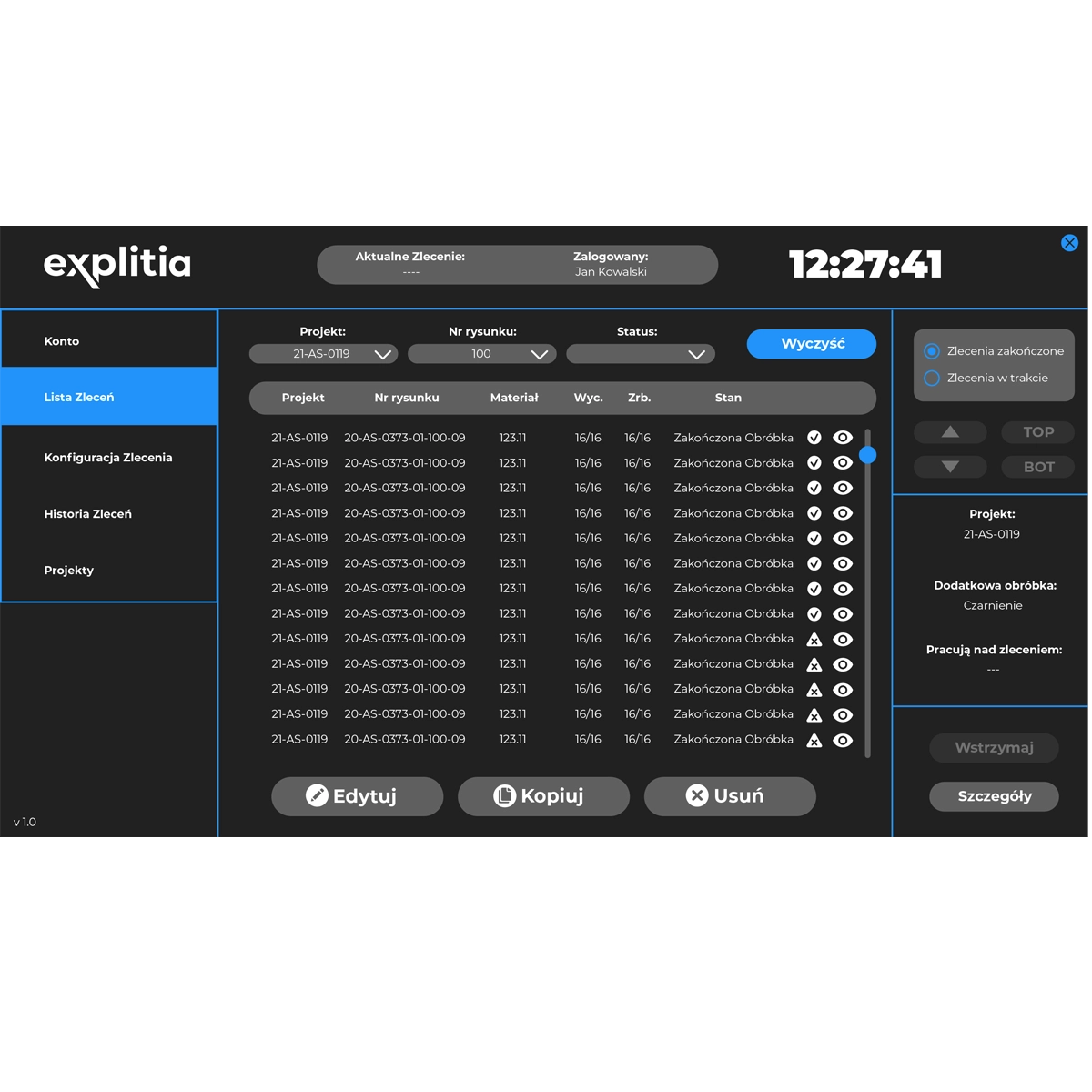

Production planning and scheduling
Production needs a clear plan. Without it, delays, shifting priorities, and wasted time appear quickly.
The Production Portal helps you decide what should be done, when it should be done, and in what order. It becomes easier to assign tasks, use resources well, and keep control over production orders.
You get more predictability and fewer last-minute changes.
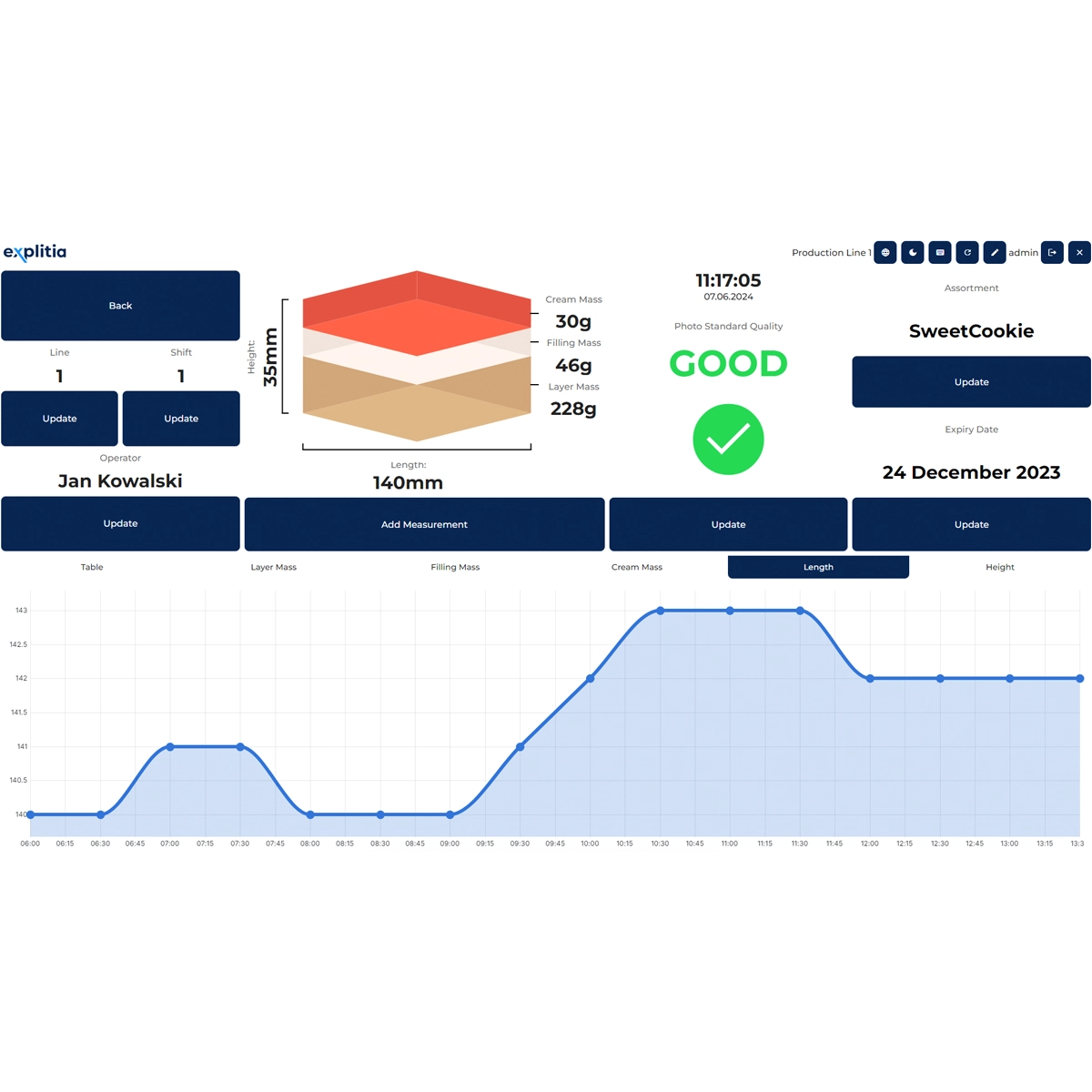
Data collection and visualization
One of the biggest benefits of a MES system is having a full picture of production in one place.
The Production Portal monitors measurements and operating parameters from equipment and machines. It lets you review historical data, track production stages, monitor raw material availability, and send alerts when something needs attention.
You also get an operator panel that lets people enter data directly at the workstation.
It equals less manual work, less searching for information, and a clearer process from shift to shift.

Production monitoring and OEE
If you want better performance, you need to see what is happening on the shop floor at present.
The Production Portal gives you a live view of the process and forms the basis for OEE analysis, showing how efficiently machines and production lines are working.
You can more quickly:
- assess actual performance
- check cycle time
- find the causes of downtime
- react to drops in efficiency
When the data is current, your response can be efficient, too.
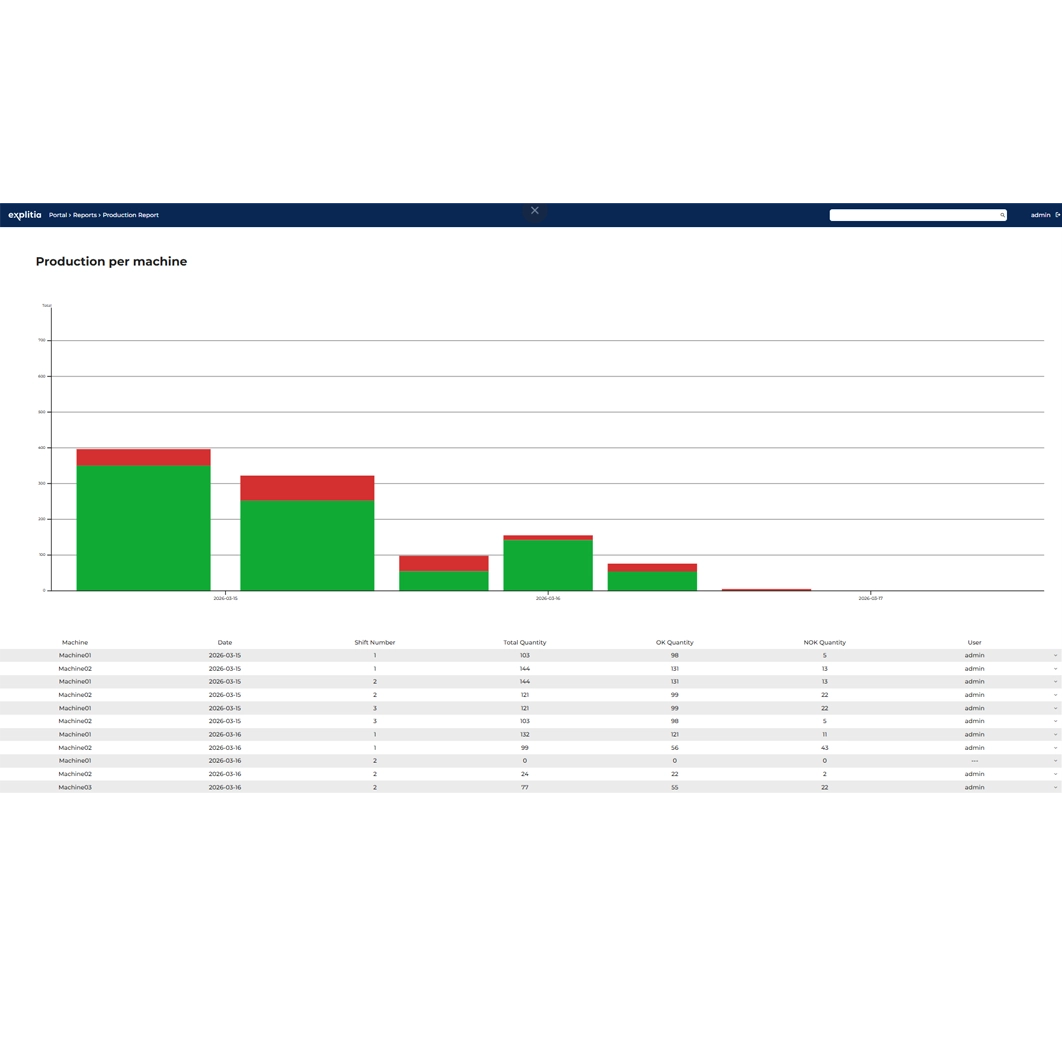
Automatic production reporting
Reporting should not take time away from the people who run production.
The Production Portal collects and stores process data, then presents it in clear summaries and indicators. Reports can be generated automatically from current and historical data.
With this you can:
- reduce manual data entry
- lower the risk of mistakes
- organize the flow of information across the company
Your team can spend less time rewriting the same numbers and more time looking at what those numbers mean.
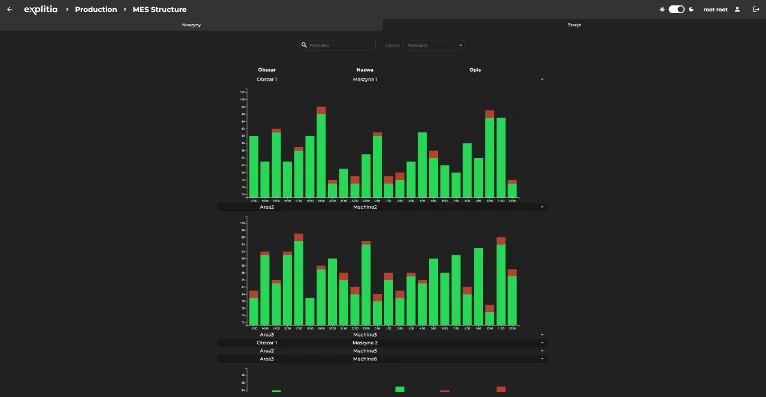
Traceability and product history
In many plants, you need a fast answer to a very practical question. What is this product made of, and what stages did it go through?
The Production Portal supports traceability and lets you recreate the history of a product, batch, raw materials, and process.
This matters when you want to:
- analyze a batch
- explain a quality issue
- prepare data for an audit
- recreate the history of a product
When all this information is in one place, you can act faster and with more confidence.
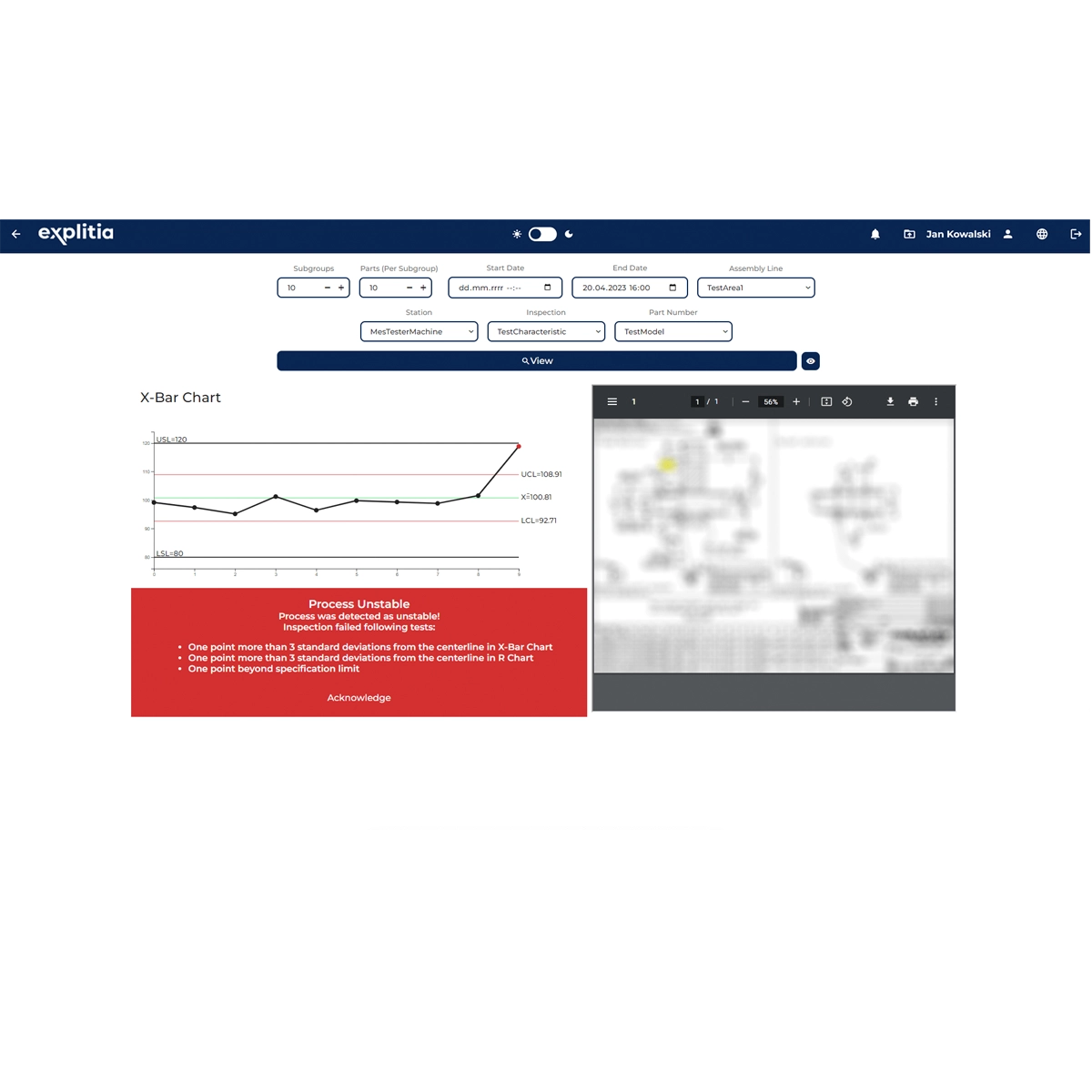
Statistical process control
The Production Portal continuously collects process data and checks it for deviations.
You can notice problems earlier, before they turn into a real quality issue or a production loss.
The result is:
- less waste
- lower risk of defective products
- better control over process stability
The sooner you notice a change in parameters, the sooner you can respond.
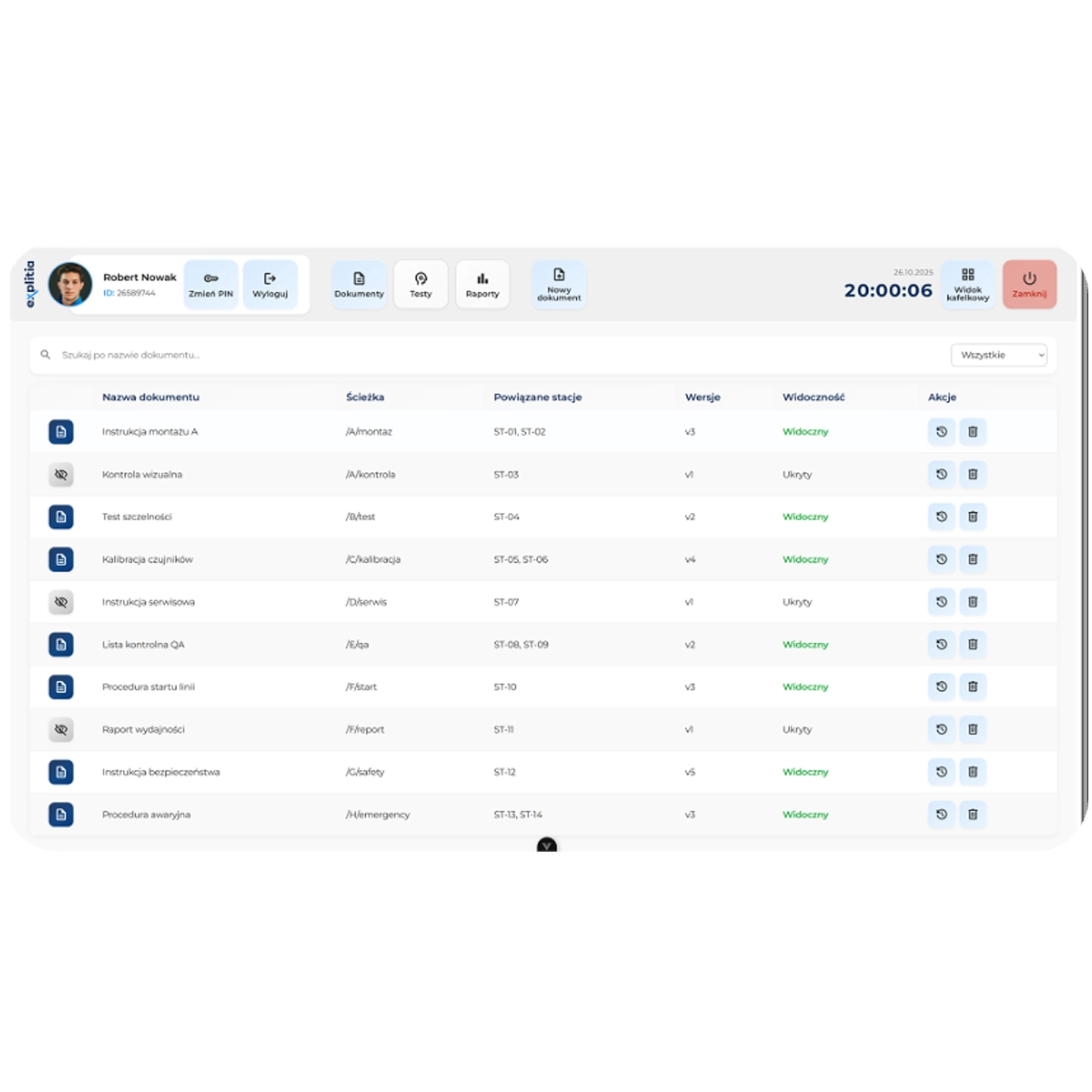
Operator instructions
In many processes, people still have a direct effect on quality and consistency. That is why the Production Portal also supports operators working at manual and semi-automatic stations.
Interactive instructions help keep work repeatable, reduce mistakes, and bring more order to each workstation.
At the same time, the system collects data directly from the process, so you get a fuller view of production, including the stages where manual work still matters.
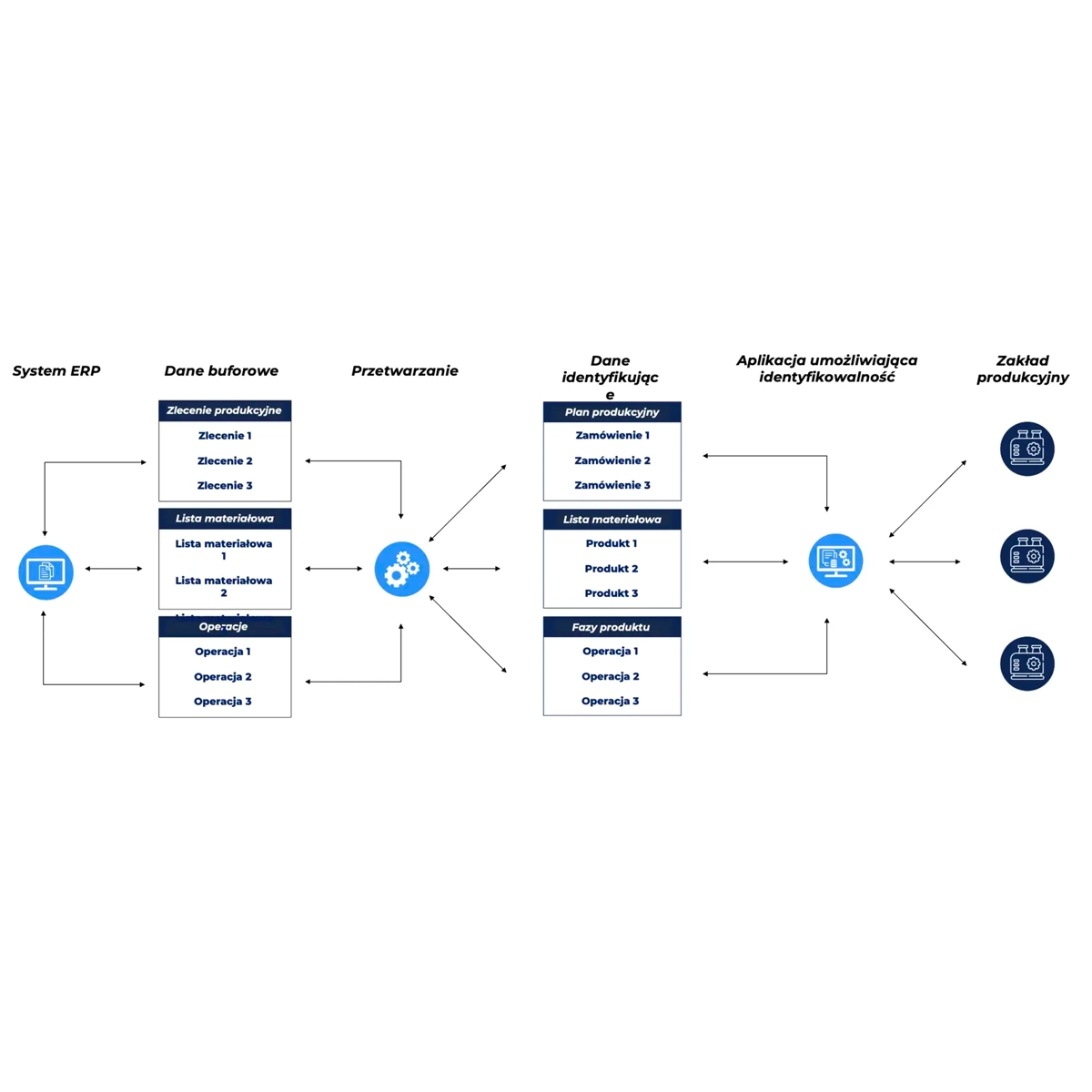
MES integration with ERP and other systems
A MES system shows its full value when it works together with the rest of your company.
You can integrate the Production Portal with ERP and other enterprise systems. Process data can move automatically to the next part of the business.
For you, it means less duplicate work, less manual rewriting of data, and better consistency between production, planning, quality, and management.
Why can this system work well in your plant?
The Production Portal does not cover just one part of production. It is one environment that helps you organize many processes and expand functionality without building everything from the beginning.
Because of that, you get:
| One system instead of many separate tools |
| Support for many areas from one place |
| Easier growth into new functions |
| More standardized implementations |
| A competitive licensing model |
| No per-user licensing |
It gives you a simpler work environment, more consistent data, and more freedom to expand across the company without adding another disconnected tool.

Start with one area and expand the system step by step!
The Production Portal lets you implement one module or a wider scope of functions, from planning and monitoring to traceability and reporting. Write to us and see what the system’s growth can look like in your plant.
What does MES implementation with explitia look like?
Implementation does not have to begin as a large, difficult project. The process is arranged so that your needs come first, and the work follows from that.
Discovery Call
Workshop
Budget offer
Pre-implementation audit
Pilot project
Full implementation
1. Discovery Call
The first step is a conversation in which the team learns about your needs, your industry, and your main production issues.
This is the moment when priorities are set.
2. Workshop
The next step is a workshop. At this stage, requirements, processes, and implementation goals are organized.
It helps you decide where it makes the most sense to begin.
3. Budget offer
After the initial information is collected, you receive an early view of the project’s scope and budget.
You can compare options and plan the next steps.
4. Pre-implementation audit
At this stage, the technical conditions, data sources, existing systems, and the actual process flow are reviewed.
It helps you prepare the implementation properly and reduces the risk of subsequent issues.
5. Pilot project
Before full implementation, you can launch a pilot.
It is a good way to test the solution in practice and see how it works in a real production environment.
6. Full implementation
Once the direction is confirmed, the project moves into full implementation within the agreed scope.
The system can cover one module, several processes, or a larger part of the plant.
After launch, you also receive employee training, technical support, and service support. This means the system continues to work for your business not only at the start, but also when your company grows into new areas.
Who is the Production Portal for?
The Production Portal works especially well where automation, quality, and organized production matter every day, regardless of the industry you work in.
It is a good fit for you if you want to plan production better, respond to downtime faster, organize reporting, and get a clearer view of what is happening on the shop floor.
One system, many ways to grow
Not every company needs a full implementation right away.
Sometimes the main need is OEE, reporting, traceability, or integration with ERP.
The Production Portal can grow step by step. You begin with the area where the effect will be easiest to feel, then add more modules over time based on your needs.
You do not need to replace the whole system or keep adding separate tools that do not work well together.
Let’s talk about Production Portal for your needs!
Do you want to see how a MES system can bring more order to production in your plant?
Talk to the explitia team and find the best place to begin. You can implement one module or build an environment that later includes more processes, departments, and users.