


Synchronize data between systems with explitia.Integration
Connect ERP, production, and plant systems into one clear information flow
Bring your ERP (Enterprise Resource Planning) system, production, warehouse, quality, and supporting systems together, so you can provide smooth data flow between your teams without delays, rework, or confusion.
When information in your facility splits across several tools, people spend too much time re-entering data, fixing inconsistencies, and checking which status is correct.
explitia.Integration brings structure and order to that process. It connects your production environment with ERP and other systems already used in the plant, so information reaches the right place at the right time.
Talk to us and identify improvement areas in your production with explitia.Integration!
We can show you where the module fits exactly in your production environment. Tell us what you do, and we will help you improve it.
What can you gain with explitia.Integration?
You gain a more consistent flow of information across the company, so you can make decisions faster, reduce errors, improve visibility, and maintain better control over planning, execution, reporting, and settlement.
With explitia.Integration, you can:
 Connect production with your ERP and other plant systems
 Organize data exchange across departments
 Reduce the need for manual data entry
 Pass order, production, and quality data between departments faster
 Improve consistency between planning, execution and settlement
 Create a reliable base for further system development
This module helps your teams work on more consistent data and makes the daily flow of information easier to manage.

What is explitia.Integration?
explitia.Integration is the module responsible for connecting your system with other solutions already running in the plant. Its role is to support integration at the level of data and processes, so different tools can work within one shared information flow.
The focus is Enterprise Resource Planning system (ERP) integration, but the scope can extend further. The module can also connect your production environment with:
- automation systems and PLCs
- warehouse systems
- laboratory systems
- quality systems
- sensors and cameras
- external data sources
- other tools already used in your company
Your systems no longer operate as lonely islands. They become part of a connected process.
ERP integration in your plant
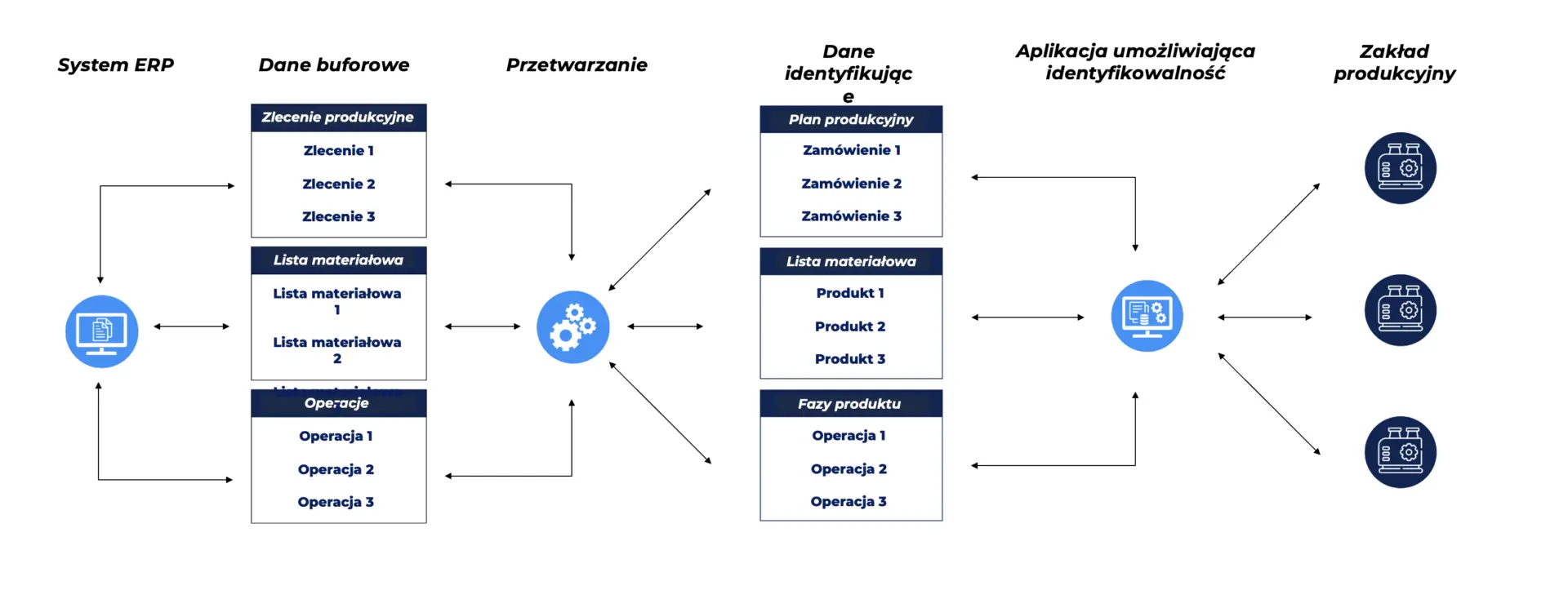
ERP and production systems serve different purposes. ERP supports business planning, order management, materials, and settlement. The production system aids execution, monitoring, and reporting from the shop floor.
You can expect the most value when these systems work together.
That is why ERP integration should cover the full flow of information between planning, production, reporting, and settlement.
A typical process looks like this:
| ERP sends order and planning data |
| The production system manages execution and reporting |
| Progress information returns to ERP |
| Quality, downtime and performance data help improve later business decisions |
Your teams gain a clearer view of what is happening at every stage and improve cooperation between departments.
What are the most important features of explitia.Integration?

ERP connection
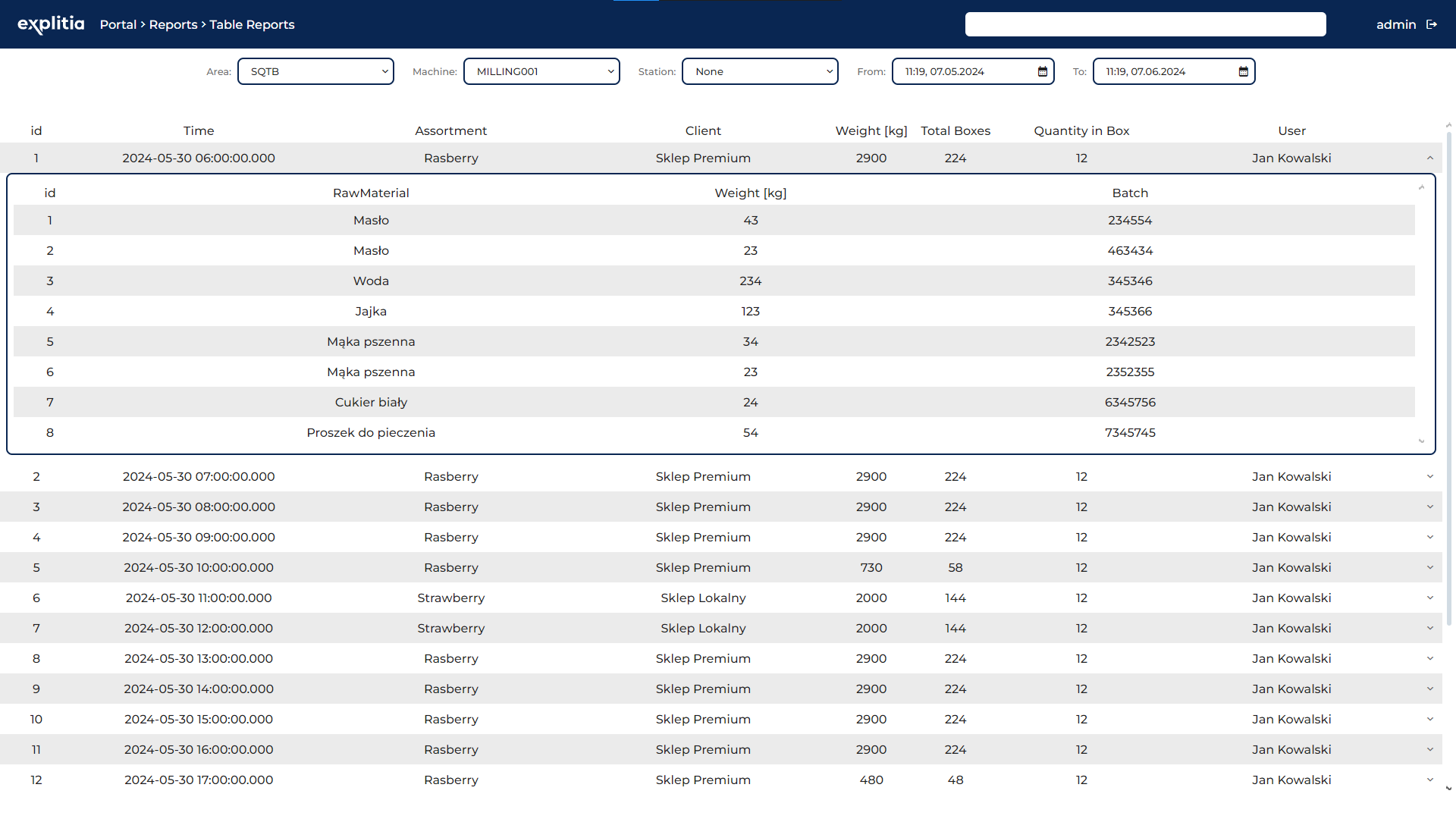
It is the core scenario. The module connects your production environment with your ERP system, so order data, planning data, materials data, and execution data can move between the business layer and the production layer.

Connection with automation and devices
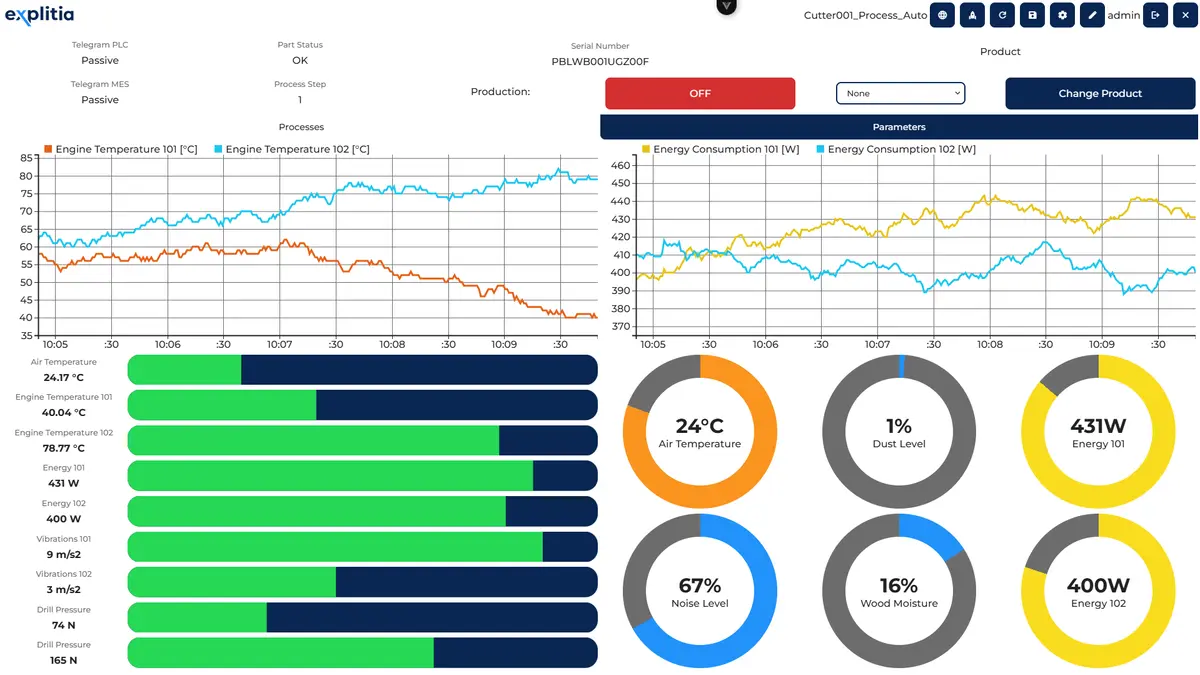
The shared information flow can also include data from machines, controllers, and devices on the shop floor. It matters wherever current process data supports production decisions, reporting, or supervision.
Connection with other systems
explitia.Integration can connect production with warehouse operations, laboratory work, quality, and other systems already used in your company. It helps your departments work with more consistent data instead of separate records.

Communication control
The integration layer can also give you better visibility into communication between systems and more control over which data has been sent, received, or processed.
How data exchange between systems works?
The scope of integration depends on your plant, your processes, and the communication options available in the systems you already use. If another system provides an interface, API, intermediate database, communication protocol, or another technical connection point, it can usually be connected.
Data exchange between systems may include:
- receiving new production orders
- sharing updates on orders in progress
- sending planned completion dates
- returning data on completed orders
- reporting production status
- sending quality data
- reporting downtime and scrap
- exchanging information on machine and factory performance
With this structure in place, data no longer moves through emails, spreadsheets, and manual follow-up. It is delivered exactly where it is needed.

Book a presentation to see explitia.Integration in action!
Actions speak louder than words. Leave us a message and we will show you what it can look like in your plant. Write to us today!
How explitia.Integration supports sales and customer service?
Sales do not stop when an order is entered. To deliver on time and keep communication with the customer clear, information must move efficiently from planning to production and then to settlement.
When ERP integration works well:
- orders reach production faster
- your team can check current order status more efficiently
- delays caused by incomplete or incorrect data are reduced
- production settlement is easier to manage
- your company becomes more predictable from the customer’s point of view
It is important for sales, operations, and customer service alike. Better internal communication helps you give better answers outside the plant.
Business benefits of ERP integration
| Fewer errors | Automatic data exchange reduces mistakes caused by copying and rewriting information manually. |
| Less manual work | Your teams spend less time on repeatable tasks that should not depend on spreadsheets, emails, or repeated input and can focus more on quality and process supervision. |
| Greater control over production | A connected environment makes planning, supervision, production reporting, and settlement easier. |
| Faster information flow | Departments work on more consistent data, which supports quicker decisions and faster reactions when conditions change. |
| Better conditions for growth | Once systems are connected, it becomes easier to expand your environment with new processes, departments, and data sources. |
| Reliable basis for long-term development | Without a solid integration layer, every improvement takes more time, adds more manual work, and increases complexity. With the right structure in place first, further development becomes much easier. |
Why it matters for long-term development?
Many companies want better reporting, better planning, better quality control, or a stronger MES environment, but the issue often starts earlier. The systems involved in those processes do not exchange information in a reliable way.
Without a solid integration layer, each improvement takes more time, creates more manual work, and adds to complexity.
explitia.Integration helps you put the right structure in place first. Once the flow of information is organized, it becomes much easier to expand the environment and connect new areas step by step.
It is where enterprise resources planning works best: not as an isolated business system, but as part of a connected production environment.
How this module works with other areas?
explitia.Integration naturally connects with other areas of the production environment such as:

Production reporting
Returning information about order execution and current production status.
More
Machine monitoring
Performance, downtime, and process data become part of one shared information flow.
More
Quality
Faster inclusion of inspection results and quality requirements in everyday production management.
More
Warehouse
Better control over material availability, easier planning, and lower risk of downtime.
More
MES for production
Access to current production data, so planning and operational decisions are based on the actual course of the process.
More
This module supports the exchange of information between those areas, so your environment works as one connected structure instead of a set of separate tools.
You can also explore related functions in the Production Portal from explitia, where this module can be linked with a broader production ecosystem across your plant.
Is explitia.Integration a good choice for your plant?
This module is a strong fit for you if:
- you already use an ERP and want to connect it with production
- you work with several systems and need a more organized information flow
- you want to reduce manual work with data
- you need morevisibility into order execution
- you are planning to further develop the IT environment in your plant
It is especially useful where production, planning, warehouse, and quality teams all depend on current and consistent information.
See how ERP integration could work in your plant
If you want to assess how Enterprise Resource Planning integration could look in your company, start with the way data travels around your plant today.
Show us how information currently passes between ERP, production, quality, warehouse, and other systems.
We will show you:
| Where you can imrove the organization of the information flow |
| Where you can strengthen data exchange |
| Which connections matter most in your daily operations |
| How our module can efficiently support your teams |
Talk to our team about explitia.Integration!
Want to see how your enterprise resource planning system ERP, production, and plant systems can work together in one organized flow of information?
Talk to the explitia team about explitia.Integration and find out how to connect the systems you already use in a way that supports day-to-day operations, clearer reporting, and better control across the plant.