



Adapt the system to your processes with explitia Platform.Engine
The layer of the Production Platform that keeps the system running behind the scenes
It is where data is collected, organized, secured, and prepared for further use.
explitia.Platform.Engine is the backend of the explitia Production Platform that brings together data, system logic, user access, and event response, and keeps them in one place. It gives you a Production Platform that works in a predictable way and can grow without adding disconnected mechanisms.

Explore explitia.Platform.Engine and see what it can bring to your production environment!
What you gain with explitia.Platform.Engine?
Platform Engine is the backend of the Production Platform that keeps the system running behind the scenes. It is where data is collected, organized, secured, and prepared for further use.
Engine gives you:
 A stable and well-organized system backend
 One central place for data integration
 Secure access and role management
 Data history and a base for analysis
 A built-in notification mechanism
 A system foundation that can grow without technology clutter
Engine is the foundation that lets everything else work in a predictable way and at a larger scale.

The role of Engine in the Production Platform
Engine organizes what sits behind the user screen and decides how well the whole solution works.
This layer:
- integrates data from different sources,
- handles system logic,
- controls access to data and functions,
- stores current and historical data,
- triggers reactions and notifications,
- provides the base for visualization, portal functions, and reporting.
It is the platform engine that connects data collection, analysis, alert handling, and the daily operation of the full environment.
The most important areas of Engine

Drivers - connection with machines and data sources
Drivers are the communication layer for industrial automation, devices, and other information sources.
What you gain:
- connection with machines and devices,
- access to shop floor data,
- automatic data collection,
- a base for monitoring, reporting, and response.
Drivers organize integrations in one place. Data is collected from production sources and immediately passed on for use across the system.
It is where the central place for data integration begins for the whole Production Platform.

Vault - data history and change analysis
Vault is responsible for storing historical data.
What you gain:
- history of parameters and events,
- trend tracking,
- period comparison,
- better analysis of deviations and processes.
With Vault, you can review changes over time, look for the causes of problems, and build reports based on real data rather than only a live view.
It turns single readings into material for analysis and decision-making.

Alerts - notifications and event response
Alerts handle events that require action.
What you gain:
- faster response to irregularities,
- notification of the right people,
- organized alert handling,
- event and action history.
An alert can be sent to the right person, assigned a status, and handled further.
As a result, it shortens the path from problem detection to action and brings order to the way events are handled in the system.

Auth - access, roles, and security
Auth manages access to the system.
What you gain:
- control over who can see and do what,
- role and responsibility assignment,
- secure use of the platform by different user groups.
Everyone works in the same environment, but within their own scope, which helps you organize daily work, reduce the risk of mistakes, and strengthen the security of the whole solution.

Pocket – shared space for current data
Pocket is a shared context for the current data used by the system.
What you gain:
- data consistency across modules,
- faster information flow,
- easier logic and screen building,
- lower risk of data mismatch.
One part of the system saves value, and another part can use it right away.
It keeps data consistent across the whole solution, while different layers work with the same current state of information.

Database - persistent data storage
Database is responsible for the permanent storage of information.
What you gain:
- organized data storage,
- stable operation,
- a base for further system growth.
It keeps order in the data structure and supports the whole solution. Without it, there would be no data persistence and no predictable platform growth.
How explitia.Platform.Engine works
Drivers collect data
Pocket makes it available inside the system
Vault stores the history
Alerts react to events
Auth controls access
Database stores data in an organized way
Because of that, the platform engine works as a consistent layer rather than a set of separate functions. Data has its source, its current context, its history, its access rules, and its place of permanent storage.

See how explitia.Platform.Engine can work in your plant!
Get in touch and we will help you think through and plan the optimal Production Platform rollout for your facility.
Business benefits of implementing explitia.Platform.Engine
Engine helps you ensure:
| A consistent and organized backend instead of many scattered mechanisms |
| Better data consistency |
| Easier system growth |
| Stronger security |
| Faster response to events |
| A reliable base for reporting and decision-making |
It is the foundation of the Production Platform that organizes data, processes, and reactions in one environment. As a result, it becomes easier to keep order, expand the system, and work with reliable information.
How Engine connects with other Production Platform layers
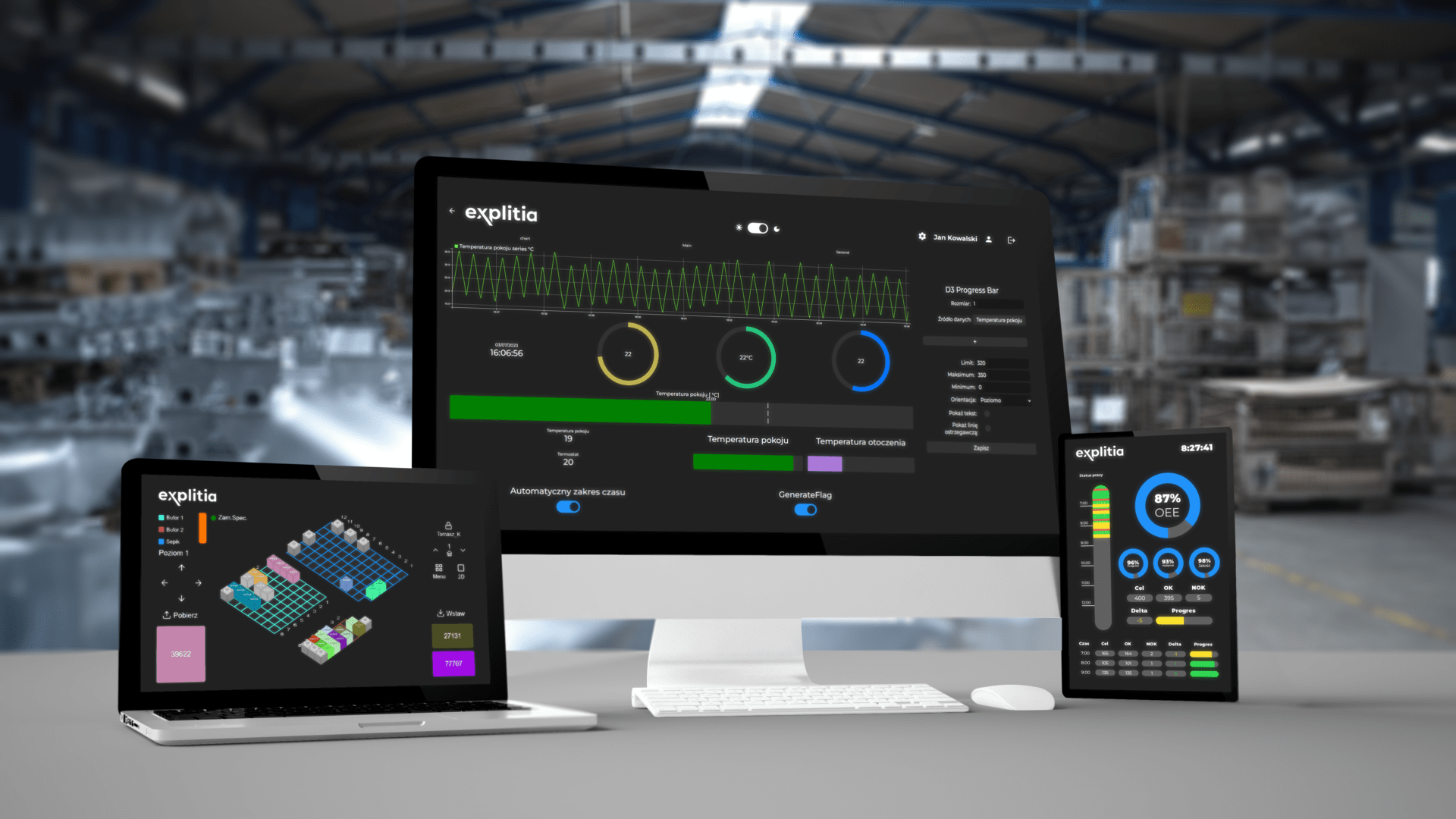
explitia.Platform.Engine does not work on its own. It is the core of the solution used by other layers.
This connection looks like this:


Explore the explitia Production Platform
- See the user layer: explitia.Platform.Presentation
- Check the implementation tools: explitia.Tools
- Explore the full architecture: explitia.Platform
See how explitia.Platform.Engine organizes data and processes behind the scenes.
Let’s talk about explitia.Platform architecture that fits your plant and its daily work.