



MES software tailored to production
Track production in real time, find sources of losses faster and make accurate decisions on the shop floor
MES systems give you an up-to-date picture of production without waiting for the shift report and without manually collecting data from several places. You see order execution, downtime, performance, quality and workstation load exactly when you need it.
At explitia, we implement a MES-class system so that it fits the process, people and way of working in your plant. Sometimes the best choice is a specific module for one area. Sometimes it is a broader environment in which the ready-made platform, Manufacturing Portal, is one of the options. When the process requires its own logic, we also create dedicated solutions.

Check which MES software implementation method will work best in your plant!
Contact our experts and we will help you choose the best solution tailored to your needs.
MES software – What do you gain from implementation?
A well-implemented MES – manufacturing management system gives you:
 Constant visibility into production and order execution
 One place for data from the shop floor, machines and systems
 Faster detection of downtime, deviations and quality issues
 Less manual reporting
 Greater control over traceability and documentation
 Clear data for operational and management decisions
 The ability to implement in stages
You do not always need a broad project right away. Often, organizing one area delivers the greatest value, followed by a calm expansion of the whole environment.

An MES system tailored to your plant
First, we check what is happening in your process and where losses, delays or information gaps occur. Then we tailor the implementation scope to your needs.
We most often work in three models:

Solutions from renowned vendors
We implement and integrate MES software from renowned vendors – including AVEVA, COPA-DATA, MPDV and Siemens. Thanks to many years of experience, we can precisely match the system to the realities of your production.
We work based on open standards, so you can integrate MES with ERP, SCADA and other OT/IT tools.

Manufacturing Portal
This is an option for companies that want to develop several areas in one environment.
The MES software is an important part of the whole here, but not the only one. It is a ready-made solution that gives you a broader range of capabilities and control.

Dedicated solution
It works well where the process is non-standard, requires its own rules, specific screens, extensive integrations or a different way of working than ready-made schemes provide.
Manufacturing Portal or a dedicated solution
One solution for implementing MES software does not fit everywhere. Sometimes the best choice is the Manufacturing Portal, which organizes several areas in one environment. Sometimes a separate module or a dedicated solution for a specific process will be better.
What matters is whether the system truly organizes work and delivers data that can be used every day. Its size is not important when the goal is to respond to the plant’s needs as well as possible.
Key areas of an MES system
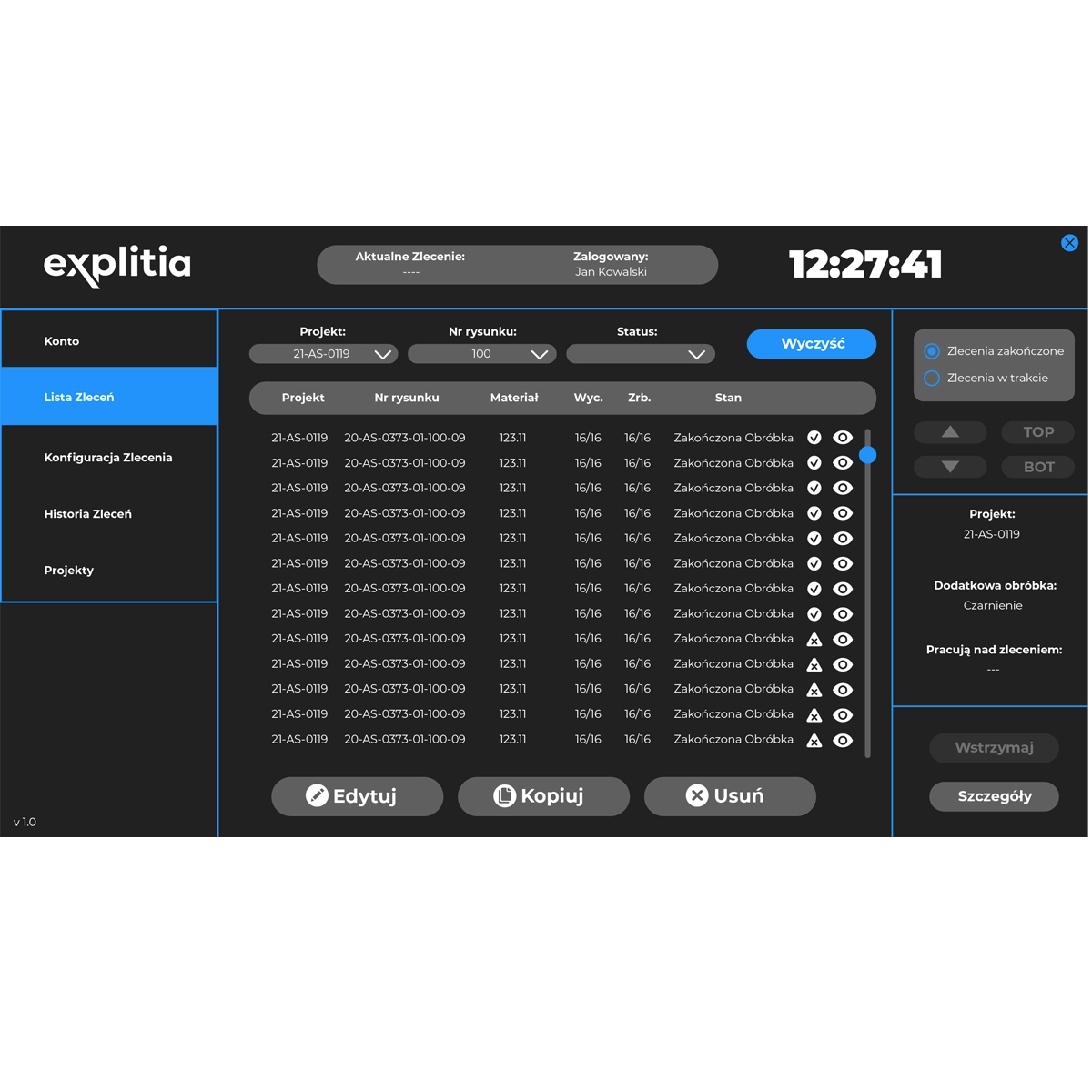

Production and order registration
This is the starting point. A MES-class system records the course of operations and assigns them to orders, workstations, machines and employees. This allows you to immediately see the execution status and detect deviations from the norm faster.
You gain:
- greater order in production data,
- easier settlement of execution,
- fewer information gaps between shifts and departments.

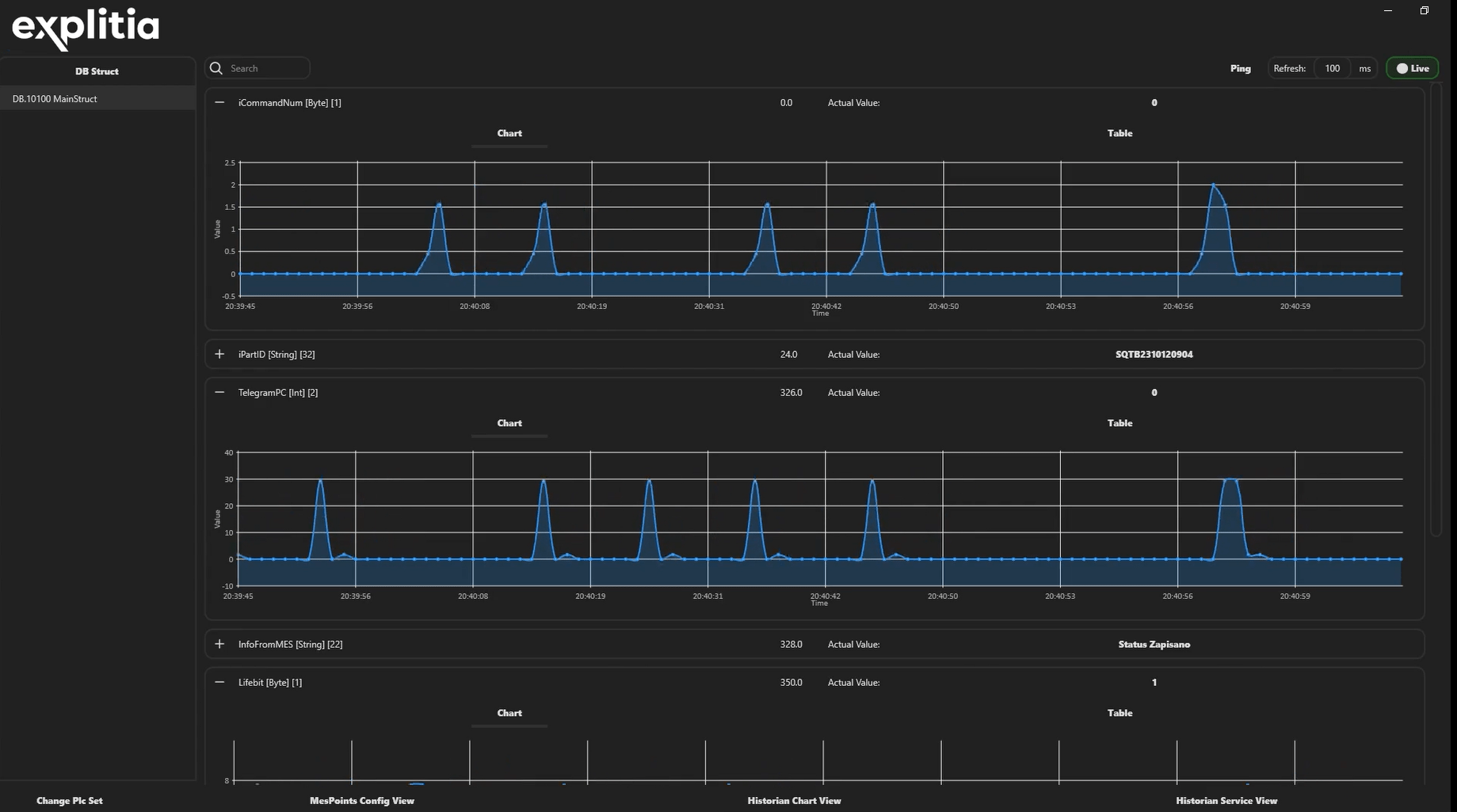
Performance, downtime and OEE monitoring
When data is collected on an ongoing basis, it is easier to determine what lowers production performance. You can see stoppages, micro-downtime, drops in pace and deviations from the plan.
This gives you:
- faster response to problems
- better machine utilization
- hard data for assessing process performance
Traceability and quality
In many plants, it matters not only that a product was made, but also from what, when, by whom and under what conditions. MES software help connect the batch, material, operation and quality control results into one consistent record.
As a result, you have:
- a more complete product history
- easier tracing of the error source
- better preparation for audits
- greater order in quality documentation
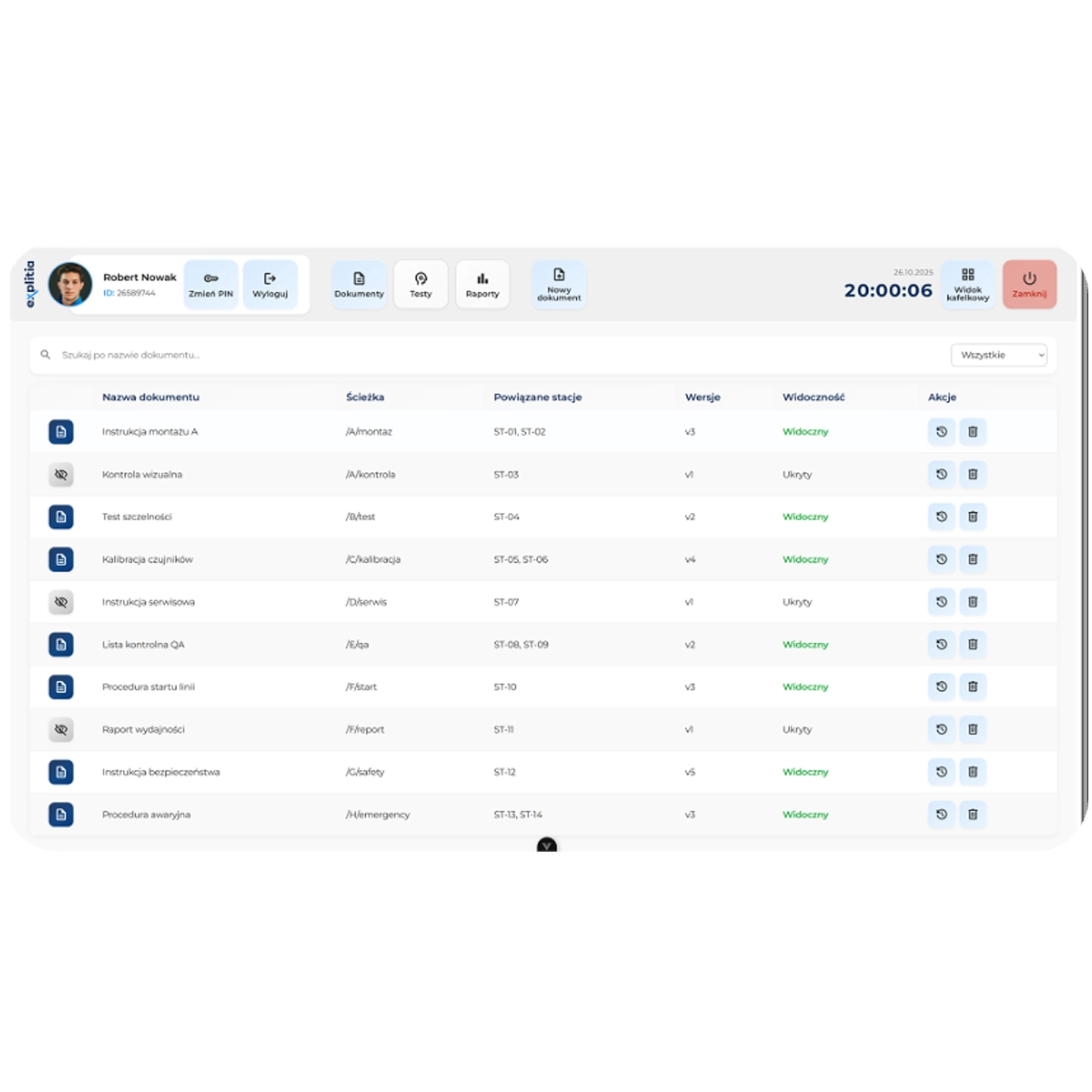
Operator data and documentation
Problems in production often start with small things: an outdated instruction, a paper form, or a lack of execution confirmation.
The system can also organize this area and include:
- workstation instructions
- checklists
- operator forms
- execution confirmations
- quality and technology records
When information is in one place, the number of mistakes decreases and managers can see faster where action is needed.

Integration with machines and automation
A large part of the value of MES software becomes visible when data enters the system without being rewritten. Integration with machines, PLCs, sensors or SCADA provides a more reliable picture of production and organizes reporting.
You will feel the difference when response speed, data quality and process repeatability matter.

Integration with ERP and other systems
MES – manufacturing management system should work with the rest of the IT environment. Especially when exchanging data on orders, materials, execution statuses, operation confirmations or quality.
As a result, planning, production and settlement are consistent with each other, and teams work on the same data.
In which areas will an MES software work best?
The greatest benefits will be gained by companies that:
- want to reduce manual reporting,
- need ongoing insight into production,
- have quality and traceability requirements,
- want to connect the shop floor with ERP,
- plan to develop the system in stages,
- are looking for a solution closer to their process than a rigid scheme.
The system will benefit operators, shift leaders, production managers, quality teams, maintenance, planning and management.

Match the MES implementation model!
Check where it is best to start so that the MES system brings you the fastest and most visible effect in everyday production work.
Business benefits of MES implementation
A well-implemented MES software helps organize the plant’s everyday work and delivers measurable effects:
| Less downtime |
| Fewer reporting errors |
| Shorter response time to deviations |
| Better data quality |
| Greater predictability of order execution |
| More efficient cooperation between departments |
| Clearer reports for management |
Most importantly, you base decisions on the real picture of production, not on guesswork.
Where to start?
The best start usually does not begin with a full implementation for the entire plant, but with understanding which area is currently slowing production down the most.
A good implementation model looks simple:
You choose the area that needs to be organized
You launch the solution within the required scope
You organize data and everyday work
You expand the system with additional functions
This way, you will notice the effect faster and develop the environment without overburdening the process.
What should MES connect with?
It is worth connecting the MES software with areas such as:
OEE
The MES software connects production data with the analysis of availability, performance and quality, enabling ongoing measurement of the real efficiency of machines and production lines.
More
Andon
MES can feed the Andon system with information about downtime, errors, material shortages or process deviations, enabling a quick response from operators and maintenance.
More
CMMS
MES integration with CMMS makes it possible to automatically transfer information about failures, downtime and machine condition to the maintenance management system.
More
Traceability
MES collects data on batches, raw materials, operations, operators and process parameters, creating a full product traceability path.
More
Production reporting
MES automates the collection of production data and transforms it into reports on order progress, performance, losses, quality and resource utilization.
More
ERP integration
MES software retrieves orders, recipes, indexes and planning data from ERP, and then returns information on production execution, material consumption and order status.
More
SCADA
MES integration with SCADA enables data collection directly from machines, controllers and process visualizations, so that production decisions are based on real operating parameters.
More
Dedicated software
MES can be developed or integrated with dedicated applications tailored to specific processes, industry requirements and the working methods of a particular plant.
More
Manufacturing Portal, partner implementations and dedicated solutions
We want the MES software to meet your expectations and support your production as effectively as possible.
As an independent technology advisor we do not sell one solution – we select the best one.
Based on an analysis of processes and production needs, we indicate whether it is worth choosing a ready-made MES system from a recognized vendor, expanding an existing tool or creating a dedicated solution.
That is why our offer includes our proprietary platform, dedicated solutions and integrations from trusted partners, such as AVEVA MES.
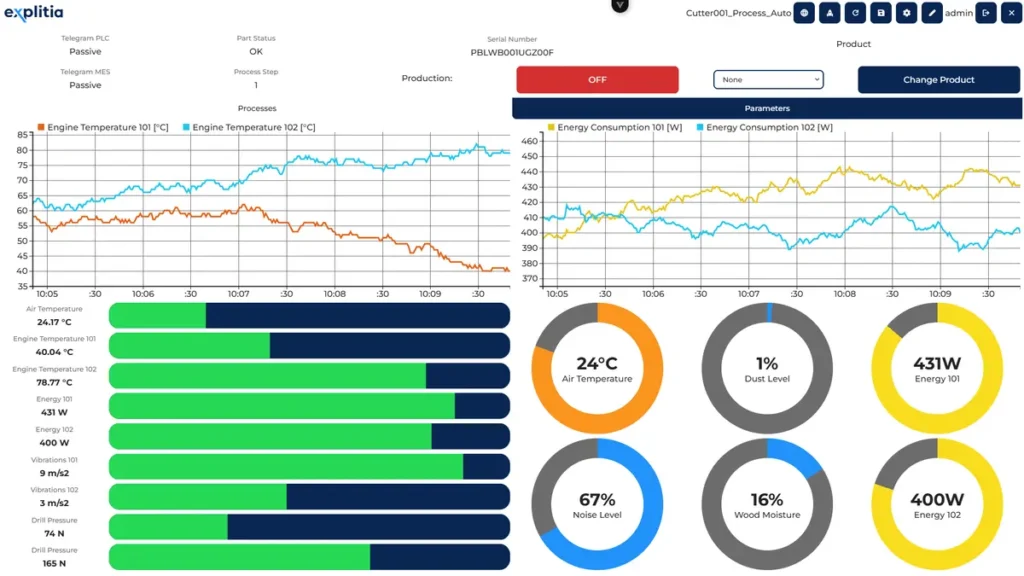
Check what MES makes sense in your plant!
Do you want to organize production, start with one module or plan a broader environment?
Talk to us about whether, in your case, the best choice will be a point implementation, the Manufacturing Portal or a dedicated solution. We will select a scope that makes sense for the process, not just one that looks good in a presentation.