



AVEVA Enterprise Integration
AVEVA Enterprise Integration helps you automate data exchange between production and business systems, so information moves where it should, when it should. It creates a reliable integration layer between MES, ERP, and other enterprise applications, giving you cleaner data, fewer manual steps, and better control across your plant.
At explitia, we use AVEVA Enterprise Integration in manufacturing projects where disconnected systems slow teams down, create reporting gaps, and make production harder to manage than it needs to be.
AVEVA Enterprise Integration supports the development of a stable integration architecture in which production and business data can be processed in an organized and predictable way.
The solution makes it possible to eliminate manual information transfers, reduce the risk of errors, and prepare the environment for further automation and operational analytics development.
Thanks to a properly designed integration layer, the company gains greater data consistency and better control over the flow of information between MES systems, ERP, and applications supporting production.
In integration projects delivered by explitia, the solution is used as an intermediate layer between production and business systems.

Book a consultation and see how AVEVA Enterprise Integration can support your plant!
Contact us and let’s talk about how AVEVA Enterprise Integration can improve the flow of information between MES systems, ERP, and applications supporting production.
What is AVEVA Enterprise Integration and when is it needed?
The implementation of AVEVA Enterprise Integration is aimed at organizing data exchange and improving information consistency between systems operating within the company.
The solution is particularly useful in situations where:
 Production data is scattered across different systems
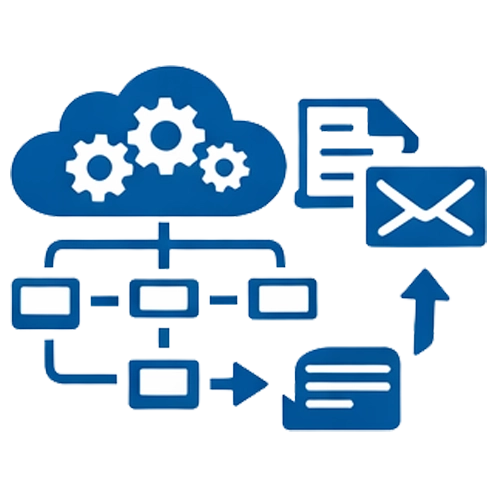 The company wants to automate information flow and eliminate manual data transfer and the risk of errors
 Centralized data processing is required
 MES and ERP integration becomes critical for production execution
Thanks to flexible configuration, it is possible to create integration scenarios that reflect the actual architecture of the production environment.

How AVEVA Enterprise Integration supports production data exchange?
Production data exchange works best when the flow is consistent, timely, and clear. AVEVA Enterprise Integration helps organize that flow between production applications and business systems.
Typical use cases include:
| Sending production orders from ERP to MES |
| Sending production progress and completion data from MES to ERP |
| Synchronizing BOM data and production parameters |
| Exchanging material, process, and execution data |
| Collecting information for performance monitoring and operational reporting |
It helps your teams work with the same data across departments instead of reconciling conflicting records later.
What Communication Methods Does AVEVA Enterprise Integration Support?
AVEVA Enterprise Integration supports common data exchange methods used in manufacturing IT and OT environments. Depending on your system landscape, integrations may include:
- SQL databases,
- web services,
- business system APIs,
- message queues.
It enables connecting different databases, servers, and software components within one integration model built around your operating environment.
The goal is not to force your systems into a rigid template. The goal is to create a data exchange structure that fits the reality of your plant.
Possible communication scenarios include:

MES-to-ERP integration
The solution supports integration of MES with ERP, enabling automatic transfer of order data, production execution data, and process parameters.

Communication with databases, workflow, and enterprise applications
The flexibility of configuration makes it possible to integrate AVEVA Enterprise Integration with databases, workflow, and other enterprise applications operating within the company architecture.

Data processing based on SQL and server mechanisms
It enables efficient exchange, transformation, and synchronization of information between production and business systems.
The flexibility of configuration makes it possible to adapt the solution to the existing architecture and the company’s operational requirements.
In practical project work, this makes it possible to build integrations tailored to the architecture of the systems used by clients.
Why Work with explitia on AVEVA Enterprise Integration?
Technology alone is not enough. The quality of the implementation decides whether the integration supports production or creates more maintenance and confusion.
At explitia, we deliver AVEVA Enterprise Integration implementation services as part of broader manufacturing integration projects. We focus on how data should move in your environment, which systems matter most, and where the real operational risks sit.
Our scope typically includes:
Analysis of data flow across the enterprise
Integration design for MES, ERP, and related systems
Configuration of AVEVA Enterprise Integration
Validation of stability and security
Testing of data exchange scenarios
Post-implementation support
You work with a team that understands industrial environments, production realities, and the importance of accurate data in daily operations.
Bring AVEVA Enterprise Integration into your plant
If your systems still rely on manual transfers, disconnected records, or patchwork communication, it may be time to put a proper integration layer in place.
Talk to our team about your current architecture and see how AVEVA Enterprise Integration can improve data exchange across your manufacturing environment.