

Andon in Lean Manufacturing: What the Andon System Is and How It Works in Production
Problems are part of daily life on the shop floor. A machine stops. Material runs low. A defect appears. Output drops. When your team finds out too late, downtime gets longer, waste grows, and the cost of fixing bad parts rises fast.
That is why the Andon system matters in Lean Manufacturing.
Andon helps you report issues as soon as they appear, show the status of a production line in real time, and react before a small disruption turns into a bigger production loss. It is one of the clearest tools for visual management in manufacturing and a practical way to support quality, flow, and faster response on the shop floor.
In this article, you will learn:
- what Andon is in Lean Manufacturing
- how an Andon system works in production
- what Andon implementation looks like
- what benefits an Andon alert system can bring to your plant
What Is Andon? Definition and Role in Lean Manufacturing
The simplest Andon definition is this: it is a visual system used to signal problems in a production process.
The word Andon comes from Japanese and originally meant lamp or lantern. In manufacturing, it refers to a visual signaling system that shows the current status of a machine, workstation, or production line.
In Lean Manufacturing, Andon supports:
- visual process control
- fast issue reporting
- quick maintenance response
- line stoppage when quality or flow is at risk
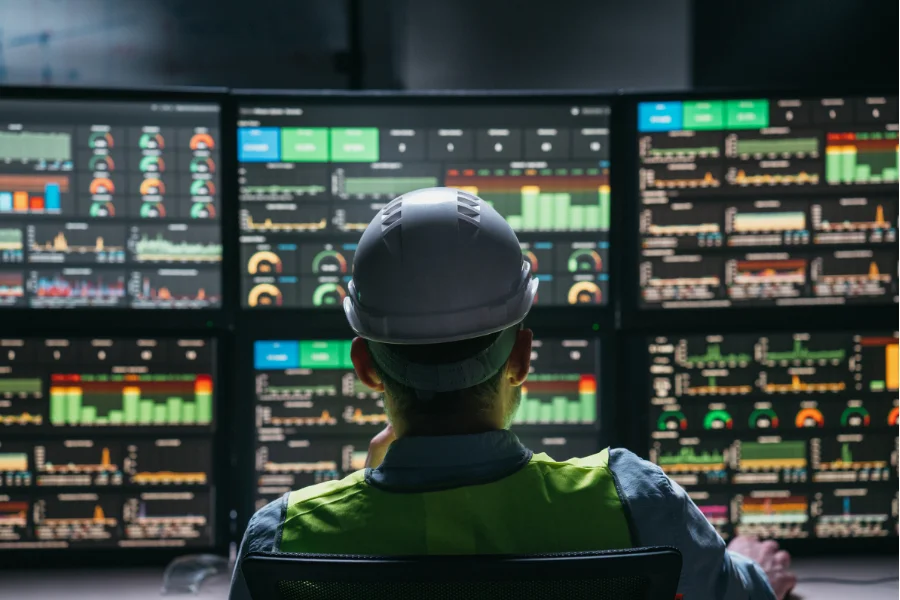
An Andon alert system uses lights, screens, and sometimes sound signals to show what is happening on the shop floor. That means operators, supervisors, maintenance teams, and production managers can all see the situation right away.

Implement Andon in your production plant at no extra cost.
Implementing andon system in your production plant comes with many benefits. Additionally, you can start using it at no extra cost. Go to the explitia.Andon page and gain a customisable andon for your company.
Andon in Lean Manufacturing
Andon is one of the best-known visual management tools in Lean Manufacturing.
Its job is simple:
- report production problems as soon as they happen
- show where the issue appeared
- help the right team react quickly
- protect product quality
In many factories, the system uses buttons, pull cords, stack lights, or digital panels placed at workstations.
When an operator notices a problem, they can report it at once. The Andon system then sends a visible alert so support can reach the right place without delay.
Where the Andon System Comes From
The Andon system comes from the Toyota Production System.
In the 1950s, Toyota engineers saw that early problem detection had a direct effect on quality, cost, and output. Operators on the assembly line were given the authority to signal a problem and stop production when needed.
This was closely linked to jidoka, often described as automation with built-in quality control.
The idea was clear:
- find the problem
- stop the process if needed
- identify the cause
- fix it before work continues
That way of working helped Toyota reduce defects and stop problems from moving to the next stage of production.
How an Andon System Works
A typical Andon system includes a few main elements:
- call buttons or pull cords
- signal towers or stack lights
- display boards
- sound alerts
- reporting and data collection tools
When an operator reports an issue, the system activates a visual or sound signal. The alert shows that a problem has appeared and points the team to the exact workstation, machine, or line that needs attention.
This makes communication faster and removes guesswork from the response process.
Andon Lights and Color Signals
Many factories use a simple light-based setup that is easy to read at a glance.
The most common Andon light colors mean:
Green
Normal operation. The line is running as expected.
Yellow
A problem has appeared and needs attention.
Red
The line has stopped or immediate action is needed.
Some manufacturers also add sound alerts to shorten response time.
In explitia.Andon, you are not limited to three standard colors. You can set up as many statuses and issue categories as you need, so the system can reflect the real conditions of your production process more clearly.

How the Andon Process Usually Works
An Andon system is built around fast reporting and fast response.
In most production settings, the process looks like this:
- An operator notices a problem.
- The issue is reported through the Andon system.
- The system sends a visual or sound alert.
- The right team responds.
- If the issue is not resolved in time, the line may stop.
In some cases, serious failures can also trigger an automatic stop.
That matters because it helps you deal with the issue before it creates scrap, rework, or a longer production delay.
Reporting Production Problems with an Andon Alert System
One of the main reasons manufacturers use Andon is speed.
Instead of looking for a supervisor or calling maintenance manually, the operator can trigger an alert in seconds. That cuts response time and helps your team deal with the issue while it is still manageable.
This helps you improve:
- quality control
- communication on the shop floor
- production efficiency
- response time during downtime events
When output, deadlines, and quality targets all matter at the same time, that speed makes a real difference.
Stopping the Production Process
There are times when stopping the line is the right decision.
This may happen because of:
- a serious machine failure
- a quality issue
- missing material
- operator error
- a safety-related problem
A line stop may look expensive in the moment, but letting the issue continue often costs more. A short stop can prevent a batch of defective parts, damage to equipment, or much longer downtime later.
That is one of the reasons Andon plays such an important role in Lean Manufacturing. It helps you act early instead of paying more later.
Andon Reports and Production Data Collection
Modern Andon systems do more than signal a problem. They also collect production data that helps you see what is happening over time.
An Andon system can record:
- the number of alerts
- response time
- repair time
- issue type
- downtime history
- recurring fault patterns
This data feeds into Andon reports, giving you a clearer view of where time is being lost and where the same issues keep coming back.
For production managers, that means better visibility and better decisions.

Root Cause Analysis
Andon reports make root cause analysis much easier.
With the right data, you can see:
- which machines create the most downtime
- where quality issues appear most often
- which faults repeat
- how long it takes teams to respond and fix the problem
That helps you move past temporary fixes. Instead of dealing with the same issue again and again, you can work on the reason it keeps happening.
Andon Automation
More manufacturers are moving toward automated Andon systems.
Newer setups can connect Andon with machines, sensors, MES platforms, and other production software.
A modern Andon system can:
- detect faults automatically
- send alerts to maintenance or support teams
- collect production and downtime data in real time
- show line status on screens across the factory
That gives you a clearer view of production and shortens the gap between problem detection and action.
Andon System Implementation
A good Andon implementation starts with a clear plan.
In most cases, the project includes a few main stages.
Production Process Analysis
The first step is to review the production process and identify where Andon will make the biggest difference.
This usually includes:
- mapping workflow
- finding common downtime points
- identifying recurring quality issues
- reviewing how issues are reported today
At this stage, the goal is to understand where delays happen and where your team needs faster visibility.
Andon System Design
Next, the system is designed around your production setup.
That includes decisions such as:
- where to place Andon devices
- how operators should report issues
- which alert categories to use
- how reports should be structured
A good design keeps the system simple for operators and useful for supervisors, maintenance, and management.
Andon Pilot Program
Many manufacturers start with one line, one area, or one process.
A pilot program helps you check how the Andon system works in daily production before expanding it across the plant. It also gives your team time to get used to the reporting process and shows whether the alert logic works as expected.
Full Andon System Rollout
Once the pilot confirms the setup, the system can be introduced to other lines and departments.
A phased rollout usually works best because it gives you room to adjust the setup, refine reporting categories, and train teams without causing disruption.
Benefits of an Andon System
A well-planned Andon system can bring clear benefits across production, maintenance, and quality.
Higher Production Efficiency
Faster response to issues reduces downtime and helps keep production moving.
Better Equipment Use
Andon data can support OEE tracking and show where machine availability is being lost.
Fewer Quality Defects
Early problem detection helps stop defects before they move further through the process.
Better Communication on the Shop Floor
Visual alerts make it easier for teams to see what is happening and where support is needed.
Faster Problem Resolution
The right people can respond sooner, which shortens the time between issue detection and recovery.
Better Production Visibility
Managers and supervisors can see trends, recurring issues, and problem areas more clearly.
Andon as Part of Lean Culture
Andon is not only a production tool. It is also part of how Lean Manufacturing works day to day.
It supports a culture where operators report problems as soon as they see them, instead of working around them or passing them to the next stage. Over time, that leads to better visibility, stronger accountability, and more stable quality.
It also supports:
- Kaizen
- ongoing improvement
- stronger quality control
- faster response to production issues
That is why the Andon system remains one of the most important Lean tools on the production floor.
With the right setup, Andon helps you react faster, reduce downtime, and create a production environment where problems are seen early and solved before they grow.

FAQ: Andon System
What is an Andon system in manufacturing?
An Andon system in manufacturing is a visual alert system used to report production problems, show line status, and call for support when an issue appears.
How does an Andon system work?
An operator reports a problem using a button, pull cord, or digital interface. The system then sends a visual or sound alert so the right team can respond quickly.
Does an Andon system stop the production line?
It can. In some setups, the line stops only if the problem is not resolved in time. In others, serious faults can trigger an immediate stop.
What problems can an Andon system report?
An Andon system can report machine failures, material shortages, quality defects, operator issues, maintenance needs, and other events that affect production flow.
What data does an Andon system collect?
Most modern Andon systems collect data such as alert count, response time, repair time, downtime history, and issue type.
Why is Andon important in Lean Manufacturing?
Andon is important in Lean Manufacturing because it helps teams spot problems early, react faster, reduce waste, and protect product quality.
Start improving your production processes with explitia.Andon