

Production Downtime: Where Your Company Loses Time and Money
One stoppage can quickly trigger a chain reaction: delays, rushed schedule changes, production shortages, pressure on the team, and a greater risk of errors. The more often this happens, the harder it becomes to stay on schedule and keep operations predictable.
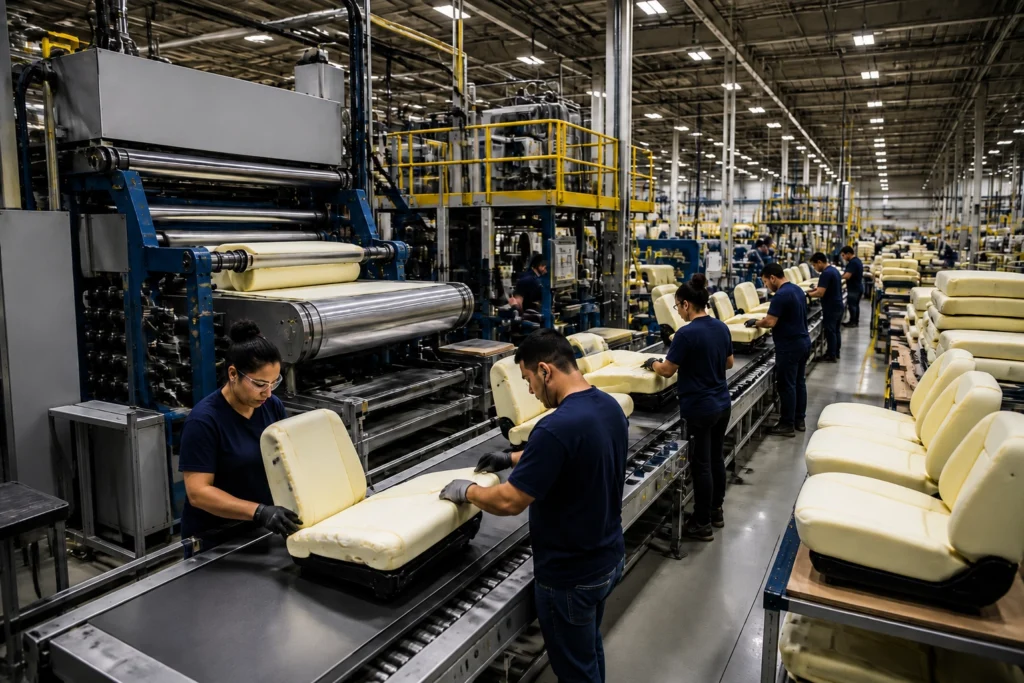
A machine stops, the operator waits, the warehouse is looking for material, and the shift plan starts to fall apart. That is what production downtime looks like on the shop floor, which is why it should not be treated like a normal break in work.
If you want to reduce losses, simply restarting the line is not enough. You need to know what causes production downtime, why it keeps coming back, and how to shorten response time.
What Is Production Downtime?
Production downtime is any situation in which the manufacturing process stops or slows down enough that you can no longer meet the plan as expected. It may affect one machine, an entire cell, one shift, or a larger part of the shop floor.
Most often, it means:
- a machine stopping after a breakdown
- waiting for raw material, a component, or packaging
- an extended changeover
- work being stopped because of a quality issue
- the lack of an operator, tool, or decision
Every minute of downtime lowers productivity and raises the cost of production.
The Most Common Cause of Production Downtime
It is rare for there to be only one cause of downtime on the production floor. In most reports, you see the symptom, not the source. The machine stopped, but what really matters is what led to the stoppage and why no one responded earlier.
1. Machine Breakdowns and Wear
This is one of the main reasons why machine downtime happens. Often, it is not one major breakdown, but small warning signs that were ignored for days or even weeks.
The most common sources of the problem are:
- worn parts
- lack of regular maintenance
- delayed repairs
- no spare parts on site
- fixing the effect instead of the root cause
When a machine has been running louder than usual, losing consistency, or stopping briefly and starting again, downtime is usually only a matter of time.
2. Missing Material and Errors in Job Preparation
The line is ready, people are at their stations, and production is still stopped because one component, label, or package is missing. This is exactly how production shortages begin, and later they have to be made up for at the expense of the next orders.
Most often, this is caused by:
- incorrect inventory records
- a delayed delivery
- a mistake when issuing material
- no information about a plan change
- incomplete material preparation before startup
3. Changeovers That Take Too Long
A changeover itself is not the problem. The problem starts when it takes longer than it should, looks different every time, or begins without tools and materials being prepared in advance. Then time slips away, and shift performance drops before the next batch even starts.
4. Quality Issues
An incorrectly set parameter, a defective batch, a nonconformance detected by quality control. This kind of stoppage hurts twice. You lose time, material, and confidence that the next batch will be safe.
5. Organizational Errors
The machine may be working, the material may be waiting nearby, and the line still does not run. The reason may be simple: no one knows who should make the decision, a report is stuck, one shift did not pass on the information, or the problem is moving from one department to another. In those situations, downtime lasts longer than it should.

How Much Does Production Downtime Cost?
A common mistake is to count only the time when the machine was not running. But that is not the full picture. Production downtime triggers a whole chain of losses.
Its effects may include:
- fewer units produced
- a higher unit cost
- overtime needed to recover the plan
- delayed shipments
- a greater risk of errors caused by working under pressure
- material losses
- tension on the shift
If a line is down for 40 minutes, you are not losing only 40 minutes of machine time, but also operator time, space in the schedule, and the time buffer for the rest of the day. When a similar stoppage happens several times a week, the scale of the loss grows faster than the report itself shows.
How to Recognize That Production Downtime Is Becoming a Permanent Problem
Not every stoppage looks serious right away. First, there are warning signs that are easy to ignore.
Pay attention when:
- the same machine stops for a similar reason
- changeovers regularly exceed planned time
- operators report the same difficulties on consecutive shifts
- production shortages are increasing
- the schedule requires constant adjustments
- maintenance works mainly in emergency mode
- after a quick repair, the problem returns a few days later
That is a sign that you are not dealing with a one-time event, but with a recurring source of loss.

Is production downtime slowing your factory down? Let’s find a way to stop it.
Production downtime can quietly sabotage your operations. At explitia, we know how to help. Work with us to create the right action plan and improve production flow.
How to Reduce Production Downtime
The good news is that most downtime can be reduced. You just need to introduce more structured actions.
Define Clear Downtime Reasons
If everyone describes the problem differently, the report will not show much. One person enters “breakdown,” another enters “no signal,” and someone else enters “line stoppage.” Then it becomes difficult to see what is actually affecting production the most.
It is worth organizing the causes, for example like this:
- breakdown
- missing material
- changeover
- quality
- no operator
- waiting for a decision
- no tool or spare part
That way, you can more quickly see which types of machine downtime happen most often and which ones cost the most.
Respond to Minor Issues Right Away
Many major stoppages begin with a small symptom. A sensor loses its reading, a fitting starts leaking, a guide starts moving with resistance. If those signs are ignored, the machine will stop when there is the least room for it.
Prepare the Changeover Before Stopping the Line
This is often where a meaningful amount of time can be recovered. What helps is:
- preparing tools in advance
- checking material availability
- having a clear sequence of tasks
- dividing responsibilities on the shift
- measuring the actual changeover time
The less improvisation, the shorter the downtime.
Tighten the Flow of Information
Some stoppages last a long time not because the problem is difficult, but because no one knows who should respond. When production, warehouse, quality, and maintenance follow clear rules for action, downtime becomes much shorter.
Keep Control of Inventory and Material Preparation
Production shortages often come from simple oversights: an incorrect inventory level, incomplete material issuing, wrong batch labeling, or a purchase order placed too late. Even a well-maintained machine cannot keep production flowing if the material it is supposed to process is missing.
Look for the Source, Not the Person to Blame
Did the machine stop because of operator error? That still does not mean the operator is the main cause. Maybe training was missing, the instruction was unclear, or the previous shift did not leave any information about the problem. If you focus only on the person, the downtime will come back.

What to Do When Production Downtime Has Already Happened
When the line stops, the most time is lost when everyone acts in their own way. That is why it helps to have a simple response process:
- Report the stoppage immediately and briefly describe the symptom.
- Assign one person to coordinate the response.
- Assess the scale of the problem, meaning the impact on the line, the plan, and shipping.
- Remove the cause, not just restart the machine for a moment.
- Record the event so it can be compared with future cases.
This is a simple way to shorten response time and avoid repeating the same mistakes.
The Biggest Mistake? Getting Used to Production Downtime
You may lose the most when production downtime becomes the new normal. The team assumes that this is just how the machine is, the plan will have to be adjusted anyway, and the issue is considered closed the moment the line starts again.
If production downtime keeps coming back regularly on your shop floor, do not stop at putting out the current fire. Check which stoppages happen most often, how long they last, and what their real cause is. Only then can you reduce losses, make work more stable, and regain control over production.
FAQ – Production Downtime
What does production downtime mean?
It is a stoppage or a significant slowdown in work that prevents the production plan from being completed as expected.
What are the most common causes of machine downtime?
The most common causes are breakdowns, missing material, extended changeovers, quality issues, and delayed technical or organizational response.
Where do production shortages come from?
Most often from planning errors, incomplete inventory records, delayed deliveries, mistakes in material issuing, or losses created during downtime.
How do you determine the cause of production downtime?
You need to check the length of the stoppage, the symptom, the location of the event, the shift, the people involved, and the history of similar cases. Without that, it is easy to confuse the effect with the real source.
See how to stop machine downtime at your facility. Get in touch with us and let’s build a smart action plan together.