

What Is TPM? How Total Productive Maintenance Helps Prevent Downtime Before It Starts
You have a production plan, people on the floor, and orders to ship. Then a machine stops. Sometimes for a few minutes. Sometimes longer. It seems minor in the moment, but by the end of the week, those small stops have piled up. Production loses rhythm, maintenance works under pressure, and the team starts treating that machine like it is just one of those things. That is where Total Productive Maintenance (TPM), comes in.
In lean manufacturing, TPM is one of the core methods used to bring order to machine care, reduce unplanned downtime, and spot issues earlier. Andon also plays an important role here. A standard alone is not enough. Your team also needs a clear way to notice a problem and report it at the right time.
What Is TPM?
The simplest answer to what is TPM is this:
Total Productive Maintenance (TPM), is a way of organizing work so machine condition is not only the job of maintenance, but a shared responsibility across the production team.
It moves you away from the mindset of “we’ll fix it when it breaks” and toward “we take care of equipment so breakdowns happen less often.”
The term Total Productive Maintenance (TPM) matters word by word:
- Total means more than one department is involved, not only maintenance
- Productive refers to machine availability, performance, and product quality
- Maintenance means keeping equipment in a condition that supports stable production with fewer disruptions
At its core, TPM helps you build a more predictable, less stressful production environment.
Total Productive Maintenance (TPM) in Lean Manufacturing: Why It Matters
Lean focuses on removing waste. Some of the most expensive waste on the shop floor comes from machine breakdowns, short stops, speed losses, and quality problems caused by equipment condition.
That is why TPM in lean manufacturing matters so much.
You can have schedules, work standards, and output goals. But if your equipment keeps letting you down, the team ends up spending the day reacting to problems instead of following the plan.
A well-run TPM program in lean approach helps you:
- reduce unplanned downtime
- improve machine availability
- keep quality more consistent
- cut the number of urgent maintenance calls
- make better use of your team’s time
That affects delivery performance, production cost, and customer trust.
How TPM Changes Daily Work on the Shop Floor
In many plants, maintenance works in reaction mode. Something breaks, someone reports it, a technician rushes over, the issue gets fixed, and a similar problem shows up again a few days later.
Total productive maintenance (TPM) changes that pattern.
Instead of living from one intervention to the next, you create standards, routines, and shared ownership that reach beyond the maintenance department.
In day-to-day work, that usually includes:
- regular machine condition checks
- planned inspections and preventive actions
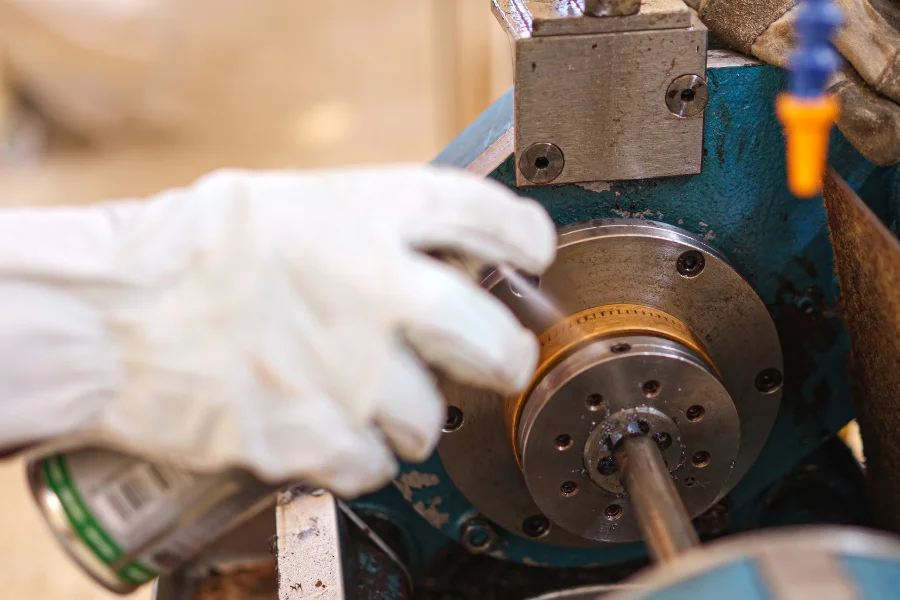
- simple daily care handled by operators
- faster reporting of abnormalities
- looking for root causes, not only symptoms
- clear rules on who responds and when
A machine failure rarely appears with no warning. In most cases, there were earlier signs: a leak, unusual noise, vibration, dirt buildup, rising temperature, or a drop in smooth operation. TPM teaches your team not to ignore those signs.
Andon and TPM: A Strong Pair on the Production Floor
Total productive maintenance (TPM) works best when problems are noticed early and reported clearly. If issues are spotted too late, or the message gets lost, the standard alone will not solve much.
That is where andon comes in.
Andon is a visual system used to signal a problem in production. It can take the form of signal lights, screens, call buttons, or alerts tied to a specific station. Its job is simple: show that something is wrong and needs attention.
When you connect andon and TPM, you get real value:
- the operator is not left alone with the issue
- the team can quickly see where a disruption started
- response is based on a clear rule, not chance
- it becomes easier to separate a small abnormality from a risk to the whole line
- reports can be reviewed later to find patterns and recurring causes
TPM keeps machine care organized. Andon keeps problem reporting organized. Together, they make it easier to catch abnormal conditions early and return to stable production faster.
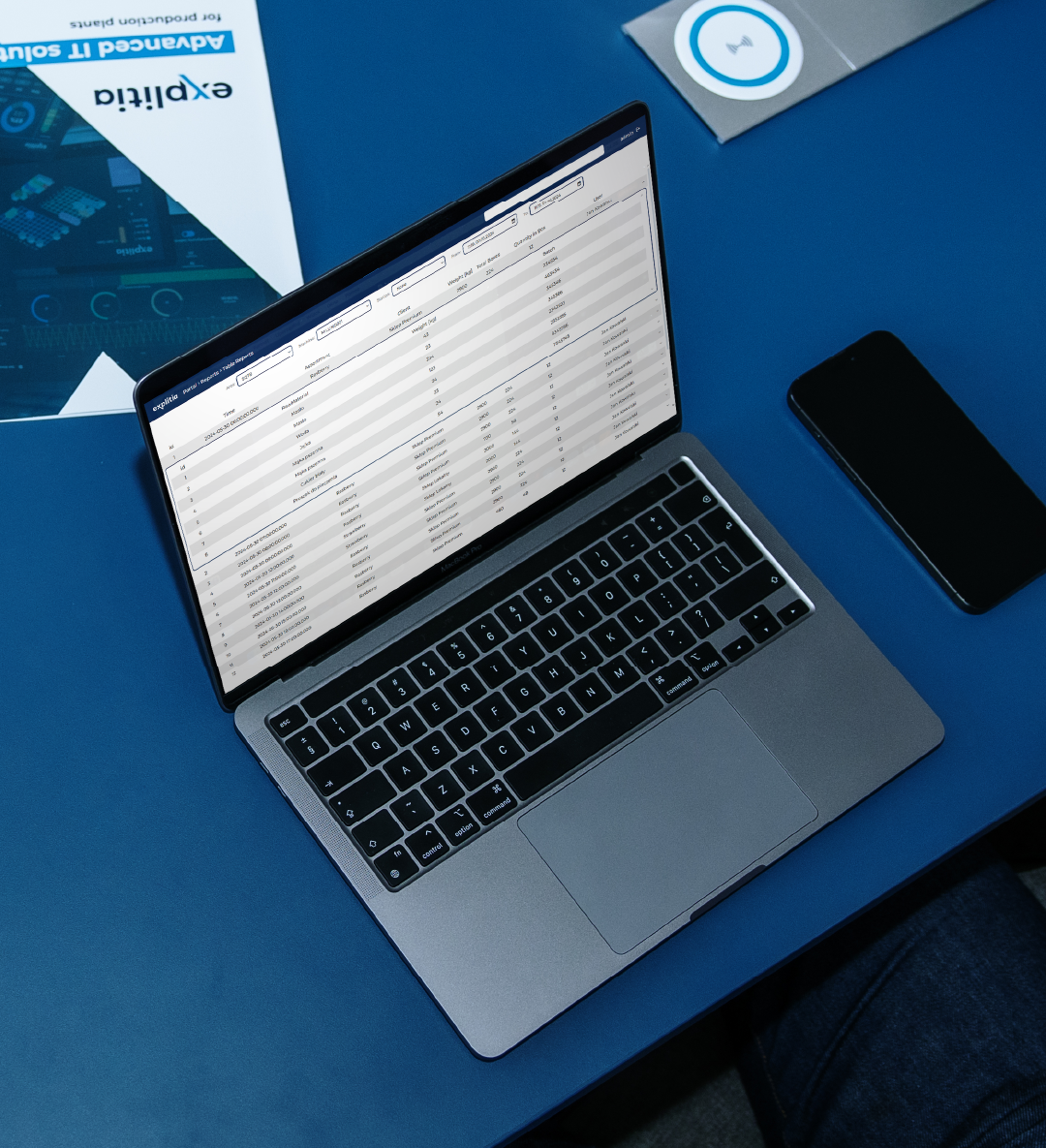
Want a broader answer to the question, what Is TPM? Contact us!
Main Goals of Total Productive Maintenance (TPM)
Good Total Productive Maintenance (TPM) is not just a set of checklists. You should see the results on the floor and in business performance.
The most common results are:
- fewer breakdowns
- fewer stoppages
- higher machine availability
- better product quality
- lower repair costs
- safer work conditions
- less tension between production and maintenance
For your customer, that leads to something very simple: more confidence that delivery dates and product quality are not left to chance.
What Total Productive Maintenance (TPM) Includes
Companies can roll out TPM at different levels, but a few parts show up almost every time.
1. Autonomous Maintenance
Operators handle basic machine care such as cleaning, checking condition, spotting abnormalities, and following clear standards. They do not replace maintenance technicians, but they help catch issues sooner.
2. Planned Maintenance
Inspections, part replacements, and service work are scheduled before failure happens, based on equipment needs instead of last-minute pressure.
3. Root Cause Removal
Fixing the visible symptom is not enough. If the same issue comes back next week, you are still losing time and money. TPM pushes teams to find the source of recurring problems.
4. Skills and Training
Your people need to know what to look for, what to report, and what falls within their role. Without that, TPM stays on paper.
5. Quality and Safety
Machine condition affects more than output. It also affects product quality and operator safety.
Signs You Need TPM
Not every company says the problem out loud. More often, you hear comments like:
- “That machine acts up sometimes.”
- “You have to keep an eye on it all shift.”
- “We’ll get through today somehow.”
- “Maintenance is swamped again.”
- “One stop threw off the whole plan.”
If that sounds familiar, it may be time to look at what TPM is and how it can bring more control to your production floor.
Common warning signs include:
- the same machine issues keep coming back
- operators notice abnormalities but do not have a simple way to report them
- short stops happen often, even if each one seems small
- maintenance spends most of its time on urgent interventions
- it is hard to tell whether the daily plan will hold
- tension between teams rises every time a line goes down
Total Productive Maintenance (TPM) in Manufacturing Is a Daily Discipline, Not a One-Time Project
It helps to see TPM in manufacturing as more than a technical method. It is a way of organizing work so machines run with fewer surprises, operators know how to respond, and recurring problems are not ignored.
It is not something you “do” once in a workshop or a cleanup event.
TPM works when it becomes part of the daily routine:
- each machine has a clear care standard
- abnormalities are visible
- reporting is fast and easy to follow
- response steps are clear
- recurring causes of disruption are reviewed and removed
That is also why andon supports TPM so well. When the signal appears right away, you have a better chance of stopping the loss before it grows.
How to Start Total Productive Maintenance (TPM) and See Results
The best first step is not to launch everything at once. Start with one area that clearly needs attention.
A good TPM starting point often includes:
- choosing one line, machine, or work cell
- collecting data on downtime and recurring faults
- setting a few simple operator tasks
- organizing clear problem-reporting rules
- linking TPM activities with an easy-to-read andon system
- reviewing the most common causes of stops on a regular basis
When the rollout is realistic and well structured, your team is more likely to see the point of it and stick with it.
Less Downtime, More Control with Total Productive Maintenance (TPM)
If you want more control over production, TPM is a strong place to start. It helps you bring order to maintenance work, involve operators in equipment care, and reduce the kind of disruptions that ruin the day’s plan.
When you add andon, problems become visible sooner and response becomes easier and more consistent.
For your business, that means fewer losses, fewer urgent maintenance calls, and more confidence that production will run the way it should. For your customers, it means better on-time delivery, stronger quality, and fewer unpleasant surprises.
FAQ: Total Productive Maintenance (TPM) Questions You May Be Asking
What does TPM stand for?
TPM stands for Total Productive Maintenance.
Is Total Productive Maintenance (TPM) only for the maintenance department?
No. TPM involves operators, team leaders, maintenance, quality, and production management.
Is TPM part of lean manufacturing?
Yes. TPM is one of the main lean methods used to reduce waste linked to downtime, equipment issues, and unstable machine performance.
Is andon part of Total Productive Maintenance (TPM)?
They are not the same thing, but they work very well together. TPM organizes machine care. Andon speeds up problem detection and reporting.
Where should you start with TPM?
Start with one pilot area, a few simple standards, and real data on your most common downtime events.
Now that you know what TPM is, let’s look at how it can support your production. Let’s talk.