

Industry 5.0: What It Means for Manufacturers and How to Prepare for the Fifth Industrial Revolution
Industry 5.0 moves manufacturing digitalization from machines and systems to decisions. Automation, data, AI, and robotics still matter, but their value grows when they help people react faster to downtime, quality issues, schedule changes, and rising costs.
This topic should be on the radar of production directors, operations leaders, and business owners who want to grow their plants without adding more manual work, spreadsheets, and late reports.
Industry 5.0: What Is It?
Industry 5.0 is a model of manufacturing development in which automation, data, robotics, and artificial intelligence support human decision-making. It is not only about higher machine efficiency. It also brings in business resilience, workplace safety, loss reduction, and better use of team knowledge.
It is a shift from simply collecting data to using it in daily decisions: on the shop floor, in planning, quality, maintenance, and logistics.
The Fifth Industrial Revolution builds on Industry 4.0, but changes the focus. Technology should not work next to people. It should help them understand situations faster, respond to problems, and reduce the risk of poor decisions.
The Three Pillars of Industry 5.0
Industry 5.0 is most often described through three areas: people, resilience, and sustainable production.
| Pillar | What It Means for a Manufacturing Company | Example |
|---|---|---|
| Human-centric production | Systems support operators, shift leaders, planners, and maintenance teams | An operator sees not only an alarm, but also a possible cause of the deviation |
| Resilience | The company reacts faster to failures, material shortages, and order changes | The production plan shows the effects of a delayed delivery before the schedule is changed |
| Sustainability | Production reduces waste, energy use, and unnecessary downtime | Data points to the batches, shifts, or parameters that generate the highest losses |
This direction matters when you already have machines, systems, and reports, but still lose time on manual data checks, searching for root causes, or making decisions too late.
Industry 4.0 vs. Industry 5.0
Industry 4.0 gave companies process digitalization, machine-to-system integration, automation, and access to real-time data. That foundation still matters.
Industry 5.0 is the natural next stage because it connects technology with human responsibility for decisions.
| Area | Industry 4.0 | Industry 5.0 |
|---|---|---|
| Goal | Automation and efficiency | Efficiency, resilience, lower losses, better decisions |
| Human role | System user | Person supported by data and technology |
| Data role | Monitoring and reporting | Forecasting, risk analysis, decisions |
| AI role | Automated analysis | Support for planning, quality, service, and safety |
| Business effect | Better process control | Faster response and fewer hidden costs |
The difference is clear in the case of a machine failure. In Industry 4.0, the system can show that a machine has stopped. In Industry 5.0, the team receives earlier signals that the risk of stoppage is growing and can act before the problem affects delivery dates.
Why Is the Fifth Industrial Revolution Speeding Up?
Manufacturing companies face growing pressure around costs, deadlines, quality, and workforce availability. At the same time, the amount of data available from machines, ERP, MES, APS, sensors, quality control, and warehouse systems keeps growing.
The issue is less often a lack of data. Now, the bigger problem is making the right decision on time. The numbers show the scale of the change:
- in 2025, 19.95% of companies in the European Union with at least 10 employees used AI technologies,
- among large companies, the share was 55.03%,
- in Poland, it was 8.36%,
- by 2028, annual new industrial robot installations are expected to exceed 700,000 units.
This does not mean every company needs to invest right away in complex AI projects or full robotization. It does mean that competitive advantage will increasingly depend on who connects data, processes, and human knowledge faster.
What Does Industry 5.0 Look Like in Manufacturing?
Industry 5.0 is easiest to see in daily decisions: at the line, in planning, in quality, and in maintenance.
The Operator Sees the Cause, Not Just the Message
If a system only shows that a parameter has exceeded its limit, the operator still has to look for context.
In an Industry 5.0 model, the operator sees more: batch number, material, shift, history of similar events, machine settings, and possible quality impact. That helps them decide faster whether to stop the process, adjust a parameter, or pass the case to a process engineer.
The Planner Knows the Cost of a Schedule Change
Changing the order of production jobs may look simple, but the effects can be costly: extra changeovers, missing materials, overtime, delayed shipment, or conflict with another department.
Industry 5.0 helps show these dependencies before a decision is made. The planner does not look only at the deadline. They see how the change affects people, machines, materials, and the next stages of production.
Maintenance Acts Before Downtime
Machine data can show that temperature, vibration, pressure, or cycle time is slowly moving away from the norm. The maintenance team can plan an intervention earlier instead of reacting only after the line stops.
The effect may be fewer unexpected failures, less pressure during shifts, and better control over delivery reliability.
Quality Finds Patterns Faster
A quality defect is often affected by the material supplier, machine parameters, changeover, operator experience, temperature, humidity, or time pressure.
Connecting data helps find dependencies that used to be spread across reports, spreadsheets, and employee knowledge. The quality team can move from symptom to source faster.
Industry 5.0 Technologies
Technology choices should come from the problem, not from a trend. In manufacturing companies, the most useful areas are often:
- MES systems, when you need to see production in real time,
- predictive analytics and AI, when you want to detect the risk of failures, delays, or quality issues earlier,
- collaborative robots, when people perform repetitive, heavy, or risky tasks,
- digital twins, when you want to test a process change before introducing it on the shop floor,
- ERP, MES, APS, and machine data integration, when departments work with different versions of information,
- tools for operators and leaders, when you want to shorten response time.
A well-planned implementation should reduce unnecessary tasks, shorten the time spent looking for information, and help people make decisions closer to the place where the problem appears.
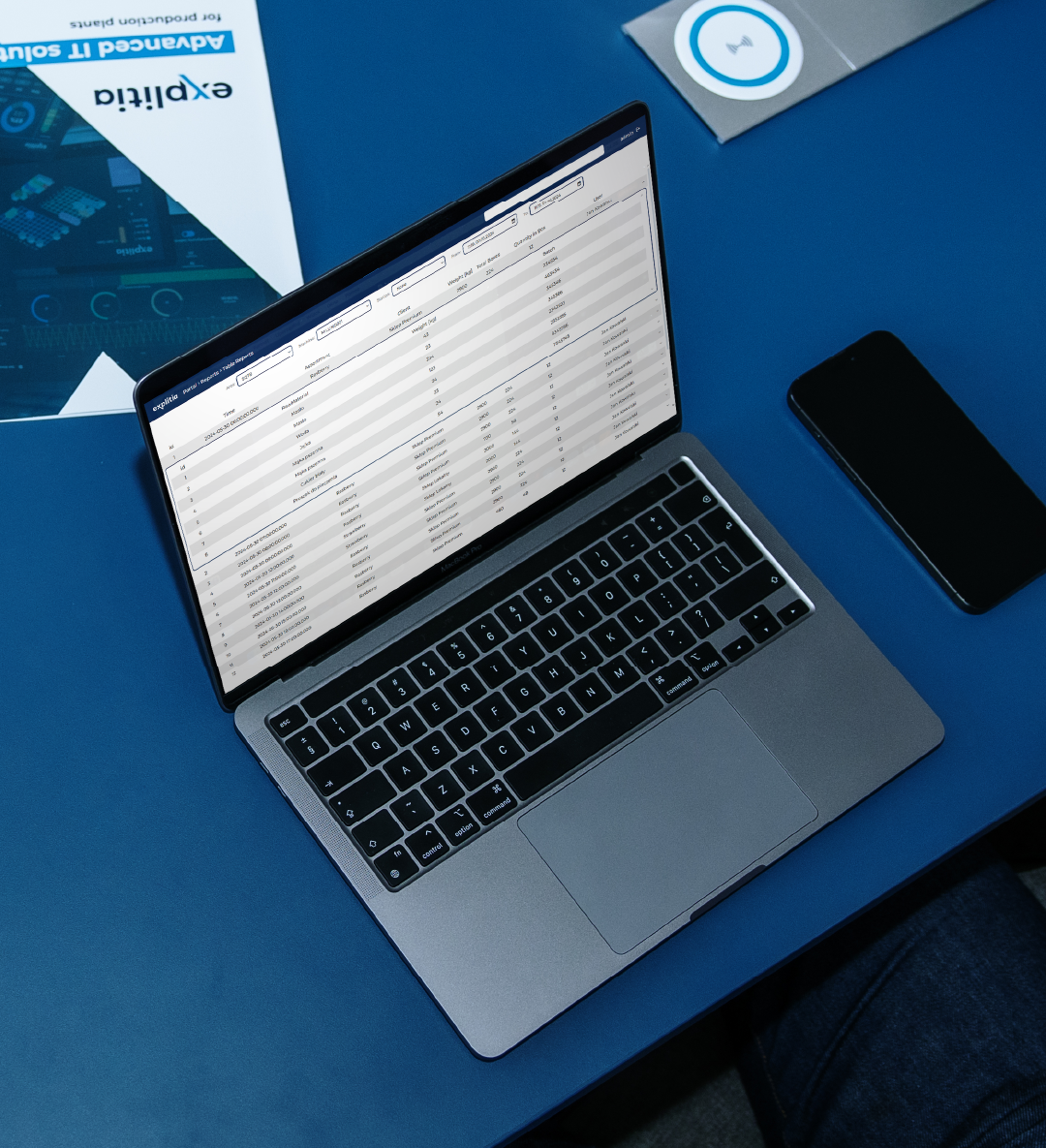
See how to bring Industry 5.0 into your plant.
Choosing technology is not the first step in preparing your plant for the Fifth Industrial Revolution. First, identify the areas where it has the best chance to support your decisions. Schedule a conversation, and we will help you through the process.
Where Does Industry 5.0 Show Its Strongest Value?
The best starting point is a process where you can already see the cost. It does not have to be the largest project in the plant. A well-chosen, limited area is often better.
Good candidates include:
- frequent downtime,
- high waste levels,
- manual production reporting,
- long changeover times,
- delays between plan and execution,
- quality issues,
- no single version of data across departments,
- dependence on the knowledge of a few people.
Technology can help in each of these areas, but only when it is clear which decision it should support.
Example: if a company wants to reduce downtime, an OEE report alone is not enough. The company also needs data on stoppage causes, response time, technician availability, spare parts status, and the effect of downtime on the production plan. A fuller view helps you make a better decision.
Industry 5.0 and People
Automation and artificial intelligence often raise concerns. That is understandable, especially when change is communicated in technical language rather than the language of daily work.
In Industry 5.0, people remain responsible for decisions. Technology should take over tasks that are repetitive, risky, and prone to error. People gain better access to information, a shorter path to response, and more control over the process.
A good implementation should answer employees’ questions, such as:
- what will change in my role,
- which tasks will the system take over,
- what will I still be responsible for,
- how will data help me in my work,
- who do I report a problem to,
- how will the effect of the change be measured.
When the team understands the purpose of the implementation, it is easier to accept new tools. When people only see more screens and extra duties, resistance should not be a surprise.
How to Prepare Your Company for the Fifth Industrial Revolution
The most reasonable starting point is a diagnosis of one process, beginning with a decision that is too slow, too costly, or based on incomplete data. Technology selection comes later.
Start by checking:
- Where do you lose the most time?
Failures, changeovers, reporting, waiting for decisions, explaining errors? - Which decisions depend on single individuals?
If employee experience is not supported by data, the company carries hidden organizational risk. - Is the data reliable?
Manual entries, different spreadsheets, and inconsistent reports make decisions harder than they may seem. - Do systems show the same picture of production?
ERP, MES, planning, quality, and maintenance should work with consistent information. - Does technology reduce the workload for people?
If an implementation adds work instead of organizing it, it is hard to expect a good result.
After the diagnosis, choose a small pilot: one department, one line, one problem. Measure the effect not only in cost, but also in response time, number of errors, waste level, and team comfort.
What Comes Next?
Industry 5.0 and the solutions behind it bring value when they help the company make better decisions faster. You do not need a large transformation right away. What matters is choosing the right place where data and technology can reduce pressure on people and lower losses.
If you are responsible for production, start with one question: which decision in your plant is most often made too late?
That decision can become the base for the first project: organize the data, connect the systems, shorten the response path, and test the effect on a real process.
This is where a technology partner naturally comes in. At explitia, we support manufacturing companies in process digitalization, shop floor data integration, and systems that help people work with one version of information.
We can help you enter Industry 5.0 step by step.
FAQ: Industry 5.0
What Is Industry 5.0?
Industry 5.0 is a manufacturing model in which automation, robotics, data, and artificial intelligence support people in decision-making. Its main areas are human-centric production, business resilience, and sustainable manufacturing.
Does the Fifth Industrial Revolution Replace Industry 4.0?
No. The Fifth Industrial Revolution builds on Industry 4.0. Data, integration, and automation are still needed, but human decisions, process stability, and loss reduction become more important.
Is Industry 5.0 Only for Large Companies?
No. Large plants more often invest in robotics and AI, but smaller companies can also start with one process: downtime, quality, planning, reporting, or changeovers.
Where Should a Company Start With Industry 5.0?
The best starting point is a process that generates a measurable cost. It may be machine failures, waste, manual reporting, slow response time, or inconsistent data across departments.
Prepare your company for Industry 5.0 with our experts. Let’s talk about the next step.
Read the latest industrial insights on the explitia blog.