

Industrial Digitalization: 3 Ways to Make Production More Efficient
Industrial digitalization is the process of implementing digital technologies in manufacturing plants to improve the management of data, machines, orders, quality, and operators’ work. In practice, it includes documentation digitalization, automatic machine data collection, production reporting, ERP integration, and the implementation of MES, SCADA, or CMMS systems. As a result, manufacturing companies can respond to problems faster, reduce downtime, and make decisions based on up-to-date data.
The term digitalization is becoming increasingly important in the context of manufacturing companies’ growth. Industry 4.0 is no longer just a technology trend — it is becoming a direction of change for organizations that want to improve efficiency, reduce losses, and build a stronger competitive advantage.
What is plant digitalization?
This is the process of introducing modern tools and digital technologies into commonly used business mechanisms. Examples of digitaliization include process automation and data digitalization. The digitalization process is becoming a key element that allows production activities to be elevated to a new level. In an era of rapid technological development, the implementation of advanced digital solutions provides the necessary competitive edge. It is a step towards the future, enabling companies to thrive in the dynamic world of industry. The digitization of production plants brings many tangible benefits, which will be explored further in this article.
In a manufacturing plant, digitalization may include both simple improvements, such as replacing paper forms with electronic documentation, and more advanced projects, such as real-time machine monitoring, automated production reporting, quality control, batch tracking, or production order planning based on data.

What Technologies Support Industrial Digitalization?
Industrial digitalization is supported by solutions that connect data from the shop floor, machines, quality systems, maintenance, warehouse operations, and production planning. In practice, these include MES, SCADA, CMMS, APS, machine data collection tools, production reporting systems, and ERP integrations.
Their role is to organize information and make it available to the people responsible for production, quality, logistics, and management. This allows companies to identify bottlenecks faster, monitor performance indicators, and make decisions based on real data instead of manual spreadsheets or delayed reports.

See how digitalization can improve your production plant.
Digitalization is a natural next step in improving your production company. However, it needs to be done carefully. Talk to us and we will lhelp you choose the best solution to fit your needs.
1. Production Data Digitization and Higher Employee Productivity
Digitization is the process of transforming physical objects into their digital counterparts. In terms of data, this involves converting paper documents into electronic formats. The data digitization process not only saves space but also enhances accessibility and simplifies management of the production process. Additionally, digitization offers better security for documents, which are more prone to damage and loss in physical form.
Digitalization in the Context of Workplace Enhancement
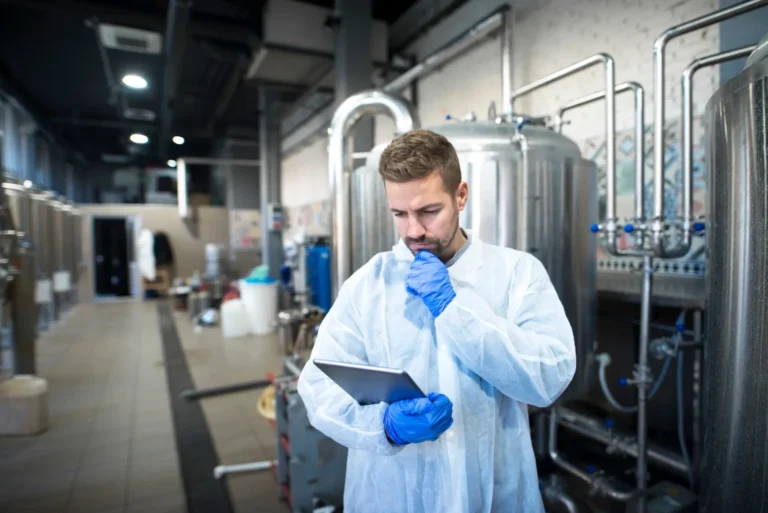
Through digitalization, employees can save time and effort that would otherwise be spent on physically searching for data, allowing them to focus on more important tasks. This improves productivity and reduces procrastination. Documentation can be accessed from anywhere using a mobile device, such as a tablet, which increases access to critical information and tools. Digitization also reduces errors that arise from oversight or missed real-time communications. Quick access to schematics helps overcome spatial challenges, ultimately enhancing workplace safety.
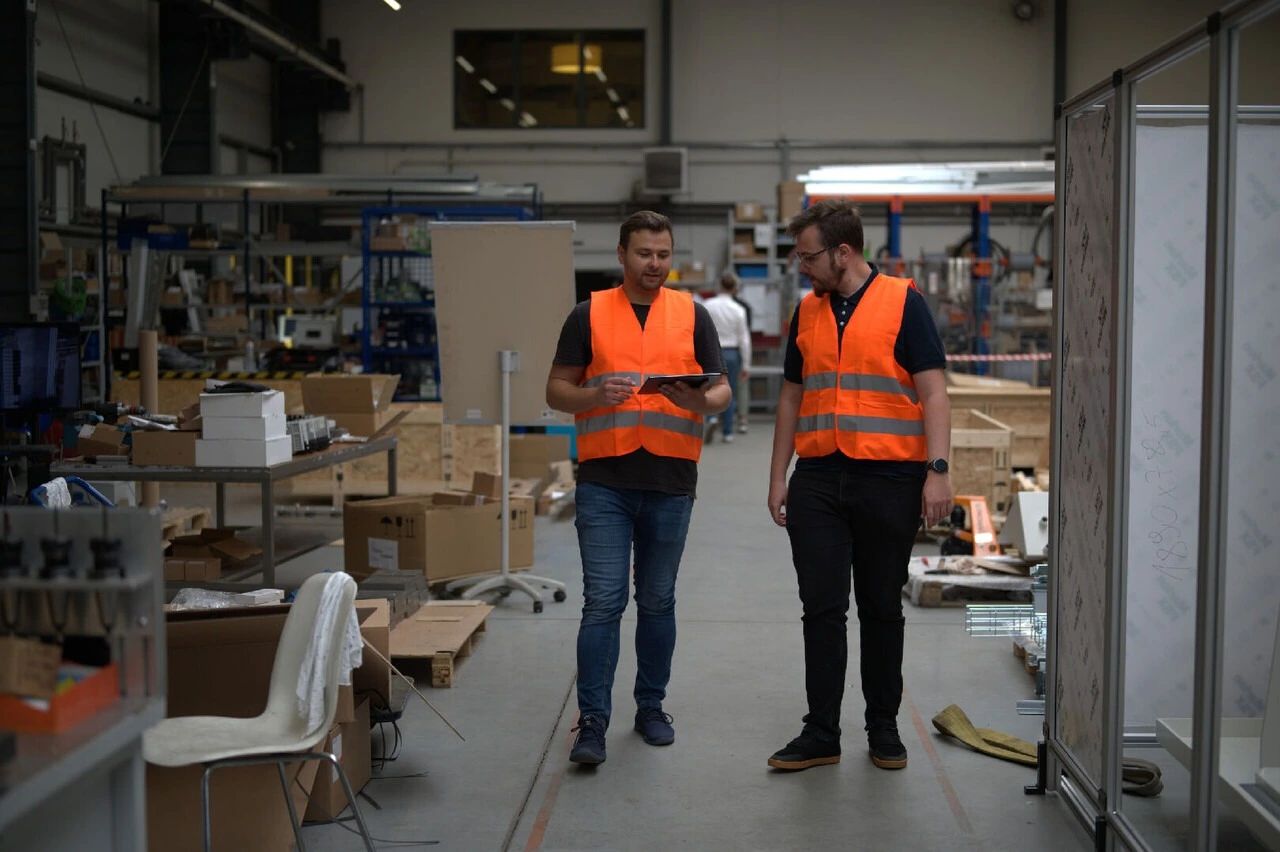
In practice, this means that operators no longer need to search for paper instructions, control sheets, or forms. They can use up-to-date documents on a tablet or operator panel, while data from their work can be sent directly to the system. This reduces the number of mistakes, speeds up the flow of information, and makes it easier to analyze what is happening on the production floor.

2. How Does Production Digitalization Help Improve Plant Efficiency?
Digital integration enables the swift identification of bottlenecks, thereby enhancing production processes by maximizing the potential of the existing machinery. Comprehensive analysis of production data helps a company closely monitor situations and make key decisions, which leads to more prudent management of budgets and resources. The ability to flexibly adapt production to changing market conditions, in turn, boosts the company’s competitiveness.
Less Downtime Thanks to Real-Time Machine Monitoring
With integrated digital data and up-to-date analysis, digital transformation in a production facility enables better management of maintenance schedules. This allows for maintenance to be planned precisely when it is needed, based on current data, thereby avoiding unnecessary downtime. By minimizing such interruptions, companies can prevent drops in product profitability and maintain steady production levels. Additionally, real-time monitoring of machine parameters helps prevent numerous breakdowns, further enhancing both safety and efficiency within the production environment.
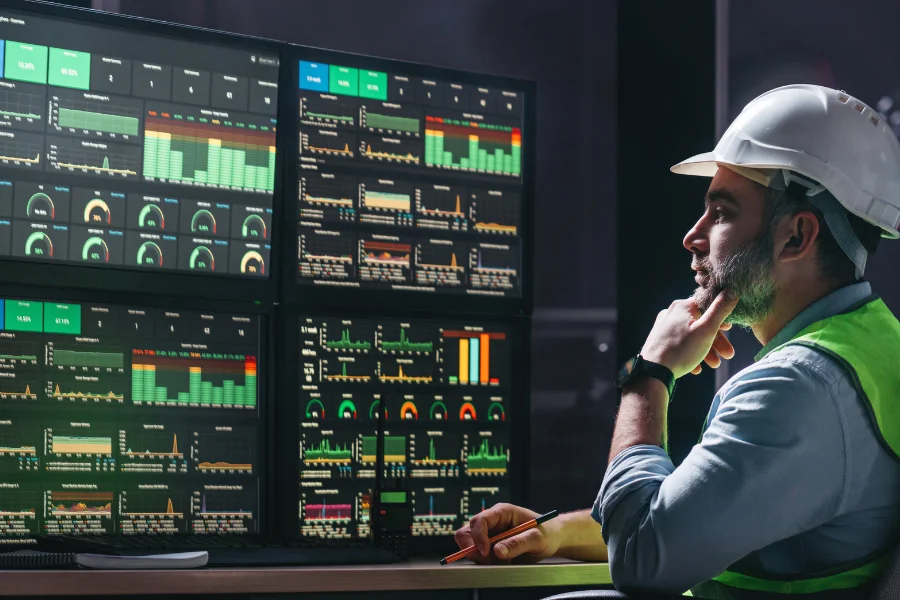
Collecting data directly from machines and production workstations is particularly important. Such data makes it possible to check when a machine is running, when it is stopped, what causes downtime, and how often deviations from the plan occur. This allows production managers to identify sources of losses faster and implement specific improvement actions.

3. Digital Transformation and Better Customer Service
Digitization is an essential step on the path toward the complete transformation of a production facility. The pandemic has shown us how critical it is to move part of the operations online. Online visibility significantly enhances customer relations, as clients no longer need to call or visit the production facility—they can find answers to their questions on the company’s website or through an online chat. Automating response processes with AI or chatbots also reduces the need to involve multiple employees in customer interactions.
In manufacturing companies, digitalization improves customer relationships not only through better online communication, but also through greater predictability in order fulfillment. Access to up-to-date data on production, quality, inventory, and order status makes it easier to answer customer questions and provide faster information about deadlines, changes, or possible delays.
Digitization includes the implementation of solutions in robotics, artificial intelligence, augmented reality, and the Internet of Things. Moving toward full digital transformation is a necessary process for any company. It is wise to get ahead of the competition and start integrating production processes in your business today. To facilitate this, we recommend exploring products like those offered by explitia. They provide clients with a MES Production Portal, a Logistics Platform, and a comprehensive range of IT services to help effectively implement the ideas of Industry 4.0.
For the customer, this means greater transparency, faster service, and more trust in the supplier. For the manufacturer, it means less manual communication, fewer information errors, and better control over the entire order fulfillment process.
Production process digitalization helps analyze, among others:
- machine downtime,
- cycle time,
- production plan execution,
- product quality,
- resource availability,
- workstation efficiency.
If you want to start digitalizing your production, it is worth beginning with the areas that generate the greatest losses or require the most manual work. This may include production reporting, machine data collection, order planning, maintenance, quality control, or integrating production systems with ERP.
At explitia, we support manufacturing companies in designing and implementing solutions aligned with the idea of Industry 4.0, from technology consulting and MES or SCADA systems to dedicated applications for production.
FAQ: Industrial Digitalization
What is industrial digitalization?
Industrial digitalization is the process of implementing digital technologies in manufacturing plants and industrial companies. It includes, among others, machine data collection, documentation digitalization, automated production reporting, system integration, and the implementation of solutions such as MES, SCADA, CMMS, or data analytics tools.
What is the difference between digitalization and digitization?
Digitization means converting data, documents, or forms from paper-based formats into digital ones. Digitalization is a broader concept — it refers to using digital technologies to improve entire processes, such as production, planning, quality control, maintenance, or customer service.
What are the benefits of production digitalization?
Production digitalization helps improve data availability, reduce errors, shorten reporting time, and respond faster to problems on the shop floor. It also supports reducing downtime, improving quality control, streamlining planning, and making decisions based on up-to-date information.
Where should a company start with digitalizing a production plant?
The best starting point is to analyze current processes and identify areas where the company loses the most time, data, or resources. In many cases, the first step is to implement production reporting, machine data collection, documentation digitalization, or an MES system in a selected area of the plant.
Does industrial digitalization require replacing machines?
Not always. In many cases, digitalization can begin without replacing the entire machine park. Existing machines can often be integrated with systems for production monitoring, reporting, downtime analysis, or data collection. The scope of implementation should depend on the company’s goals, infrastructure, and technological maturity.
What technologies support industrial digitalization?
Industrial digitalization is supported by technologies such as MES, SCADA, CMMS, APS, IoT solutions, machine data collection tools, production reporting systems, digital forms, electronic work instructions, and ERP integrations. Their role is to organize information and provide better control over production processes.
Is production digitalization profitable for small and medium-sized companies?
Yes, production digitalization can also be profitable for small and medium-sized companies, as long as the implementation is adapted to the real needs of the plant. Companies do not have to start with a large project covering the entire organization. Often, it is enough to begin with one area, such as production reporting, downtime monitoring, or documentation digitalization, and then gradually expand digital solutions.
Let's talk about the digitalization of your production plant.
Read about new technologies in production on explitia blog.