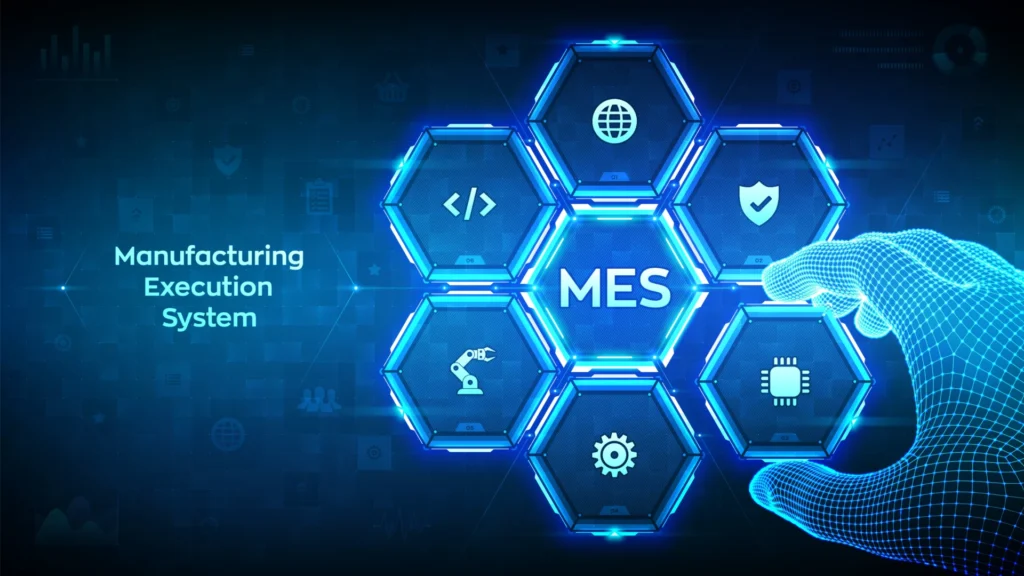



Industry 4.0 – what is it and how does it change production?
Recent years have brought a clear shift in the way production is planned and managed. More and more industrial companies are turning to data, automation, and system integration in order to manage processes more effectively and respond more quickly to market changes. In this context, the fourth industrial revolution, known as Industry 4.0, plays a particularly important role.
In this article, we will discuss in more detail the definition of Industry 4.0, as well as the main technologies associated with it. We will also highlight its impact on the economy and list the benefits that companies can achieve by implementing modern solutions.
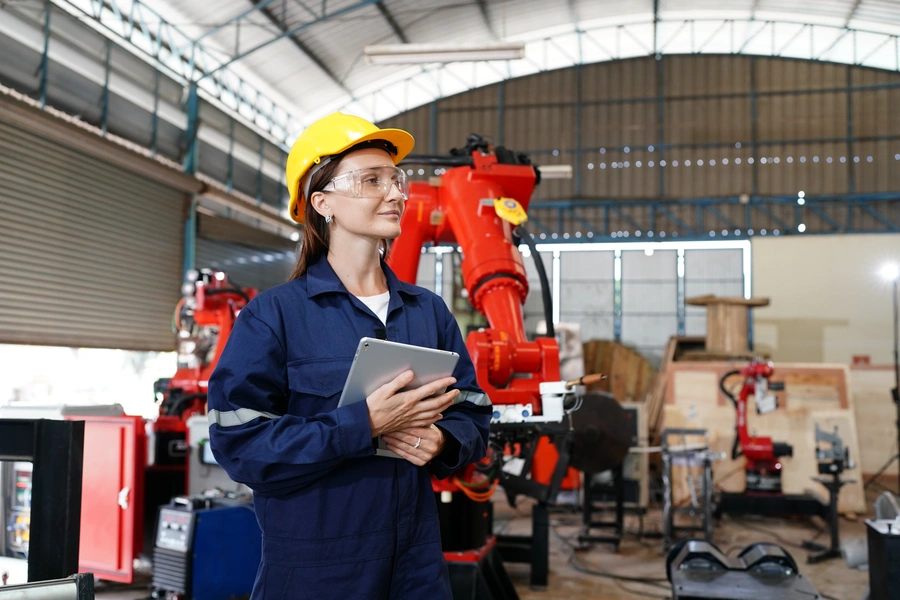
Industry 4.0 – what is it
Industry 4.0 is a concept of digital transformation of production processes, based on the integration of machines, IT systems, data, and people into one coherent ecosystem. Its goal is to create intelligent factories in which systems communicate with each other, analyze data in real time, and support autonomous decision-making.
Industry 4.0 – definition and the meaning of transformation
To properly understand what Industry 4.0 is, it is worth looking at it more broadly than only through the lens of technology. It is not a single tool, but a model of production organization in which data becomes the foundation for planning, optimization, and control.
In Industry 4.0, manufacturing processes are:
- horizontally and vertically integrated,
- data-driven,
- capable of rapid adaptation.
In practice, this means moving away from silo-based management and manual reporting toward systems that independently collect data, analyze it, and support operational decisions – from the production floor to the management level.
Key Technologies in Industry 4.0
Industry 4.0 is based on the application of many advanced technologies. They enable the integration of systems and processes into one coherent environment. This allows effective communication between various elements of industrial infrastructure and data exchange. The approach enables not only the integration of digital processes, but also physical ones. As a result, it leads to more efficient and flexible management of overall operations.
Industry 4.0 is based on the convergence of technologies such as:
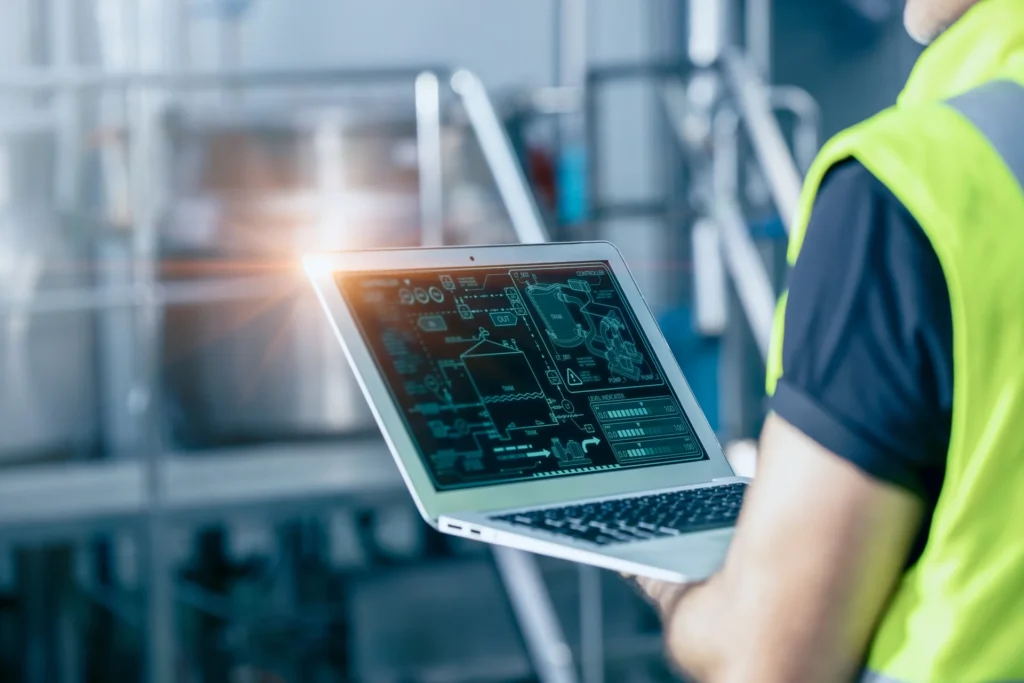
- Internet of Things (IoT) and Industrial Internet of Things (IIoT) – machines, sensors, and devices connected in a network collect production data in real time, enabling process monitoring and control. IIoT is an extension of IoT into the industrial environment, enabling remote monitoring, control, and diagnostics.
- Artificial intelligence (AI) and machine learning – the use of advanced AI and ML algorithms to optimize processes, predict failures (predictive maintenance), automate tasks, perform quality control, and enable autonomous decision-making by machines.
- Big Data and data analytics – include the processing and analysis of vast datasets generated by machines and processes. This analysis makes it possible to identify patterns and trends, optimize operations, and support more informed decision-making.
- Robotization and automation – the extensive use of industrial robots, cobots (collaborative robots), and automated systems in order to increase efficiency, precision, repeatability, and safety in production.
- 3D printing (additive manufacturing) – an additive manufacturing technology that enables the creation of three-dimensional objects directly from a digital model and supports design, facilitates prototyping, and the development of non-standard components.
- Cloud computing (Cloud Computing) – the use of remote computing resources and data storage space, which ensures system scalability, flexibility, and availability while reducing the load on local infrastructure.
- Cyber-physical systems (CPS) – the combination of machines, systems, and people that enables data exchange and real-time control of production processes. They allow the integration of the physical layer (machines) with the virtual layer (software).
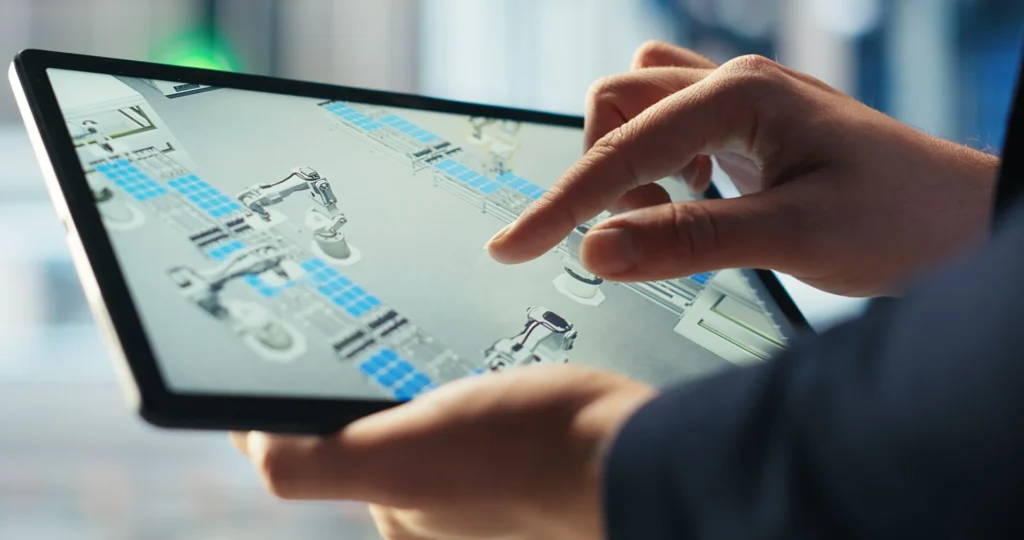
- Digital twins (Digital Twins) – the creation of virtual, dynamic replicas of physical objects, processes, or entire systems enables simulations, scenario testing, analysis, and optimization without interfering with the real world.
Industry 4.0 technologies together form the foundation of modern production processes. Their use allows companies to achieve levels of efficiency and innovation that were previously unattainable.

Are you wondering where to start Industry 4.0 in your plant?
Talk to the explitia team and find out which production areas have the greatest potential for automation. Contact us or schedule a Free 360 Workshop.
Automation and robotization in Industry 4.0
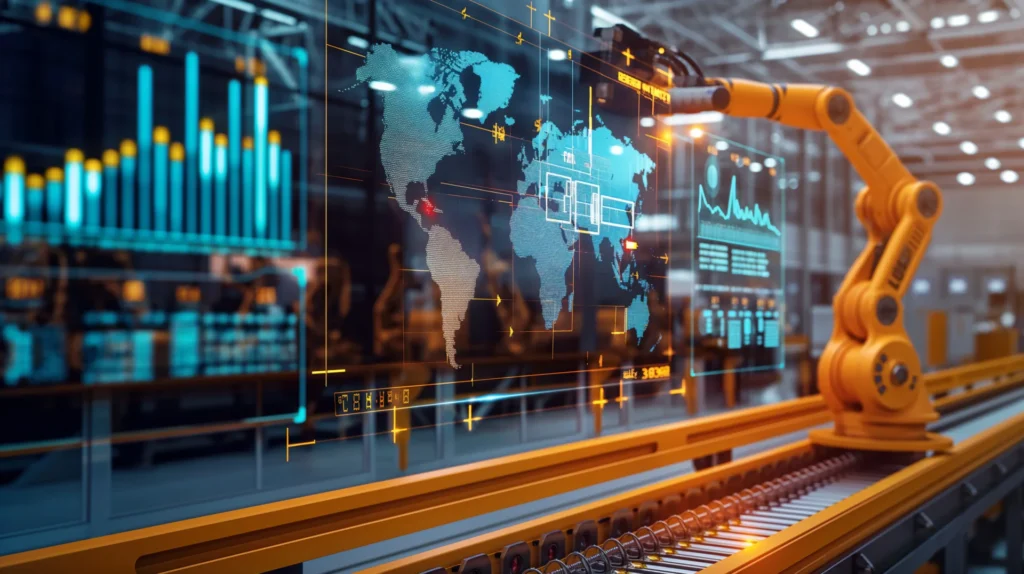
Automation and robotization form the foundation of implementing Industry 4.0. Their role is not limited to replacing manual labor – it is primarily about process stability, quality repeatability, and better use of data. Industrial robots are used in many industries, especially those requiring precision, such as electronics or automotive manufacturing.
Combined with IoT and AI, robots:
- support flexible production planning,
- respond to parameter changes,
- cooperate with operators.
Combined with IoT and AI technologies, these robots can not only perform repetitive tasks, but also learn and adapt to new conditions. Companies also often use cobots, that is, collaborative robots designed to work with people and support them in their daily tasks.
Impact of Industry 4.0 on the global market
The fourth industrial revolution has significantly changed the functioning of global markets. Industry 4.0 production, based on technology and digitalization, has posed a number of new challenges for entrepreneurs, but also opportunities. By using modern technologies, companies can better adapt to customer needs, shorten time-to-market, optimize the consumption of raw materials, and increase their competitiveness. In this context, IT services for industry can play an important role by supporting companies in the effective implementation and management of Industry 4.0 solutions.
The concept also promotes sustainable development. Integrated systems allow better use of resources, reduction of waste, and optimization of energy consumption. As a result, enterprises can more easily pursue ESG-related goals while simultaneously increasing their efficiency.
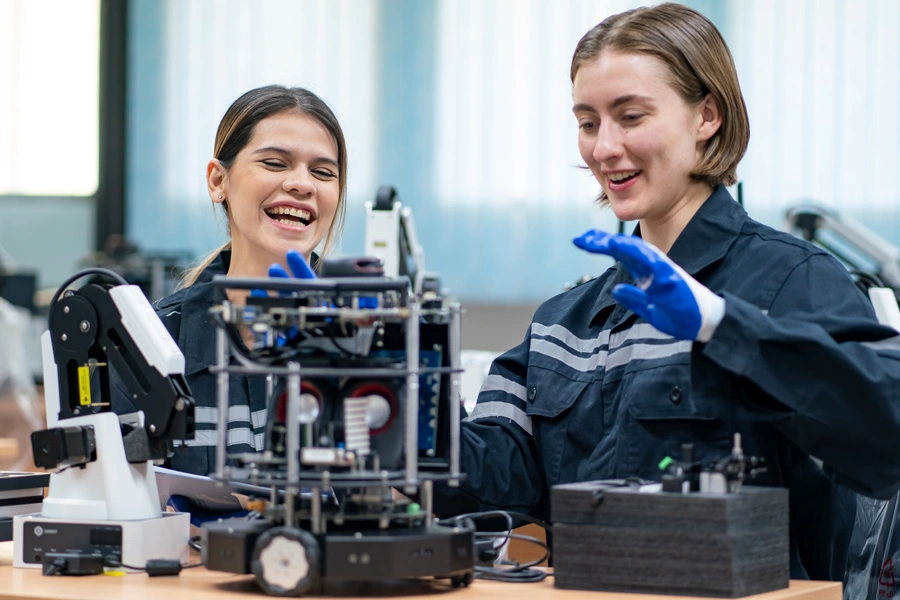
Benefits of implementing Industry 4.0
The implementation of Industry 4.0 solutions is currently one of the important development directions for companies that want to maintain competitiveness. The application of modern technologies effectively allows enterprises to achieve significant operational and strategic benefits, as well as financial ones.
Companies that implement Industry 4.0 solutions gain a real operational and business advantage:
- Higher productivity and production efficiency – automation, process optimization, and better use of data lead to faster production, shorter manufacturing cycles, and an overall increase in efficiency.
- Better product quality – machine precision, continuous control of production processes, and the ability to quickly identify errors result in higher and more consistent quality of final products.
- Reduction of operating costs – optimization of energy, raw material, and time consumption, better inventory management, and minimization of machine downtime translate into significant cost reductions.
- Production flexibility – intelligent factories are able to quickly and effectively adapt to market changes, changing customer requirements, and even produce personalized products.
- Workplace safety – automation of repetitive, monotonous, and hazardous tasks reduces the risk of accidents and improves working conditions for employees.
- Fewer failures – predictive maintenance instead of reactive maintenance.
- Increased competitiveness – companies that successfully implement Industry 4.0 solutions gain an advantage in the market through better quality, lower costs, and greater innovation.
The essence of Industry 4.0 is not only technology, but also a complete change in the approach to management and the functioning of manufacturing plants. Digitalization and Industry 4.0, working together, enable enterprises to fully integrate multiple processes, resulting in greater precision and cost minimization. By implementing modern solutions, companies can achieve higher efficiency, respond better to changing market needs, and pursue ESG-related goals. In the era of digitalization and automation, the application of Industry 4.0 solutions represents a milestone toward success on the global market and offers the opportunity to invest in the future.
Industry 4.0 in Poland – where are we?
In Poland, Industry 4.0 is gradually moving from the concept stage to real implementations. More and more companies are investing in MES systems, production analytics, OT/IT integration, and automation of reporting.
This transformation is supported by funding programs and educational initiatives, however, full use of the potential requires:
- further development of digital infrastructure,
- investment in employee competencies,
- a conscious approach to data and system architecture.
Industry 4.0 is not a one-time technological project, but a long-term change in the way production is managed. Companies that treat digitalization as a strategic element rather than a cost achieve process stability, predictability, and scalability more quickly.
Looking to implement Industry 4.0 solutions? Planning a digital transformation of your production facility?
Get in touch with us!
Gain knowledge to stay ahead of the competition! Read the explitia blog.