



KEPServerEX
Organize data from machines before it enters the systems
Machines, PLCs, and sensors contain the data needed for production, maintenance, quality control, and reporting. It’s more difficult to use this data when each device communicates differently.
KEPServerEX manages data flow as an OPC server between machines and systems such as SCADA, MES, ERP, and their dashboards. This allows the data to be transmitted further in a single, standardized format.
Let’s check whether KEPServerEX makes sense for your plant!
Tell us about the day-to-day operations at your facility, and we’ll help you determine where you can benefit from implementing KEPSeverEX.
What are the benefits of using KEPServerEX?
A well-planned implementation helps streamline communication between machines and IT/OT systems.
You can gain:
 One central access point for machine data
 Fewer separate integrations between machines and systems
 Easier handling of multiple communication protocols
 Less work required for future implementations
 Easier scaling to additional machines and lines
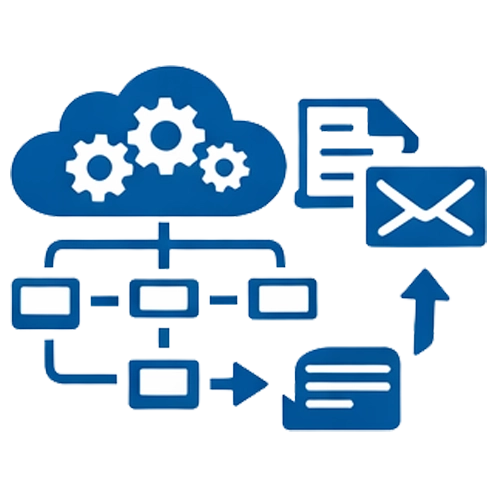 Clearer data flow to SCADA, MES, ERP, reports, and production portals
 Greater clarity and order for engineering, IT, automation, and production teams
One of the biggest advantages is that data from the machines does not have to be retrieved separately by each system and does not have to pass through a single common communication layer.

What is KEPServerEX?
KEPServerEX is an OPC server that connects machines, PLCs, and other data sources to host systems.
To put it simply, it works like this:
machines / PLCs / sensors → KEPServerEX → master systems
The server communicates with devices on the production floor, retrieves data from them, and makes that data available in a standardized format via the OPC UA protocol. This means that higher-level systems do not need to be familiar with each individual protocol or communication method used by a specific machine.
This can be particularly important in facilities where machines come from different manufacturers and operate using different communication standards.
What is KEPServerEX used for?
The main goal is to standardize the flow of data from machines.
Without such a layer, each system might attempt to connect directly to every machine. With several production lines, different manufacturers, and several master systems, this quickly becomes a network of connections that is difficult to maintain.
As an OPC server, KEPServerEX allows you to create a common data source for systems that need it. Instead of setting up separate connections for each machine and each system, you can centralize communication through a single intermediary layer.
As a result, it makes it easier for you to manage changes, develop the system, and connect additional machines.
When is it a good idea to implement KEPServerEX?
KEPServerEX is worth considering, especially when a project is large-scale or is expected to evolve over time.
This is a good direction to consider if:
| You have many machines or several production lines |
| The machines are from various manufacturers |
| Devices communicate using various protocols |
| The data is to be sent to several master systems |
| You're starting out as a pilot, but you want to fly more aircraft later on |
| You want to organize your production data sources |
| You looking for an integration framework that's easy to scale |
Let’s consider the following example:
You have four lines and are starting with just one, but your ultimate goal is to integrate all of them into SCADA, ERP, or another system. In this situation, an OPC server helps you establish a structured system from the start, one that’s easier to expand.
The Impact of an OPC Server on Your Business
Once KEPServerEX is implemented, data from the machines becomes easier to use throughout the plant.
For you, this might mean:

Fewer scattered connections between machines and systems
KEPServerEX organizes industrial communication by reducing the number of separate integrations created independently for each machine, line, or application.

Faster connection of additional machines, lines, and data sources
Thanks to a shared communication layer, new devices and data sources can be added to the plant ecosystem more efficiently and according to a repeatable model.


Easier management of changes in industrial communication
Changes in connection structures, device configurations, or the way data is shared are easier to control because they take place within one organized environment.

A stronger foundation for SCADA, MES, ERP, reports, and Production Portals
Machine data can be reliably made available to higher-level systems, making it easier to build reporting, monitoring, analytics, and digital tools for production.
More order and clarity in the work of engineering, IT, and automation teams
A shared access point for data reduces communication chaos and makes it easier for teams responsible for automation, IT infrastructure, and production system development to work together.
As the team moves through the next stages of digitization, it doesn’t start from scratch. It has a proven process and a shared data access layer.

Not sure whether KEPServerEX is the right solution for you? Let’s check it together!
A shared access point for data reduces communication chaos and makes it easier for teams responsible for automation, IT infrastructure, and production system development to work together.
When is KEPServerEX not necessary?
Implementing an OPC server is not always necessary. If you have a single machine, a simple data set, and no plans for expansion, you may want to consider a simpler solution that does not include a separate OPC layer.
The value of KEPServerEX increases with scale. The more machines, protocols, and systems there are, the more useful a central data standardization layer becomes.
What does the implementation of KEPServerEX look like?
We start by checking what data is available, where it comes from, and where it should go.
The process usually includes:
Identification of data sources
Checking controllers and protocols
License selection
KEPServerEX installation
Configuration of connections with machines
Identifying data sources
We determine which machines the data should be retrieved from and what information is needed next.
Checking drivers and protocols
We analyze which controllers work in machines and what communication protocols they support.
Selecting a license
The scope of the license depends on the industry, machines, protocols, and required modules. Sometimes it needs to be tailored to meet specific needs, for example, for less common protocols.
Installing KEPServerEX
The software is installed on a computer or server within the customer’s infrastructure.
Configuring Connections to Machines
We configure communication with machines, PLCs, or other data sources.
Sharing Data with Upper-Level Systems
The data is further exposed via the OPC standard so that it can be used by SCADA, MES, ERP, reports, the Production Portal, or other applications.
What systems can KEPServerEX work with?
The server can serve as a data source for the higher-level systems used at the facility.
It may transfer data to, among others:
SCADA
KEPServerEX can supply SCADA systems with data from machines and devices, supporting real-time process monitoring and visualization of production line performance.
More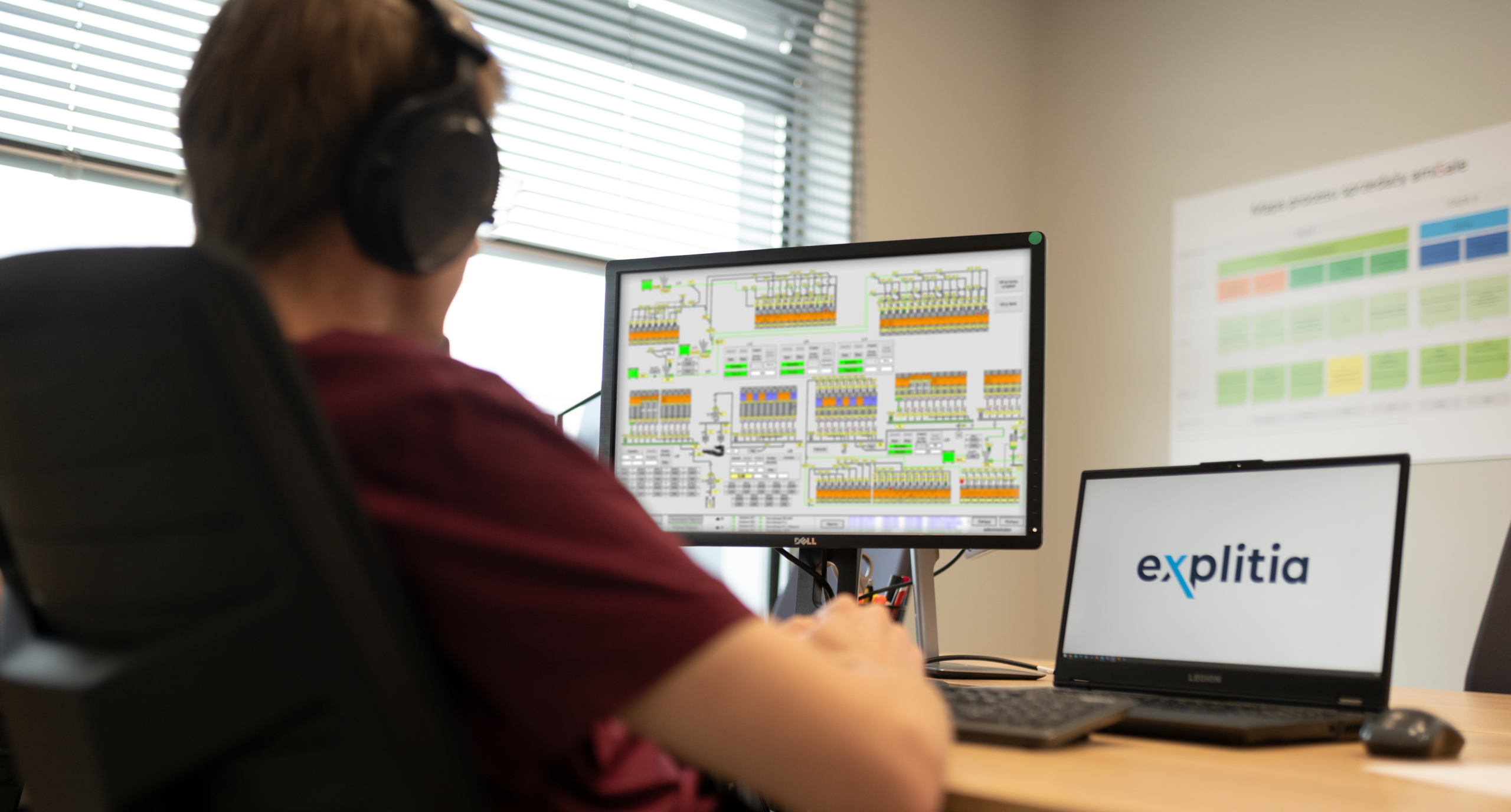
MES
Data made available by KEPServerEX can be sent to the MES system, where it supports production analysis, event registration, order execution control, and performance reporting.
More
ERP
KEPServerEX can mediate the transfer of production data to the ERP system, making it easier to connect shop floor information with planning, logistics, and production accounting.
More
Portalu Produkcyjnego
Machine data can be presented in a production portal, giving operators, team leaders, and management easier access to up-to-date process information.
More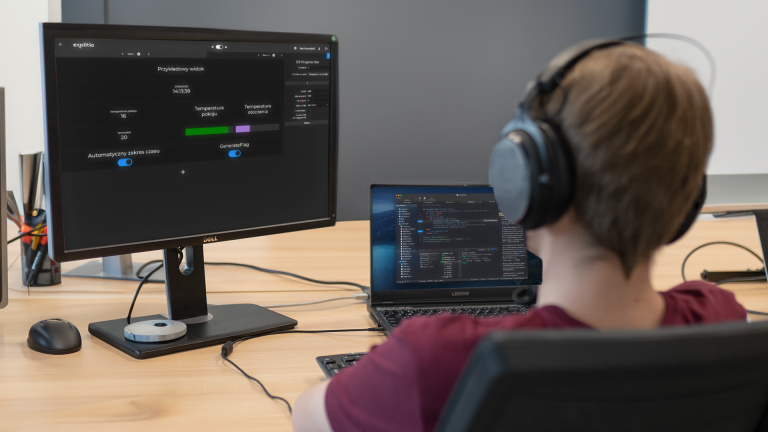
Systemu Raportowego
KEPServerEX can supply data to reporting systems that transform production information into summaries, indicators, alerts, and analyses that support decision-making.
More
Systemów Utrzymania Ruchu
Data on machine operation, device status, and technical events can support maintenance activities, helping teams respond to failures faster and plan inspections.
More
Systemów Jakościowych
KEPServerEX can transfer process data to quality systems, supporting production parameter control, deviation analysis, and compliance documentation.
More
Innych Aplikacji Przemysłowych
Thanks to its broad integration capabilities, KEPServerEX can also work with other industrial applications that need stable access to machine data.
More
As a result, each of these systems does not need to communicate directly with every machine. It can use a single, organized data source.
What should you prepare on the facility side?
When implementing KEPServerEX , you need infrastructure that allows communication with the machines.
You may need the following on your end:
- company network,
- network cabling,
- access to machines,
- the ability to communicate with devices,
- decisions regarding the domain,
- IT security,
- a server or consent to the contractor’s provision of a server.
At Explitia, we can provide the server as hardware and install it. However, you may prefer to manage the domain, security, and IT infrastructure yourself . That’s understandable, since it concerns the security of your facility.
Why isn’t it worth writing such a solution from scratch?
In theory, it is possible to build your own communication solutions. In most cases, however, this doesn’t make much business sense.
KEPServerEX is a ready-to-use product that:
| It has been tested |
| It is stable |
| Supports multiple protocols |
| It does not require creating support for each protocol from scratch |
| Reduces implementation time |
| Reduces the risk |
| It reduces the need to write separate integrations |
The biggest challenge with a custom solution is supporting multiple manufacturers, machines, and protocols. A separate communication protocol would have to be developed for each case.
A ready-made OPC server, such as KEPServerEX, is more practical, faster, and usually more cost-effective.
Why should you choose explitia as your implementation partner?
At explitia, we help translate data concepts from the machine level into a working implementation. We bring together perspectives from manufacturing, automation, IT, and higher-level systems.
We can assist with the following aspects of the project:
- identifying data sources,
- after checking the drivers and protocols,
- selecting a license,
- KEPServerEX installation,
- configuration of connections to machines,
- sharing data with higher-level systems,
- preparing the architecture for further development.
As a result, implementation is not just a matter of installing a server, but also of streamlining communication within the facility, which facilitates the subsequent stages of digitization.

Let’s see if KEPServerEX is a good fit for your facility
If you have multiple machines, use different protocols, or are planning to expand your SCADA, MES, ERP, reporting, or Production Portal, let’s start by talking.
We’ll take a look at where data is generated today, which systems it should be sent to, and whether an OPC server would be a good solution for your production.