


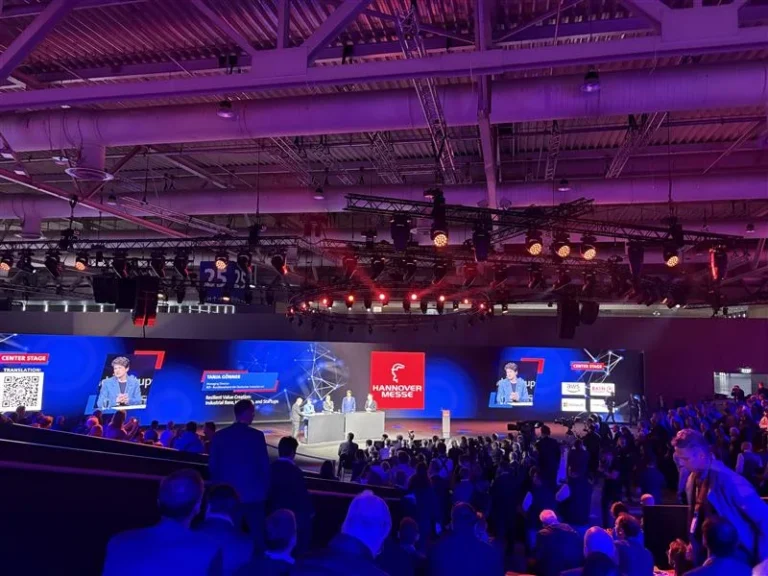
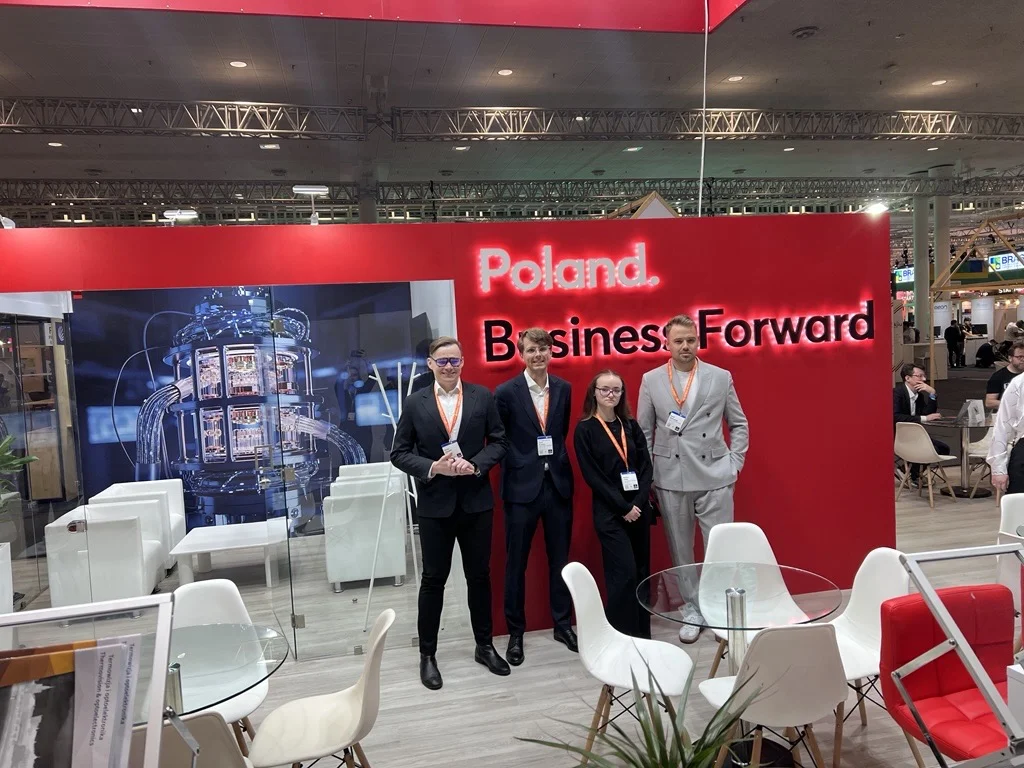
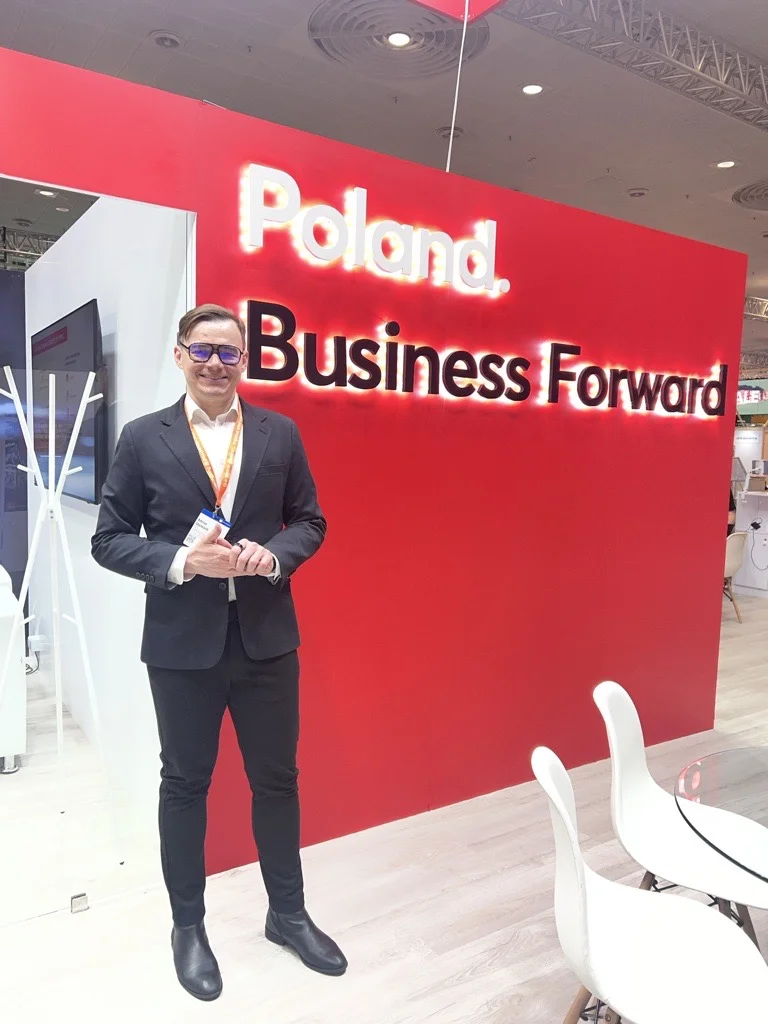
explitia as Poland’s Manufacturing-X representative at Hannover Messe 2026
During Hannover Messe 2026, explitia showed how data from the production process can become part of a product’s digital history. The presentation was connected with the Manufacturing-X project and the Digital Battery Passport, a digital record of battery data across its lifecycle.
The conversations held at Hannover Messe 2026 led to one clear conclusion: manufacturers are no longer asking whether they will need data. They are asking how to organize it, control it, and use it with confidence.
What we saw on the halls at Hannover Messe 2026
AI, automation, and robotics were strongly visible across the trade fair. Exhibitors presented use cases for data analysis, prediction, and decision support.
In conversations with manufacturers, several challenges came up again and again:
- data exists, but it sits in several systems and is hard to connect,
- some information still ends up in spreadsheets or documents outside core systems,
- the product is not always linked to the history of how it was made,
- preparing data for an audit or customer request takes too much time,
- responsibility for data is spread across departments.
The discussions at Hannover Messe 2026 showed that behind the interest in AI, automation, and digitalization there is a very practical need: organizing data inside the production process.
Production data as part of the product
Hannover Messe 2026 confirmed a direction we have seen among manufacturers for several years. Data from machines, systems, and quality control is becoming information about the product: its origin, parameters, history, and later lifecycle.
At the fair, we showed this through the battery industry. Digital Battery Passport assumes that data about a battery, its components, production, use, service, and recycling must be collected and connected.
A manufacturer needs to know:
- what the product was made from,
- which batches the components came from,
- what parameters were recorded during the process,
- what happened at each stage of production.
The DBP demonstrator at Hannover Messe 2026
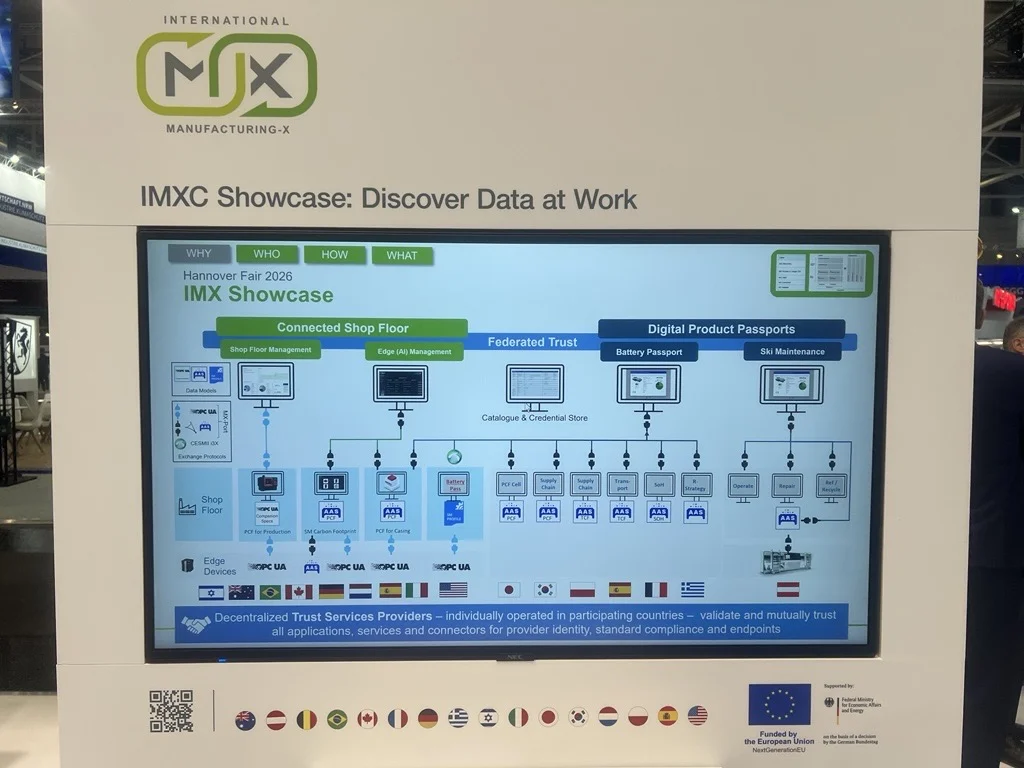
At Hannover Messe 2026, as part of the international Manufacturing-X project, we presented a Digital Battery Passport demonstrator showing a selected part of the battery production process.
This was not a slide presentation or a conceptual model. The demonstration focused on the stage where components become a finished product, while data is created and assigned at the same time.
During the demonstration, visitors could see:
- how components and batches are identified,
- how process data is assigned to the product,
- how a consistent production history is created,
- how this information can later be used in the passport.
The main takeaway from the demonstrator is clear: the Digital Battery Passport does not start in a reporting system. It starts at the machine, at the operator station, and in quality control.
If data is not collected in an organized way at this stage, preparing the passport later means manually connecting information from many sources.
Manufacturing-X and control over data
The demonstrator also showed the cooperation side of Manufacturing-X. Data can be prepared for exchange with partners, while the manufacturer keeps control over what is shared and with whom.
This matters because many companies still ask the same question: how can we share data without losing control over the business and know-how?
The direction is clear:
- not all data is for everyone,
- access must match a specific need,
- the source of data must be clear,
- the manufacturer must know what is shared and why.
AI at Hannover Messe 2026: the need for trusted data
At Hannover Messe 2026, AI was visible almost everywhere. Many conversations, however, returned to the same issue: data quality and data availability.
If data about the process, quality, or batches is incomplete or scattered, it is hard to base analysis or forecasting on it.
That is why the first step is not choosing a tool. It is answering basic questions:
- where the data comes from,
- where it is stored,
- who is responsible for it,
- whether it can be linked to a specific product.
What Hannover Messe 2026 means for manufacturers
The conclusions from the fair are especially important for people responsible for production, quality, IT/OT, and regulatory compliance.
Companies that can connect data with the process and the product will be better prepared for:
- customer requirements related to transparency,
- regulations related to traceability and environmental reporting,
- cooperation across supply chains,
- projects related to the Digital Product Passport.
Companies that still work with scattered data will have to catch up under time pressure and market expectations.
explitia’s role at Hannover Messe 2026
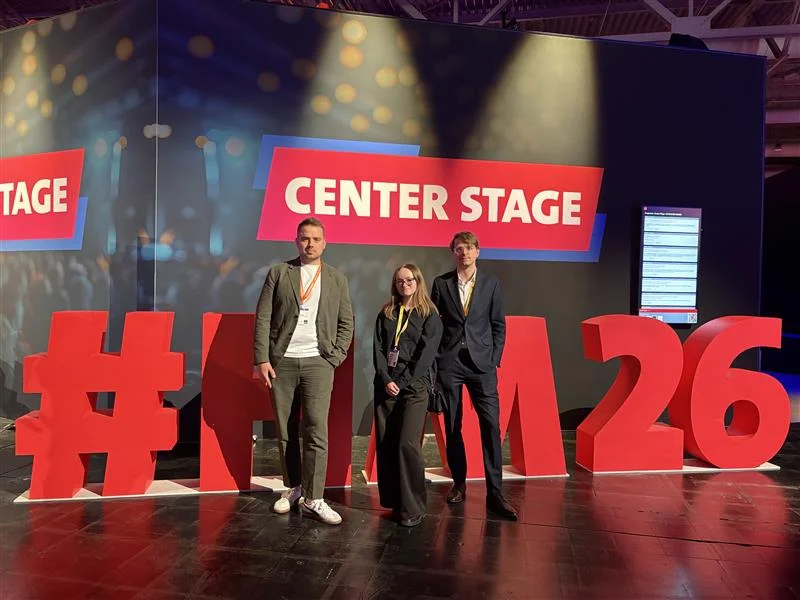
Our role is to support manufacturers in organizing data from machines, people, and systems, and in building an environment that helps them understand the production process better.
This is the foundation for projects related to:
- Digital Product Passport,
- Digital Battery Passport,
- Manufacturing-X,
- quality analysis and operational decisions.
Our participation in Hannover Messe 2026 highlighted the direction for modern manufacturing: connecting production with the data layer in a way that responds to the needs of manufacturing plants.
For companies preparing for requirements related to the digital product passport, traceability, or secure data exchange, one process is a good starting point. We help verify what data is already available, what is missing, and how to turn it into a solution that supports production.