

How to implement Lean Manufacturing in a company? Tools and pitfalls
Lean Manufacturing is not just a trendy management concept but a proven philosophy that has helped companies for decades to eliminate waste, improve quality, and respond faster to market needs. Simply learning the principles of Lean Manufacturing is only the beginning. The real challenge is the effective implementation of this concept in a company. Discover which Lean tools are most commonly used, how the implementation looks step by step, and which mistakes you should pay special attention to.
Lean Manufacturing tools
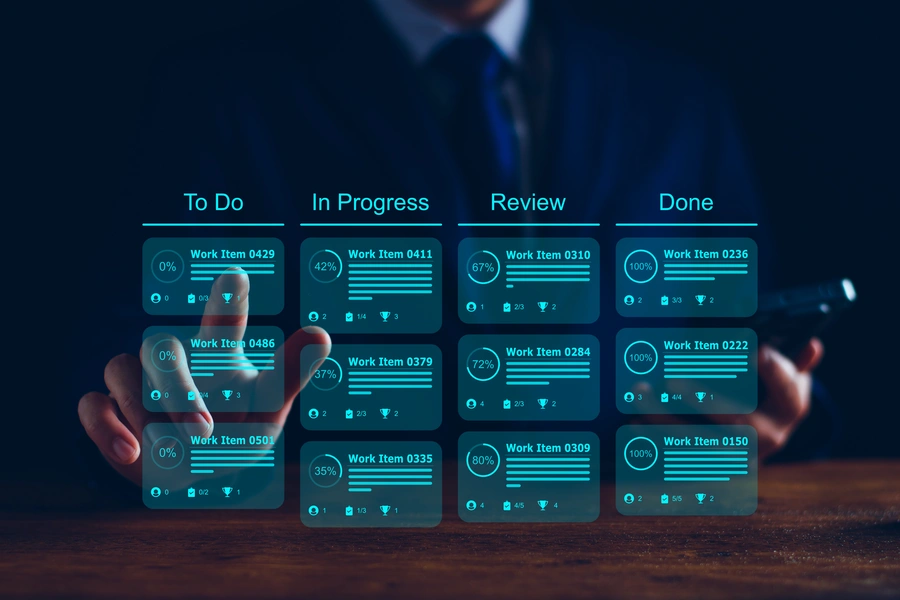
Many companies turn to solutions and IT services for industry to grow technologically. But in production, something more is needed… Think of Lean Manufacturing as a toolbox that allows you to streamline the functioning of your production plant. We have prepared an overview of such tools for you.
| Tool / Method | What it provides / how it works | Where it is most useful |
| 5S (Sort, Set in order, Shine, Standardize, Sustain) | Organized, clean, and standardized workstations, easier problem identification, better ergonomics. | Repetitive production, plants with a large number of machines/equipment, warehouses. |
| Kaizen / Continuous Improvement | Regular, small improvements, employee engagement; allows gradual process enhancement without large investments. | The entire organization, especially important in production, quality, maintenance departments. |
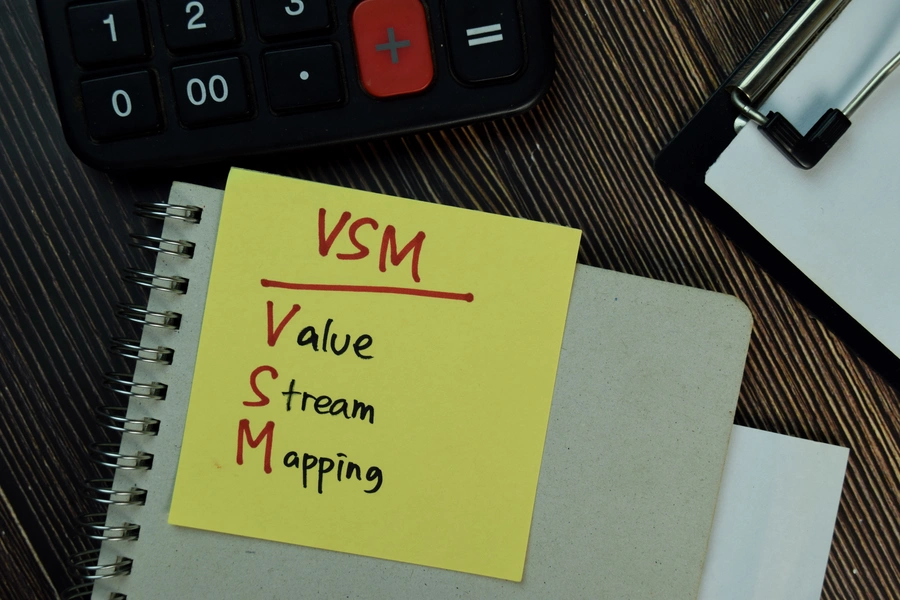
| Value Stream Mapping (VSM) | Mapping the entire value stream – showing the process from raw material/order to product delivery; identifying areas with delays, stockpiles, waste. | When a company wants to take a holistic view of processes, especially where bottlenecks occur. |
| Kanban | Pull system, signaling material, parts, production needs; reduces excessive inventory. | Plants with multiple production stages and warehouses, where downtime or overproduction occurs. |
| Poka-Yoke | Error-proofing mechanisms; systems that prevent an incorrect step from being executed. | Quality-critical processes, assembly, safeguards. |
| Total Productive Maintenance (TPM) | Maintenance, breakdown prevention, operator involvement in keeping machines in good condition – fewer failures, less downtime. | Plants with intensive machine infrastructure, where breakdowns are costly. |
| SMED (Single Minute Exchange of Die) | Reducing machine changeover/setup times, enabling smaller batch production with greater flexibility. | Production lines where products or specifications change frequently. |
| Work Standardization | Establishing guidelines, instructions, and procedures so processes repeat consistently, making deviation identification easier. | |
| Visual Management | Visual management – boards, indicators, visual signals that make deviations, work status, and speed visible. |
7 steps of Lean Manufacturing implementation in a company
Implementing Lean Manufacturing is a process that can be divided into 7 stages:
1. Diagnosis of the Current State
The first phase involves collecting data about the production process. We check what we already know (how much inventory do we have? what downtimes? what quality issues? where are the bottlenecks?).
At this stage, it is also worth assessing process maturity and organizational culture (are employees open to change? are processes standardized? have we developed a change management structure?).
2. Management Engagement and Communication
For Lean Manufacturing implementation to succeed, management must be aware of the benefits and ready to support the changes. Without top-level support, Lean may stall.
It is worth having management define goals and clearly present their vision (what do we want to achieve?).
3. Choosing a Pilot Area
You may be tempted to implement Lean on a full scale, but we don’t recommend that. It is better to start with one process, one line, or a small area to test tools and show the effect – so-called „quick wins”.
4. Training and Building Competence
Often overlooked, but such an important step in Lean implementation is training on Lean tools, standards, and problem-solving techniques.
We also encourage you to involve employees at all levels – operators, line leaders, engineers.
5. Implementing Tools and Methods
Entering the Lean world can feel like a child entering a candy store. Remember that the approach „I’ll take everything at once” will not necessarily bring the expected results. Test Lean tools gradually: first 5S, standardization, then TPM, SMED, Kanban, etc. Observe how they perform.
Take care to properly set KPIs, efficiency indicators (e.g., machine availability, downtime, quality).
6. Monitoring, Analysis, Improvement (Kaizen, PDCA)
Implementing any solution makes no sense without regular performance checks and comparing them to intended goals.
So improve and adjust actions continuously.
7. Expansion and Scaling
Pilot project done? Time to expand the scope of the new solution, i.e., implement Lean methods in other areas of the company.
Another important point is maintaining the Lean culture, because lean manufacturing is not a one-off operation but a philosophy of action.

The most common mistakes in Lean implementation
Have you ever renovated a house or apartment? If so, you know that difficulties always arise: the plumber is late, the last tile cracks, the electrician damages the wall finish, etc. It is similar with digital transformation and with implementing solutions such as Lean. Learn about the most common mistakes so you can avoid them:
- Lack of management engagement – without top support, a Lean project may fail.
- Tool-based approach without philosophy – implementing 5S, Kanban, or TPM just to „tick the box”, without understanding customer value, continuous improvement, or respect for people, often results in superficial effects.
- Too high expectations, too short a time – expecting spectacular results right after implementation leads to disappointment and abandonment.
- Lack of standardization – if processes are not well described and standardized, it is difficult to maintain Lean results; random differences generate chaos.
- Skipping employees/resistance to change – do you encounter reluctance from employees? People often resist change if they do not see its purpose; lack of training and proper communication breeds resistance.
- Incorrect selection of tools or wrong sequence – e.g., implementing advanced methods before mastering the basics such as work standardization or 5S. It’s like teaching a child to ride a bike before they can walk.
- Lack of monitoring and continuous improvement – implementation is not the end; without a PDCA system or similar, without analysis and adaptation, results fade over time.
All this shows how important proper change management is. If you don’t know how to start introducing innovations in your company, use our technology consulting services.

Lean Manufacturing is a process, not a one-off project. The success of implementation depends on the right choice of tools, consistency in action, and employee engagement. If you want to see how lean production can work in your plant, start with small steps – you’ll see results faster than you expect. Remember: digitalization and Industry 4.0 go hand in hand with Lean!




Implement Lean without unnecessary costs! Contact us and find out how we can help you bring Lean into your production.