


Up to €72,000 in annual savings thanks to predictive maintenance of pumps
Automotive seating foam production can be highly dependent on pump operation. Pumps feed chemicals into a carousel with moulds, where the chemical reaction of the mixture creates foam.
When a pump stops working, the process cannot continue. For a direct supplier, this can mean costly downtime and the risk of delays for automotive customers.
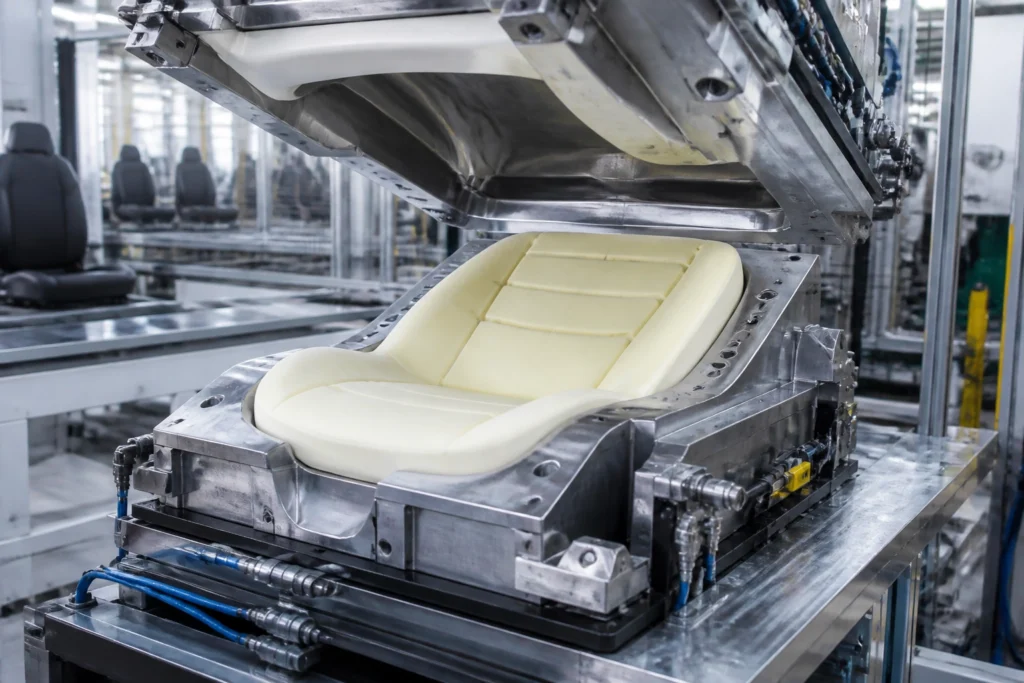
Manual measurement could not keep up with the scale of operations
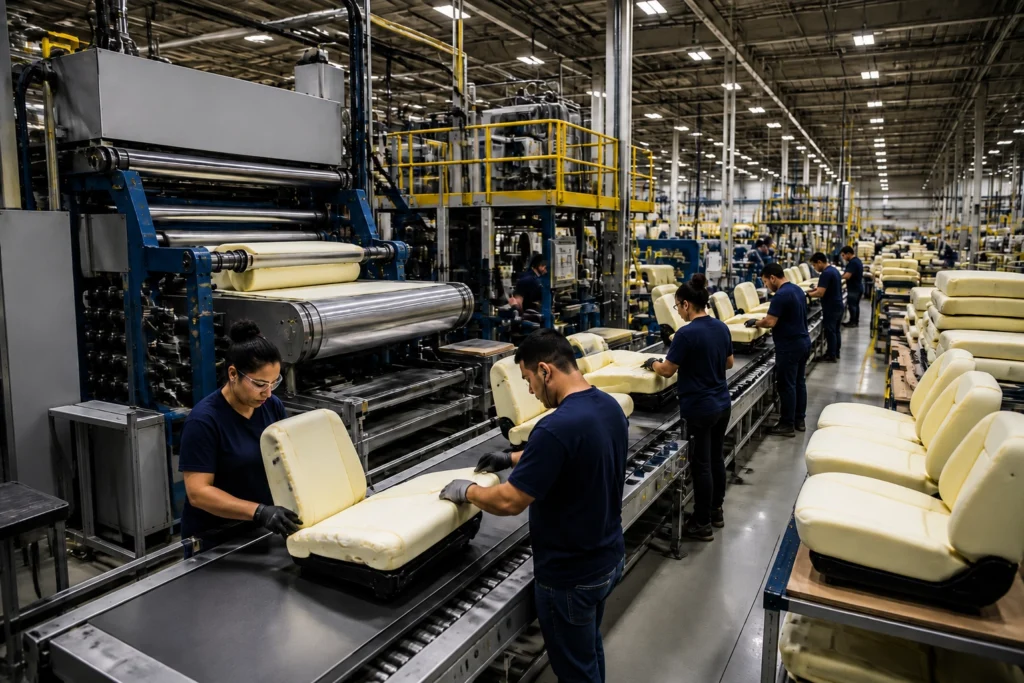
Our client manufactures components for the automotive industry and operates as a direct supplier (Tier 1). The implementation covered one plant with 6 production lines.
Before the implementation, vibration measurements were carried out manually using simple diagnostic devices. As a result, the data was not transferred to a system where it could build a history of pump operation.
The maintenance team checked the condition of the machines periodically, so service decisions depended on individual measurements, experience and reactive actions after the fact.
Data every 50 ms instead of occasional inspections
In this project, we implemented the explitia.PDM module, which extended the part of the explitia MES Production Portal already operating in the plant.
The PDM module is responsible for predictive maintenance of pumps. Sensors collect vibration data every 50 ms, while the software displays pump condition, trends and threshold exceedances.
The system monitors, among other things:
| Vibrations in the X, Y and Z axes |
| Motor temperature |
| Rotational speed |
| Alarm threshold exceedances |
| Pump wear trend |
When the system detects an anomaly, the information is sent to an external CMMS, where a service order can be created. This way, the alarm goes directly into the maintenance process.
The most expensive scenario: the carousel stops in the middle of production
Before implementing the predictive maintenance module, the client had to account for the high costs of unplanned downtime of the production carousel. A pump failure could stop the foam production process, while emergency repair meant higher costs of service, spare parts and work organisation.
Sensor data made it possible to detect an increase in vibrations before a failure occurred. The maintenance team could plan pump replacement for the weekend, when production was not running, instead of reacting after the line had stopped.
Short configuration, tangible change in maintenance work
The client already had suitable sensors that worked with explitia.PDM, so the configuration was an efficient process completed in just over a week. The maintenance team defined tolerance ranges for vibrations and pump operating parameters.
For a new implementation, including equipment delivery and system launch, a similar project can be completed within approximately one month.
The most challenging stage was the integration with the external CMMS system. It required agreeing on data exchange between the two systems and ensuring two-way communication. This was completed without disrupting line operation.
Up to €72,000 less per year in downtime and failure costs
After the implementation, the client gained continuous insight into pump condition and the ability to plan service activities based on data, not individual inspections.
The key results include:
| Up to €72,000 in annual savings |
| Reduction of unplanned failures by up to 80% |
| Fewer emergency service interventions |
| Ability to plan pump replacement outside production time |
| Automatic transfer of anomaly information to the CMMS |
The savings come mainly from reducing unplanned downtime, fewer pump failures and better service planning.
A pilot with potential for expansion
The implementation in one plant shows the potential to scale the solution to further lines and locations.
If you see potential for your plant as well, the best first step is an audit of pumps and machines whose downtime stops the line. After that, a pilot can be launched, sensor data can be collected and it can be verified which failures can be detected earlier.
See how much predictive maintenance can change in your plant!
Contact us – together we will check how explitia.PDM can help reduce unplanned downtime, detect failure risks earlier and better plan service activities in your factory.